Explosive Revelation: Atiku's FBI Quest for Tinubu's Records Ignites Fury, Sparks Debate on Foreign Intervention in Drug Allegations
A heated debate has erupted in Nigeria over former Vice President Atiku Abubakar's attempts to involve U.S. institutions in challenging President Bola Tinubu's eligibility, drawing strong criticism from figures like Mazi Franklin Ngoforo and Gen. (Rtd) Tukur Buratai who emphasize national sovereignty. While Atiku's lobbying firm alleges Tinubu intervened to block document release, Atiku himself questions the FBI's secrecy, insisting on Nigerians' right to know their leader's background amid economic hardship. The controversy underscores the tension between accountability and the protection of Nigeria's democratic process from foreign influence.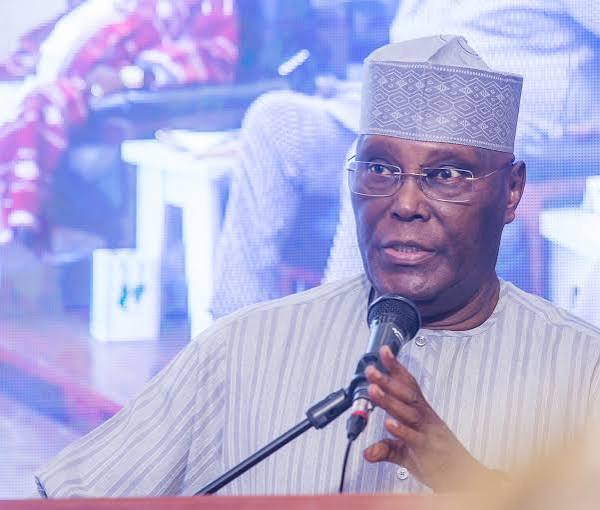
A significant political and legal controversy is unfolding in Nigeria, centered on former Vice President Atiku Abubakar's efforts to secure the release of United States government records concerning President Bola Tinubu, and the strong reactions from prominent Nigerian figures who view such actions as an unacceptable interference in national sovereignty. This dispute highlights a fundamental debate about the role of foreign institutions in Nigeria's domestic affairs, particularly its electoral process.
Mazi Franklin Ngoforo, Deputy National Leader (Southeast) of the Renewed Hope for Greater Nigeria (RHGN), strongly cautioned Atiku Abubakar against inviting foreign organizations and countries into Nigeria's political landscape. Speaking in Jos, Plateau State, after the flag-off of RHGN’s campaign activities for President Bola Tinubu’s re-election, Ngoforo accused the African Democratic Congress (ADC) presidential candidate of seeking foreign powers to prosecute his political battle against Tinubu. He urged Nigerians to reject Atiku Abubakar’s "politics of external interference" and rally behind President Bola Ahmed Tinubu for the 2027 presidential election.
According to Ngoforo, Alhaji Abubakar’s reported attempts to involve American institutions, including schools, lobbying interests, and the United States judiciary, in matters relating to President Tinubu constitute an unacceptable attempt to introduce foreign institutions into Nigeria’s domestic electoral contest. He firmly asserted that Nigeria is a sovereign nation equipped with its own constitution, electoral laws, courts, and institutions fully capable of determining questions concerning the qualification and eligibility of candidates. Ngoforo emphasized that issues regarding certificates submitted to Nigerian authorities and candidate eligibility should be resolved primarily within Nigeria’s legal and constitutional framework.
Furthermore, Ngoforo questioned the relevance of allegations concerning purported events in another jurisdiction several decades ago to the conduct of Nigeria’s 2027 presidential election. He argued that allegations concerning drugs or financial matters allegedly investigated in the United States many decades ago do not automatically become Nigerian electoral offenses or grounds for disqualification. "If there is a question about a Nigerian election, take it to the Nigerian courts and allow Nigerian law to determine it," Ngoforo stated, adding, "You cannot turn an allegation from decades ago in another country into a substitute for Nigeria’s Constitution and electoral laws." He insisted that the Nigerian electorate, not foreign institutions, would ultimately determine who governs Nigeria, urging condemnation of Atiku’s "lazy politics" and any strategy exposing Nigeria’s electoral process to undue external influence. He called on voters to support Tinubu based on his administration's record and development agenda, and for RHGN members to intensify grassroots mobilization. Ngoforo underscored that the 2027 election should be an opportunity for Nigerians to defend the sovereignty of their democratic process, stating, "The Nigerian President will not be elected in an American school, lobbying office or courtroom. He will be elected by Nigerians, on Nigerian soil, through the Nigerian ballot."
Ngoforo cited Romania's 2024 presidential election, annulled amid allegations of Russian interference benefiting Călin Georgescu, as an instructive example of how sovereign states take foreign interference seriously. He highlighted that Romanian authorities subsequently barred Georgescu from participating in the rerun and subjected him to a criminal investigation, demonstrating the importance of protecting national elections from foreign influence. He concluded, "the Nigerian presidency cannot be outsourced to Washington," arguing that Atiku’s approach fails to appreciate democratic competition, suggesting a presidential candidate should focus on convincing Nigerian voters with credible programs rather than seeking foreign ammunition against political opponents. "If Atiku believes Nigerians do not want Tinubu, he should go to Nigerians and persuade them. If he believes Tinubu is legally unqualified, he should make his case under Nigerian law," Ngoforo advised.
Echoing these sentiments, General (Rtd) Tukur Buratai, in a position paper titled, “Nigeria First: A Case for Protecting National Sovereignty and Dignity – A Patriotic and Non-Partisan Perspective,” also urged the protection of national sovereignty. Published on his verified Facebook page, Buratai's paper addressed the implications of the possible release of documents by a United States District Court related to alleged investigations into President Tinubu. The court had reportedly given Tinubu, the Federal Bureau of Investigation (FBI), and the Department of Justice (DOJ) until August 28, 2026, to oppose the release of these documents.
Buratai argued that the issue extends beyond President Tinubu, impacting "250 million Nigerians whose national pride, economic prospects, and global standing hang in the balance." He warned that international attention surrounding the allegations could associate Nigeria with claims against its president, regardless of the circumstances. "When the world reads headlines about a ‘Nigerian president’ linked to drug allegations, they do not separate the man from the nation. They see Nigeria. They see Nigerians." He questioned the fairness of judging a leader exclusively by actions from their youth, rather than by decades of subsequent public and political career, citing Tinubu’s tenure as Lagos State governor and his involvement in national politics as part of a broader record. Buratai cautioned against allowing decades-old foreign allegations to dictate Nigeria's international perception.
Further, the former Army chief raised concerns about the sovereignty implications of a foreign court deciding on the reputation of a sitting Nigerian President. "Does the United States have the right to determine the reputation of Nigeria’s head of state? Should a foreign court be the arbiter of character for a man elected by millions of Nigerians?" He reiterated that Nigeria possesses its own democratic institutions and mechanisms for addressing allegations against public officials. "We did not elect an American court to vet our leaders. We did not ask the FBI to determine the character of our president," Buratai emphasized. He urged political actors to prioritize national interest over partisan disputes, warning of potential economic consequences such as reduced foreign direct investment, disrupted international development partnerships, lower diaspora remittances, decreased tourism, and negative impacts on overseas operations of Nigerian businesses, should international investors perceive instability due to the controversy.
Buratai also connected the issue to the 2027 general elections, cautioning that the timing of any potential document release could give foreign actors "an unprecedented influence over the outcome of Nigerian elections," thereby affecting the country’s political sovereignty. He clarified that his argument for protecting national sovereignty does not oppose accountability, but insists it must be pursued in ways that respect the dignity of the office and the nation. He recommended diplomatic engagement with the United States, robust legal arguments from Tinubu’s team, greater national solidarity, public education, engagement with the Nigerian diaspora, and a communication strategy for potential disclosure. Buratai concluded by stressing the importance of strengthening domestic institutions to handle issues concerning leader conduct and accountability within Nigeria’s democratic and legal processes, ensuring that national dignity protects sovereignty and national interest, not just individual leaders.
Adding another layer to the controversy, a Washington-based lobbying firm, Von Batten-Montague-York, L.C., engaged by former Vice President Atiku Abubakar, provided an update on the legal battle. The firm alleged that President Bola Tinubu personally intervened in the federal case to oppose the disclosure of records concerning him. In a statement, they disputed claims by Tinubu and his associates that the records were withheld to protect investigative methods and lives. Citing an October 23, 2023, motion filed by Tinubu, the lobbyists claimed he argued the records contained private financial and law-enforcement information, invoking Freedom of Information Act (FOIA) provisions and privacy protections. They further alleged that Tinubu asserted the DOJ, FBI, Drug Enforcement Administration (DEA), and Central Intelligence Agency (CIA) were not adequately protecting his privacy interests, and subsequently requested 30 days to consult with federal agencies, a request granted by the court on November 27, 2023. The firm described Tinubu's intervention as a turning point, claiming the Biden administration subsequently shifted from delaying to blocking the records' disclosure. However, the firm did not provide an independent court finding directly establishing that Tinubu’s intervention caused the alleged blocking.
In response to the FBI's refusal to publicly release certain records relating to President Bola Tinubu, citing "danger to lives," Atiku Abubakar reacted strongly. In an application dated August 20, the FBI had sought permission to submit ex parte and in camera declarations to explain privately to the US District Court for the District of Columbia why it withheld some investigative records concerning allegations of drug trafficking involving Tinubu, stating it could not publicly disclose all reasons. Atiku, through his Senior Special Assistant on Public Communication, Phrank Shaibu, questioned the FBI’s justification for secrecy, arguing, "The FBI says disclosure could endanger lives. Which lives? Nigerians are already dying." He linked the hardship to the removal of fuel subsidy, asserting that the policy had triggered increases in transportation costs, food prices, and production expenses, thereby putting pressure on jobs and household incomes. Atiku reiterated his pledge to reverse the fuel subsidy removal if elected, proposing an accountable and abuse-protected approach.
Regarding the FBI records, Atiku clarified that he was not demanding the release of sensitive information that could compromise investigations, such as identities of undercover agents, confidential sources, or investigative techniques. He stated, "Protect your agents. Protect your sources. Protect legitimate investigative methods. Redact whatever American law genuinely requires you to redact. But do not stretch those protections until they become a bulletproof vest for Tinubu." Atiku characterized his position as a democratic appeal for Nigerians' right to know the background and character of their leader, rather than an attempt to interfere in Nigeria’s internal affairs.