El Salvador's Bitcoin Beach Summit Unveils Blueprint for Sustainable Crypto Economies
The Bitcoin Circular Economy Summit in El Salvador's Bitcoin Beach convened global leaders to share strategies for effective Bitcoin adoption and sustainable growth in local economies. Key takeaways included concentrated adoption, building high-trust teams, and utilizing innovative fundraising and technological tools like Blink Wallet, emphasizing Bitcoin's role in empowering underserved communities worldwide.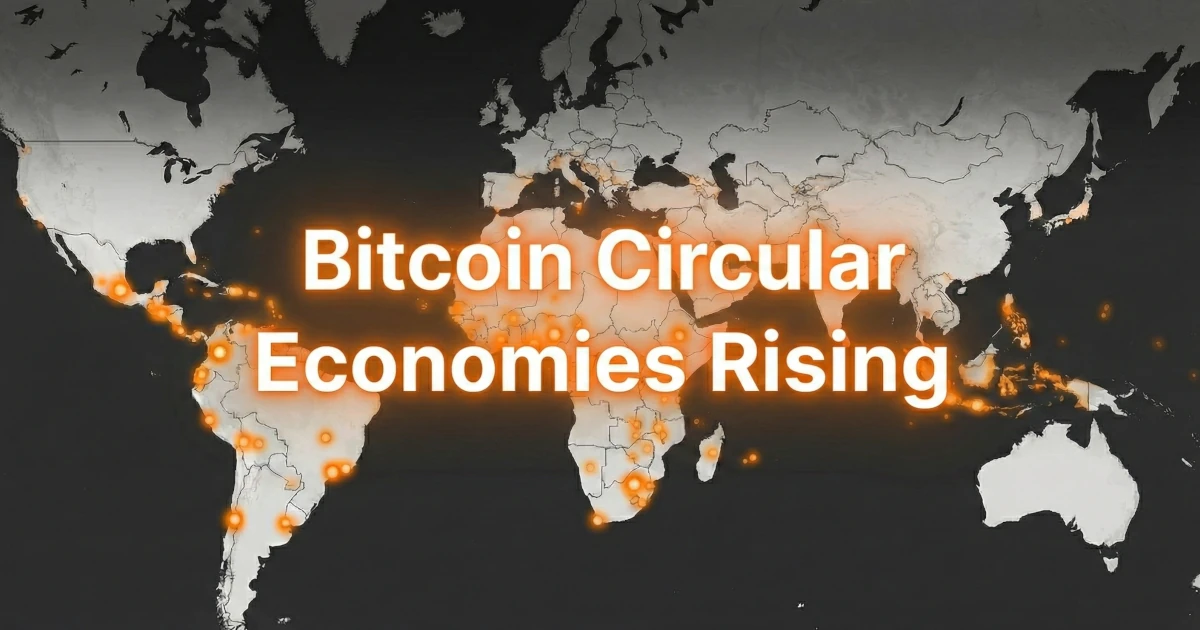
The Bitcoin Circular Economy Summit, an exclusive, invite-only event, recently concluded in El Salvador’s renowned Bitcoin Beach. The two-day summit brought together representatives from approximately 29 countries, including communities from Indonesia, Peru, Africa, and Bolivia, with a modest gathering of around 60 attendees and speakers. Organized by the dedicated Bitcoin Beach team, led by Mike Peterson and Roman Martinez, the event took place in El Zonte’s newly constructed community center, a testament to the area's growth and economic expansion. Discussions at the summit spanned a wide array of critical topics, from comprehensive overviews of various global Bitcoin Circular Economies (BCEs) to intricate debates on strategic implementation, essential tooling, financial sustainability, economic theory, and even leadership education focused on effective communication and fundraising.
Attendees shared compelling narratives of remarkable success in achieving brick-and-mortar Bitcoin adoption within nations grappling with failing traditional currencies. These accounts highlighted profound transformations, significant growth, and heartfelt gratitude from remote communities that felt overlooked by conventional civilization. The enduring hope and benevolent actions demonstrated by Bitcoin donors and activists, committed to extending the reach of sound money globally, were recurring themes throughout the event.
The summit heavily drew upon insights from the Bitcoin Beach White Paper, a document detailing the success story of El Zonte's Bitcoin Beach, which has evolved into a world-renowned brand and a leading example in the Bitcoin circular economy since 2019. Several key takeaways from this framework were discussed in depth, offering practical guidance for establishing and scaling BCEs:
Concentrate Adoption in One Location: Leaders strongly advised against a diffuse, "shotgun" approach to Bitcoin adoption, especially for physical businesses and deep social impact initiatives. The recommendation was to intensely focus efforts on achieving mass adoption within a confined area—be it a specific town, street, or community—before expanding. This concentrated strategy is believed to harness multiple network effects, similar to branding, by attracting more tourists who are likely to make Bitcoin payments. This increased transaction volume motivates merchants, fostering sustainable interest and adoption, unlike less organized attempts where Bitcoin spenders are infrequent. Concentrating the Bitcoin brand also leverages common marketing strategies where similar businesses cluster to benefit from collective advertising.
Build a High-Trust Team: Mike Peterson emphasized the importance of careful team selection, advising against rushing into relationships with unfamiliar individuals. He stressed that a small, highly trusted team is far more effective and less risky than rapid, unbridled growth, aiming to prevent individuals from becoming "single points of failure."
Bitcoin Not Crypto: The distinction between Bitcoin and other cryptocurrencies was a crucial point. While donations in various cryptocurrencies are often offered, speakers unanimously agreed on maintaining Bitcoin as the primary brand. This stance is driven by the widespread proliferation of crypto-related scams, particularly in low-income, low-education communities. Bitcoin's established reputation and global network of BCEs working on consistent educational themes make it significantly easier to address local leaders' concerns and educate the public about the most secure and successful digital currency available.
Communicate in Bitcoin, Not Dollars: Many BCEs benefit from Bitcoin donors, some anonymous, who impose simple yet powerful conditions. Bitcoin Beach’s founding donor, for instance, mandated that Bitcoin donations be used directly for purchases, not converted to fiat currency. Such donors, often Bitcoin maximalists, also insist that value be discussed in Satoshis (SATS) or BTC terms, rather than dollar equivalents (e.g., “20 dollars worth of Bitcoin”). This condition aims to firmly establish Bitcoin as a common unit of account and medium of exchange within these economies.
Sustainability emerged as another paramount topic, defined as the ability of a local Bitcoin hub to survive and grow even after donations cease. This complex issue delves into various aspects, potentially forming an economic theory for Bitcoin-powered microeconomies. The Bitcoin Beach team highlighted tourism as a vital source of external capital, though they acknowledged its unsuitability for all BCEs, particularly those in remote or politically unstable regions. While some BCEs might perpetually rely on donations, attendees also explored inter-BCE economic relationships. Motiv in Peru, for example, facilitates trade between an Indigenous artisan community in the mountains and a tourist hub in Lima, with goods exchanged in Bitcoin. Peterson underscored the importance of identifying unique community strengths and fostering local talent. Furthermore, sustainability in non-profit BCEs emphasizes "agency instead of assistance"—promoting education and economic empowerment over direct aid, embodying the "teach a man to fish" principle. Bitcoin economic theory suggests that imparting lasting life-skills is preferable to indefinite provision of "free stuff," recognizing the finite nature of Bitcoin donations, unlike the perpetually created fiat currency which can foster economic dependence through foreign aid. Personal sustainability for BCE leaders was also addressed, with Martinez and Peterson sharing personal experiences about avoiding burnout and training others to ensure the continuity of their vital work.
Effective fundraising is crucial for the non-profit aspect of Bitcoin circular economies. Various organizations and platforms contribute to this effort:
Paystand: An American B2B payments company, Paystand actively supports BCEs globally through its non-profit arm, offering grants ranging from $10,000 to $50,000. They donate through channels like the Human Rights Foundation and provide mentorship, with no expectation of advertising in return, viewing their support as integral to their mission as Bitcoiners.
Fedi: This for-profit technology company also provides grants to BCEs, initially focusing on Africa but now expanding into Latin America and establishing a strong presence in Indonesia. Fedi offers support on a case-by-case basis, aiming to empower leaders without deep involvement in specific communities. Their mature Fedi app features collusion-resistant multi-signature mints, ecash in Bitcoin and local fiat, social network capabilities, and payment rails.
The Federation of Bitcoin Circular Economies (FBCE): Co-founded by Bitcoin Beach, Bitcoin Ekasi (South Africa), and Scott Wolfe (Toronto), the FBCE offers grants to initiatives demonstrating sufficient proof of work, typically starting with smaller donations and scaling up.
Other Fundraising Platforms: Angor.io and Geyser.fund were mentioned as reliable crowdfunding platforms for BCE initiatives. Bittasker.com, a sponsor, presented a new platform for funding specific tasks and employing locals within BCEs, such as infrastructure upgrades or construction work, via a trustless smart escrow system on Rootstock.
The technological infrastructure enabling Bitcoin circular economies is diverse and constantly evolving, empowering BCEs with significant capabilities. Key tools frequently discussed and utilized include:
Blink Wallet: Having gained prominence with El Zonte’s Bitcoin Beach, Blink is the most popular wallet among BCEs. Its Lightning-native integration, on-chain capabilities, user-friendly mobile app, and stable SATS features offer an optimal experience for low-tech environments.
Fedi Wallet: With a strong presence in Africa and Indonesia, Fedi’s wallet provides a comprehensive suite of tools, including local fiat-denominated ecash, Lightning to ecash integration, and social network-like experiences tailored for BCEs.
Bittasker: This platform integrates with Nostr and utilizes Rootstock for smart contract capabilities, offering a trustless smart escrow system for funding micro tasks in Bitcoin. It also features a job board and uses the Boltz backend for trustless bridging between Bitcoin layers.
K1 BTMs: K1 Bitcoin ATMs, a summit sponsor, showcased their "coins for sats" BTMs, which have become integral to Bitcoin hubs, converting physical coins into SATS. These Lightning-native machines, available in various models, are deployed in schools, retirement homes, and BCEs globally.
Tiankii: Another sponsor, Tiankii, demonstrated its bolt cards—Bitcoin debit cards for tap-to-pay payments on terminals like the Bitcoinize machine. These cards are particularly valuable in areas with limited internet access, allowing users without mobile phones or data to access the Bitcoin network via a merchant's terminal, enabling offline digital payments.
Bitbooks.com: As a Bitcoin-native accounting platform, Bitbooks offers instant reconciliation, dual-currency views, automatic exchange rate calculations, and an experimental algorithm to guide users on whether to pay in fiat or Bitcoin based on price volatility and individual needs, ensuring clear financial management for fundraising initiatives.
AmityAge: A Bitcoin financial services company, AmityAge also provides strong educational offerings. Co-founder and CEO Dusan Matuska led an interactive workshop on overcoming common Bitcoin adoption objections, understanding new user challenges, and effective evangelization strategies. Their platform hosts a variety of educational and financial tools for those curious about Bitcoin.
The overarching sentiment from the Bitcoin Circular Economy Summit contrasted sharply with traditional industry conferences. Instead of focusing on integrating Bitcoin into conventional markets or serving major corporations, the summit championed a different direction. The collective experiences and stories shared by BCE representatives underscored that Bitcoin is not an end in itself, nor is it merely a high-tech pursuit or a speculative asset. Rather, Bitcoin is a powerful means to an end: to uplift those marginalized by traditional society, to include in global finance those beyond the reach of bank profit margins, and to deliver sound money, hope, and opportunities for growth to deserving individuals in challenging environments worldwide. The summit powerfully reaffirmed that Bitcoin's true purpose lies in its capacity to serve humanity, especially in its furthest reaches.