Global Power Players Bessent and Bukele Convene for High-Stakes Crypto Summit!
United States Treasury Secretary Scott Bessent and Salvadoran President Nayib Bukele met to discuss El Salvador's economic and cryptocurrency strategies, marking a shift in U.S. foreign policy towards digital assets. This collaboration comes after El Salvador amended its Bitcoin Law in early 2025, removing its mandatory legal tender status due to debt and low domestic adoption, yet the government continues its Bitcoin purchases.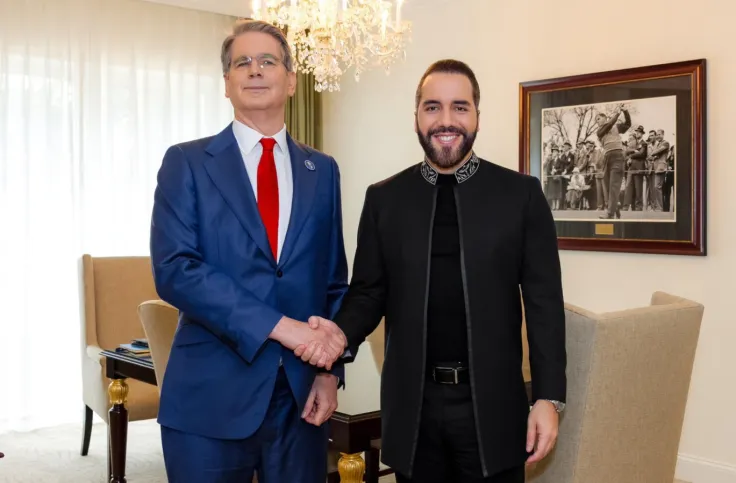
United States Treasury Secretary Scott Bessent and Salvadoran President Nayib Bukele recently engaged in a high-level meeting this weekend to deliberate on El Salvador's ongoing economic transformation and its unique cryptocurrency strategy. These bilateral talks were conducted on the sidelines of the significant "Shield of the Americas" summit held in Miami, Florida. Following the productive discussion, Treasury Secretary Bessent utilized the X platform to commend President Bukele's economic foresight, stating, "I was glad to hear more about President Bukele’s pro-market reforms for El Salvador and his efforts to make El Salvador a digital assets hub. We will continue to work together to advance strategies to strengthen our hemisphere." This meeting signals a notable shift in diplomatic relations and economic collaboration.
This recent interaction marks a significant departure from the typically frosty exchanges between U.S. government officials, international financial institutions, and President Bukele concerning Bitcoin under previous administrations. When El Salvador famously adopted Bitcoin as legal tender in 2021, it was met with repeated warnings from the U.S.-dominated International Monetary Fund (IMF), various rating agencies, and the then-U.S. administration. U.S. lawmakers even went so far as to introduce legislation aimed at mitigating potential risks to the American financial system. However, the current administration in the U.S. has adopted an aggressively pro-crypto stance, which is now visibly influencing its foreign policy.
Despite this newfound diplomatic warmth, El Salvador's journey with Bitcoin has not been without its challenges. In early 2025, the Bukele administration quietly implemented a major concession: an amendment to its historic Bitcoin Law. This decision was driven by mounting national debt and a desperate need for a $1.4 billion IMF loan. The move also came after domestic crypto adoption failed to gain substantial traction, with a 2024-2025 survey by the Public Opinion Institute of the Jesuit Central American University revealing that only "8 out of every 100 Salvadorans" actively used Bitcoin.
As part of these revisions, the Salvadoran government formally rescinded Bitcoin’s mandatory "legal tender" status. Furthermore, it agreed to limit the public sector’s direct involvement in crypto-related activities, signaling a more cautious approach to state-led digital asset initiatives. Notwithstanding these adjustments to its legal framework and public sector engagement, the Salvadoran government has continued its strategy of purchasing Bitcoin.