December Vote, December Doubt: Can South Sudan Actually Hold an Election?
South Sudan is preparing for its December 22, 2026 election amid political tensions, humanitarian crisis, and incomplete peace reforms. What will make the vote credible?
South Sudan has a date on the calendar for its next general election: December 22, 2026.
For a country that became independent in 2011 and has spent much of its short history moving between conflict, political agreements, and transitional arrangements, that date carries more weight than a normal election day. It is supposed to mark the country's first national election since independence.
But there is a reasonable question sitting behind the date: can South Sudan actually get to the ballot box, and can it get there in a way that allows people to vote freely, safely, and with confidence that their votes matter?
That question is not an accusation against the government or an assumption that an election cannot happen. It is simply the question any country approaching such a consequential vote should be able to answer.
A Date Has Been Set, But the Road Has Been Long
Image credit: ISS Africa
To understand why December matters, you have to go back a little.
South Sudan's independence in 2011 was followed by civil war in 2013 between forces aligned with President Salva Kiir and his political rival, Riek Machar.
A 2018 peace agreement created a transitional government and laid out a route towards elections, constitutional reform, security-sector integration and a return to permanent political institutions. But those milestones repeatedly slipped, and the transition was extended again in September 2024, moving the planned election from December 2024 to December 2026.
Then came another difficult chapter. Machar was placed under house arrest in March 2025 and later faced trial on charges including treason and murder, which he denies. Political tensions and renewed violence have continued in parts of the country, while the implementation of the 2018 peace agreement has remained incomplete.
Yet preparations for an election have continued. In September, the National Elections Commission said it was training state-level election committees ahead of voter registration, while the government has continued to insist that the December vote will proceed.
And then, in late September, President Kiir signed amendments removing the previous requirements for a permanent constitution and national census before elections could be held. He subsequently dissolved the transitional government. The changes clear some legal obstacles to December, but they have also drawn opposition from political groups that say the amendments were not sufficiently agreed upon among the parties to the peace process.
So yes, South Sudan is moving towards an election. The more difficult question is what kind of election it can produce.
Can People Vote When They Do Not Feel Safe?
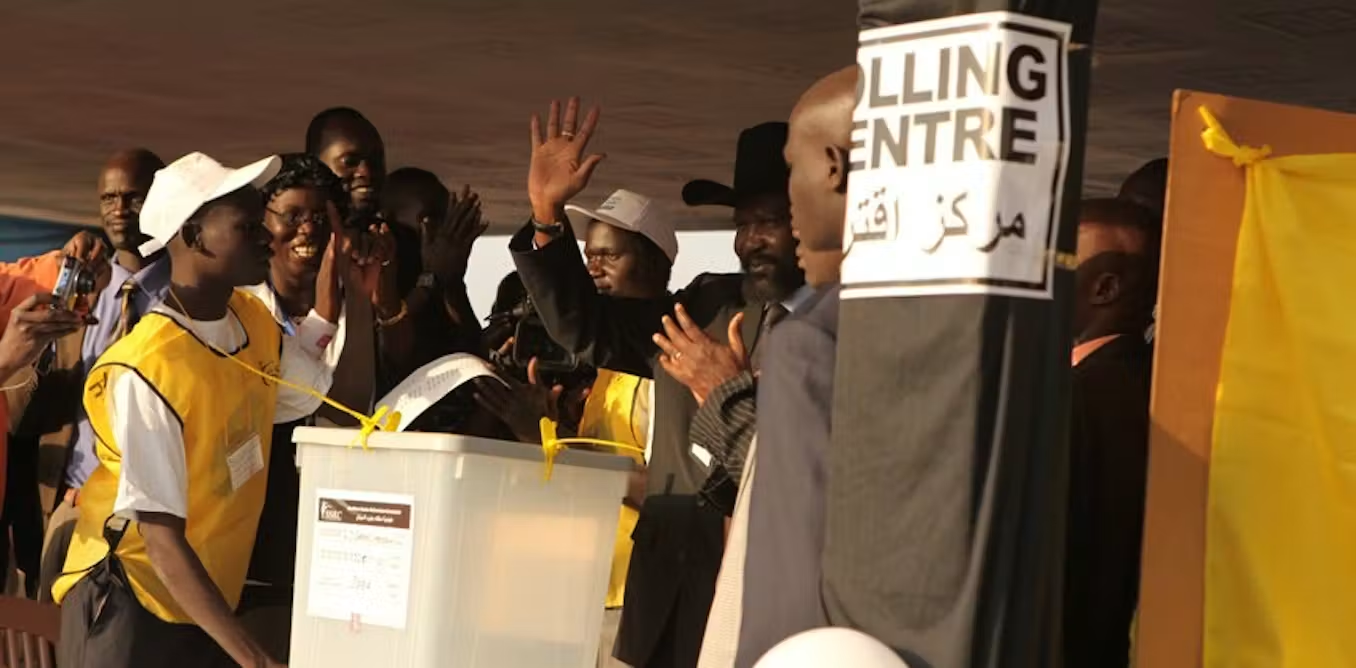
Elections are usually discussed through laws, ballots, registration centres and electoral commissions. But there is something more basic underneath all of that: people need to feel safe enough to participate.
That becomes complicated in South Sudan.
The country is facing overlapping political, security, economic and humanitarian pressures. The UN reported that more than 2.5 million people were internally displaced in 2026, while food insecurity has reached extraordinary levels. A joint FAO, WFP and UNICEF assessment found that 7.8 million people, or 56% of the population, faced high levels of acute food insecurity between April and July 2026, with tens of thousands facing catastrophic conditions.
Then there is the question of whether political competition itself can happen freely.
The African Union has repeatedly called for the implementation of the peace agreement, inclusive dialogue and credible elections. In August 2026, the AU Peace and Security Council called for credible elections by December without another extension of the transition.
The United Nations has also warned that critical questions remain unresolved, including political consensus, security, participation and confidence in the electoral process. Its position is not that an election is impossible; rather, the conditions surrounding it will determine whether the result is accepted as credible.
That is the heart of the matter.

A ballot can be printed. A polling station can be opened. A voter can put a thumbprint on paper.
But an election becomes meaningful when citizens believe they can participate without fear of instability in their nation and that their choice will count.
December Could Become More Than an Election Date
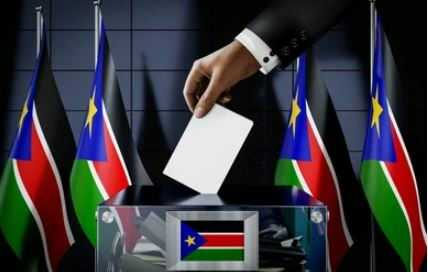
There is another way to look at South Sudan's December vote. It could become a turning point in the country's national history.
South Sudan has spent much of its existence trying to move from liberation to statehood, from war to peace and from transitional government to permanent institutions. An election that is broadly accepted by political actors and citizens could help move that story into another chapter.
But that is precisely why the process deserves attention beyond Juba.
The African Union, neighbouring countries, IGAD, the United Nations and international partners all have an interest in what happens because South Sudan's political instability does not exist in isolation. The conflict in neighbouring Sudan has already pushed refugees and returning South Sudanese across the border, adding pressure to communities and humanitarian systems inside the country.
There is also a practical issue. The National Elections Commission itself recently clarified that voter registration had not yet begun, and that a registration date, including approved centres, would be made known through official channels once preparations are complete. With December 22 approaching, the timetable is therefore extremely tight.
None of this means the election should be dismissed before it happens. It means the world should watch what happens between now and December.
Will political actors be able to compete without violence? Will displaced citizens have meaningful opportunities to participate? Will voter registration reach eligible citizens? Will election officials have the resources and independence required? Will the political class accept the result if it does not produce the outcome they want?
And maybe the most important question: will ordinary South Sudanese believe that their vote is worth the risk of casting it?
Because for a country that has spent years trying to build peace, the December election cannot simply be about counting ballots.
It has to be about whether South Sudan can finally convince its citizens that politics can be settled at the ballot box instead of somewhere else.