Common's Vision: The Path to Global Transformation Revealed
Multi-talented artist Common discusses his expansive three-decade career, detailing how his journey through music, acting, and activism is united by a relentless pursuit of truth and lasting impact. He shares insights into his evolving role as Robert Sims in Silo Season 3 and reflects on the profound influence of his mother on his commitment to community and creating access for others.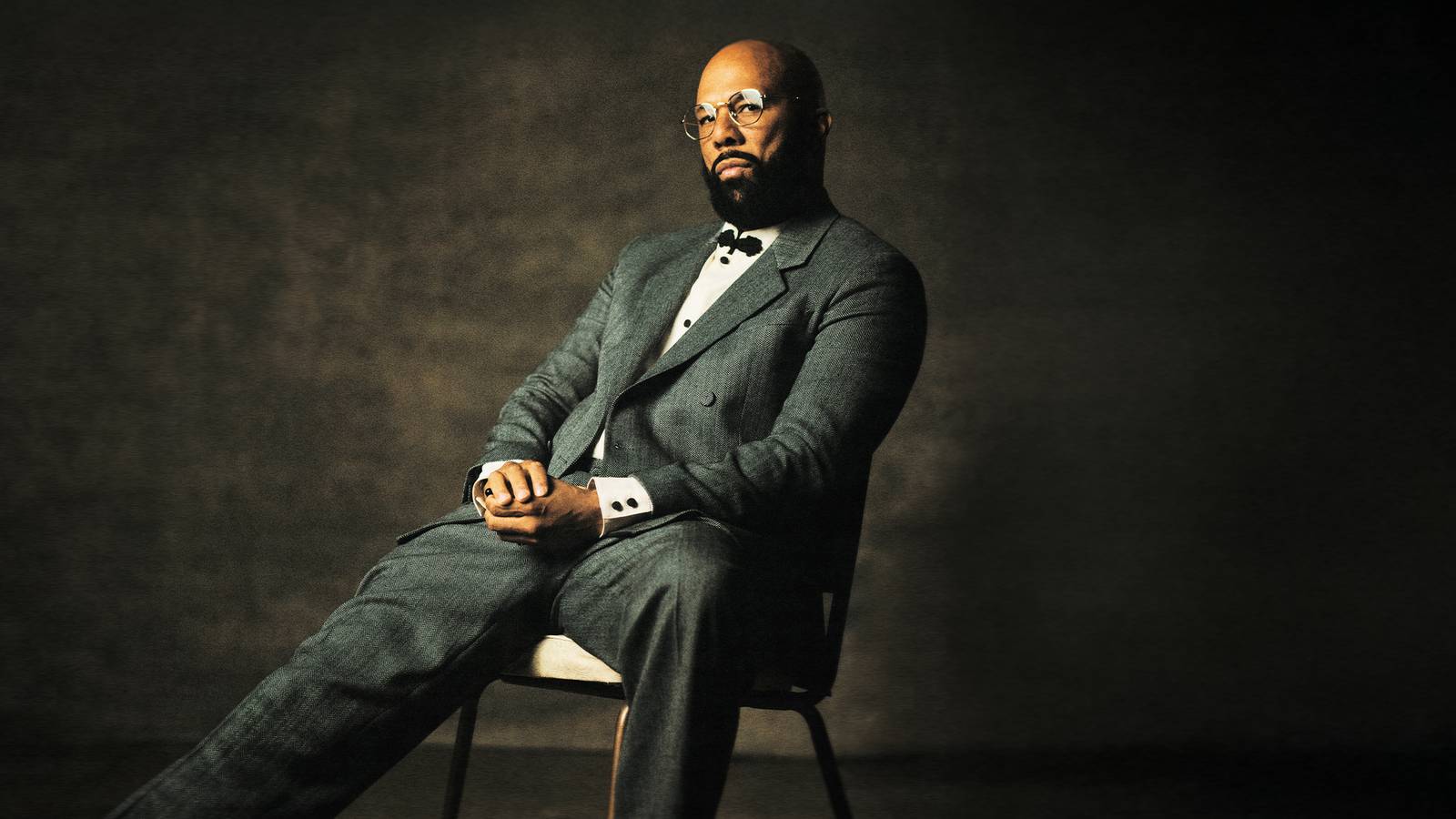
Common, a celebrated artist with a career spanning over three decades, has consistently defied expectations by embracing various artistic and humanitarian endeavors. From his origins as a Grammy-winning rapper to his impactful roles in film and television, writing, and dedicated activism, his journey is marked not by reinvention for its own sake, but by a continuous pursuit of work that resonates deeply and feels authentic. His commitment to creating art that feels 'lived in' is a thread that runs through all his projects, including his recent portrayal of Robert Sims in Apple TV’s sci-fi series, Silo.
Reflecting on his artistic beginnings, Common emphasizes that his initial drive stemmed from a profound love for music and art, a passion he poured his soul into as both a creator and a fan. He soon discovered the immense power of art through the resonant responses of his audience. 'It was more about the way people responded to the music, that light that I could see in their faces when they were at the shows, the conversations I would have with people about the music. And I think from that point, I realized the power of art; I saw what art can be,' he states. This insight highlights his focus on lasting impact over fleeting commercial success, drawing parallels to fictional groups like The Flamekeepers in Silo who work to preserve truth.
Common’s musical career exemplifies his willingness to take risks and adhere to his artistic truth. Following the commercial success of his 2000 album, *Like Water for Chocolate*, and the hit single 'The Light,' he chose a bold new direction with *Electric Circus* in 2002. Inspired by diverse artists like Pink Floyd, Jimi Hendrix, and Radiohead, he sought to interpret these sounds through his unique perspective as a Black man from the South Side of Chicago. This experimental approach initially met with resistance from critics and hip-hop audiences, resulting in a 'tough time.' However, *Electric Circus* has since been re-evaluated and is now celebrated as a cult classic, lauded for its innovation and creativity, proving that true art often requires time for its impact to be fully appreciated.
His quest for artistic freedom led Common to acting, an unexpected path where he found a similar sense of liberation. He describes his first acting class as a profound realization: 'Wow, I feel that freedom. This is what it should be. This is what I believe God wants me to do, also.' This passion culminated in his five-season tenure on AMC’s *Hell on Wheels*, portraying the complex character of Elam Ferguson. Common considers this experience a 'great college,' teaching him the discipline of consistent work and the art of character immersion over an extended period. Unlike film where the character's arc is often known from the outset, television demanded an openness to the journey, allowing the character to evolve with each season based on both the writing and the actor's contributions.
In his role as Robert Sims in Apple TV’s *Silo*, Common continues to explore multifaceted characters. Having spent two seasons as an intimidating enforcer for Judicial, Season 3 marks a significant turning point, revealing the human being beneath the imposing exterior. The character, initially defined by his sharp attire and quiet evil-henchman energy, now grapples with profound internal questions. Common emphasizes that Sims is not losing power, but rather certainty, as his long-held beliefs are challenged, particularly by his wife, Camille. This season delves into the emotional complexities of a man caught between his duty and personal doubts, trying to maintain order while his foundational certainties crumble.
The adaptation's brilliance, according to Common, lies in its refusal to paint Robert as a simple hero or villain, instead focusing on his humanity. He describes Sims' struggle to protect his son and preserve his marriage amidst unraveling certainties, forcing him to confront a range of emotions and question his own identity. The dynamic with Alexandria Riley’s Camille is crucial, as their differing conclusions on the path forward create emotional weight without malice, signifying growing uncertainty rather than outright conflict. This internal turmoil also shifts Robert’s perception of Rebecca Ferguson’s Juliette; initially seen as a threat, Juliette becomes a figure of wonder and respect, especially after her unprecedented return from cleaning. Common notes that Robert begins to see that 'what she’s been fighting for may not be wrong,' leading to nuanced and 'life-filled' scenes between them as they unknowingly search for a common truth.
Common identifies intriguing similarities between Elam Ferguson and Robert Sims, despite their ostensibly different roles – one fighting an unjust system, the other protecting it. He initially felt disconnected from Sims' authoritative nature but observed a transformation. 'Elam had to fight against that. He had to buck the system in Hell on Wheels early because he was a Black man in the 1800s. But Robert discovered that this system that he was fighting for or standing up for, there’s no truth in that. So now, he is becoming closer to what Elam is in that way,' Common explains. This evolution reveals a shared human quest for truth and justice, and a deep-seated compassion that remains even amidst hardship, a quality Common strives to infuse into all his characters.
Common views his career as an ongoing educational journey, with each experience contributing to his evolution. He embraces all his past 'eras,' from early struggles opening for KRS-One to triumphs like collaborating with Prince after 'The Light.' His curiosity remains undimmed by success; he diligently observes and learns from Hollywood legends like Denzel Washington and Ruby Dee on set. Equally profound are the lessons drawn from less conventional sources, such as conversations with incarcerated individuals or witnessing a prisoner teach himself piano on cardboard. These diverse experiences reinforce his belief in continuous growth and inform his contributions through non-profits like Imagine Justice, Common Ground Foundation, and Free to Dream.
A cornerstone of Common’s philosophy and commitment to impact is his mother, Dr. Mahalia Ann Hines, a respected educator. Her selfless acts of caring for students and family, providing meals or helping with jobs, instilled in him a deep sense of community service. Common explicitly states that his mother laid the foundation for his call to action, which he later expanded through his artistry. He passionately discusses his role as a 'connector,' leveraging his success – including winning an Oscar – to create opportunities for others. This includes initiatives like a '10,000-job initiative in Chicago,' introducing young people to diverse careers in fields like film production, underscoring his dedication to fostering access and structural support for those with high potential but limited opportunities.
Ultimately, Common's multifaceted career converges on a singular driving force: purpose. He aims to be as impactful, inspiring, and life-changing as an actor and storyteller as he has been as a musician. This involves mindful project selection, ensuring each endeavor resonates with his core values. He dismisses formulas, attributing his blessings to a combination of conscious application of purpose, connection to a higher power, and an unwavering commitment to truth. For Common, art is not merely to be consumed or created; it is a profound way to 'give to the planet,' to spread joy and love, and to see the divine in all human beings. His legacy, he hopes, will be defined by the love, purpose, and spiritual connection he poured into every facet of his work, serving as a conduit for 'the love of God.'