Chaos in Nigerian Skies: Max Air Flights Halted Over Massive Debt
Nigeria's Aviation Ground Handlers Association (AGHAN) has suspended services for Max Air's domestic operations due to approximately N1 billion in unpaid debts. This action, prompted by Max Air's alleged refusal to negotiate, highlights critical financial challenges and the need for commercial discipline within the Nigerian and broader African aviation sector, though Hajj operations remain unaffected. Travel professionals are advised to diversify airline relationships amidst potential disruptions.
Nigeria's aviation sector is facing significant disruption as the Aviation Ground Handlers Association of Nigeria (AGHAN) has moved to suspend ground handling services for Max Air, effectively grounding the airline's domestic operations nationwide.
The action, which took effect yesterday, effectively grounded the airline’s domestic operations nationwide, marking the first major enforcement move by the association against defaulting airlines.
According to AGHAN Chairman,Mr. Olaniyi Adigun,said the decision became necessary following Max Air’s refusal to engage with the handling companies on the reconciliation and settlement of outstanding indebtedness.
Despite repeated attempts by ground handling companies to facilitate an amicable resolution, Max Air failed to respond, leaving the handlers with no alternative but to withdraw their services.
In contrast, other indebted airlines have reportedly initiated negotiations for structured repayment plans.
Max Air's indebtedness to Nigeria's two primary ground handling firms, Skyway Aviation HandlingCompany (SAHCO) and the Nigerian Aviation Handling Company (NAHCO), is estimated to be approximately N1 billion.
Mr. Adigun emphasized that this drastic measure serves as a clear industry-wide message: ground handling companies can no longer provide services without timely payment.
He noted that while some other debtor airlines are nearing the signing of Memoranda of Understanding (MoUs) regarding repayment terms, Max Air's continued silence forced AGHAN's hand.
The AGHAN Chairman highlighted that its members incur considerable operating costs, including maintaining specialized equipment, employing trained personnel, and ensuring round-the-clock operations, all of which depend on carriers fulfilling their financial obligations.
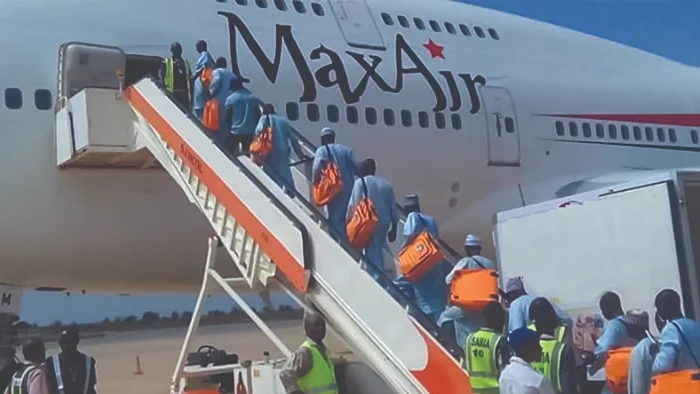
Crucially, Max Air's ongoing Hajj operations have been explicitly exempted from the suspension.
Mr. Adigun clarified that handling charges for Hajj flights are paid directly by the National Hajj Commission of Nigeria (NAHCON), thereby ensuring that pilgrim movements between Nigeria and Saudi Arabia remain uninterrupted.
This exemption underscores the religious and humanitarian significance of the Hajj season.
This development follows months of escalating tensions between airlines and ground handlers, with AGHAN consistently warning that persistent non-payment endangers the sustainability of ground handling operations and the broader efficiency of Nigeria's aviation industry.
Ground handling services encompass a range of critical tasks required for aircraft turnaround at airports, including baggage handling, passenger boarding assistance, ramp services, aircraft cleaning, and cargo loading.
Without these indispensable services, no airline can operate, regardless of its fleet or network strength.
For Africa's travel industry, this episode offers several vital lessons. Firstly, it exposes the inherent fragility of airline-supplier relationships in markets frequently challenged by financial pressures, currency volatility, and high operating costs.
Travel agencies, corporate travel managers, and tour operators coordinating domestic flights within Nigeria must remain vigilant to such potential disruptions, especially when planning itineraries with tight connection windows or critical business engagements.
Secondly, the situation underscores the urgent need for enhanced commercial discipline and transparency across African aviation.
While the continent's carriers navigate challenging operating environments, sustainable growth is predicated on healthy and reliable partnerships across the entire value chain, from fuel suppliers and maintenance providers to ground handlers, airport authorities, and regulators.

A breakdown in any link of this chain inevitably creates ripple effects, impacting passengers, businesses, and the wider economy.
Thirdly, this development reinforces the importance for travel agencies serving Nigerian and West African clients to cultivate diversified airline relationships.
With Max Air's domestic operations now significantly impacted, travelers are likely to shift to alternative carriers such as Air Peace, Ibom Air, United Nigeria Airlines, ValueJet, and Arik Air, potentially straining existing capacity.
Travel professionals are advised to maintain robust working relationships with multiple carriers to ensure service continuity for their clientele.
Efforts to obtain an official response from Max Air were reportedly unsuccessful at the time of reporting.
As Nigerian aviation continues to navigate complex financial and operational realities, there is an industry-wide hope that constructive dialogue will prevail, debts will be settled, and essential services will be restored.
For the sub-Saharan African travel sector, the overarching message is clear: the continent's aviation future hinges not solely on aircraft, airports, and routes, but equally on the financial health, commercial integrity, and collaborative spirit that binds the entire ecosystem together.