BBC's Blunders Can't Stop 'I Swear' From Being a Must-Watch!

Published 2 hours ago3 minute read
BBC's Blunders Can't Stop 'I Swear' From Being a Must-Watch!

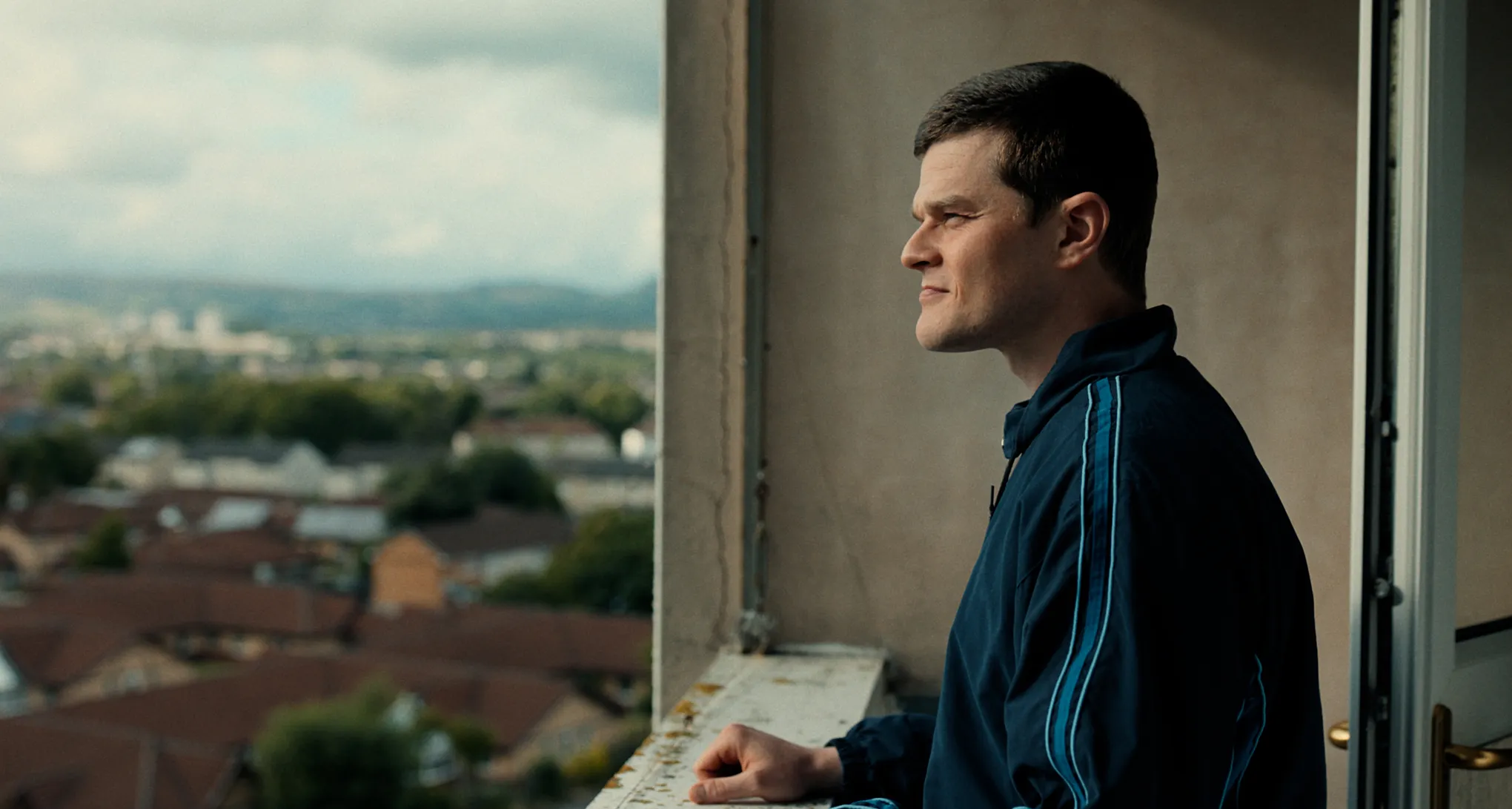
“I Swear,” directed by Kirk Jones, stands as a poignant feel-good biopic charting the life of John Davidson, lauded for its narrative of resilience and triumph against daunting odds. The film not only garnered significant critical acclaim but also earned its star, Robert Aramayo, the Best Actor award at this year’s BAFTAs, the most prestigious accolades in the British Film Industry. This recognition adds a compelling meta-epilogue to Davidson's inspiring journey, celebrating his extraordinary strength and the film's powerful storytelling.

The movie meticulously details Davidson’s life, spanning from his challenging teenage years in 1983 Glashiels, Scotland, through to his profound achievement of receiving an OBE (Officer Of The Most Excellent Order Of The British Empire) in 2019 from the Queen. This prestigious honor was bestowed upon him for his invaluable contributions as an activist, dedicated to educating institutions across the U.K. on Tourette Syndrome. A notable moment during the ceremony involved Davidson's condition leading to an involuntary outburst of “Fuck the Queen” upon his entrance, an incident met with understanding for his Tourette’s, contrasting sharply with the immense prejudice and struggles he endured throughout much of his life.

Davidson’s early years were characterized by relentless bullying from both fellow students and teachers, brutalization by strangers who misinterpreted his tics, and the deep sorrow of abandonment by his parents. A pivotal turning point occurred during a chance encounter with an old school friend whose mother, a mental health nurse (portrayed by Maxine Peake), provided him with a much-needed supportive home and a newfound sense of family. This crucial intervention laid the groundwork for his eventual advocacy work.

“I Swear” distinctly aligns with the British cinematic tradition of examining grim social issues through a comic lens. The U.K.’s cultural sensibility often eschews overt earnestness, preferring to tackle dark subject matter such as poverty, homophobia, and domestic terrorism with an underlying thread of humor. This approach is evident in beloved British properties like “Brassed Off,” “The Full Monty,” “Pride,” and “Four Lions,” reflecting a national character that often maintains a 'stiff upper lip,' where pain is seldom articulated plainly without a light dose of mockery. As John Davidson of “I Swear” candidly admits, living with Tourette’s is “a cruel and devastating thing,” yet it can, in the right context, also be “pretty blimmin’ funny.”

Beyond its comedic elements, the film’s true emotional core resides in the adult Davidson’s struggle with two conflicting impulses: an intense yearning for an ordinary existence and the harsh realization that normalcy is perpetually beyond his grasp. Robert Aramayo brilliantly embodies this contradiction, portraying Davidson with a “jittery, self-sabotaging energy” as he continually attempts, yet invariably fails, to blend into society. The narrative’s suspense is heightened by the unpredictability of the catastrophes that await him, which range from merely cringe-inducing incidents, such as inadvertently telling a prospective employer he ejaculated in the tea, to genuinely alarming encounters, like provoking a group of angry drunks wielding crowbars.

While the film’s opening sequence reveals Davidson’s eventual triumph in receiving the OBE, suggesting a glorious conclusion, the text notes that “a far more unfortunate narrative has emerged off-screen” between the film’s British release in October 2025 and its subsequent U.S. screens, adding a complex and unresolved layer to its reception.

Loading...
Loading...
Loading...

You may also like...