Anthropic Says Its Most Powerful AI Won’t Be Released And That Raises Bigger Questions
Anthropic confirmed the existence of Mythos, an internal AI model deemed too powerful for public release due to cybersecurity risks. Claude is leading the AI race, but the Mythos story raises serious questions about transparency, safety, and who decides what the public gets to access.
Claude is having a moment in the current age of AI chatbots and assistants powered by Large Language Models (LLMs). This is not to be argued or debated, it's the observable reality of the current AI landscape.
The model built by Anthropic, a company that has only existed since 2021, is moving faster than almost any other product in the space.
Different features are being shipped in weekly by the company and the user base has been growing monthly.
Developers are building entire workflows around it. At the recently concluded Human x AI Conference, Claude was one of the most referenced tools in the room, with practitioners across industries citing it as the closest thing to a genuine reasoning engine the market currently offers, not software that executes tasks, but software that thinks through problems.
The praise is warranted. What isn't warranted is the assumption that warranted praise means the questions stop.
The Model They Built but Won't Release
A software update from Anthropic recently exposed a significant volume of internal source code, the kind of accidental transparency that rarely happens at this level of a company.
A researcher found it, published a blog post, and 21 million people read it in under three hours. Buried in those files was a reference to an internal AI model called Mythos, a model Anthropic had never publicly acknowledged.
When pressed, Anthropic confirmed that Mythos exists. They also confirmed they will not be releasing it. Their stated reason: it is too capable in certain areas, particularly cybersecurity, and therefore carries too much risk for general public use.
Access, they say, is being limited to controlled environments as they work with a number of governments and institutions.
Now, take that at face value for a moment. A company whose entire public positioning is built around responsible AI development built a model so potent in cybersecurity applications that it deemed its own creation too dangerous to ship.
That's either a remarkable act of restraint or the most interesting marketing story in tech this year. Possibly both.
RELATED ARTICLE:Claude Might Be the Next Big Thing in AI, And the Shift Is Happening Already
The concern isn't cynical for its own sake, it's structural. Anyone who has worked inside a serious software environment knows how meticulous the review and approval processes are before anything ships, let alone at a company like Anthropic, where the entire brand promise is ethical development and safety-first deployment.
The idea that Mythos slipped through those layers unintentionally raises a question that deserves more than a press statement: how does something like that happen, and what does it say about what else might exist that we haven't accidentally seen yet?
Power Without Accountability Is Still a Risk
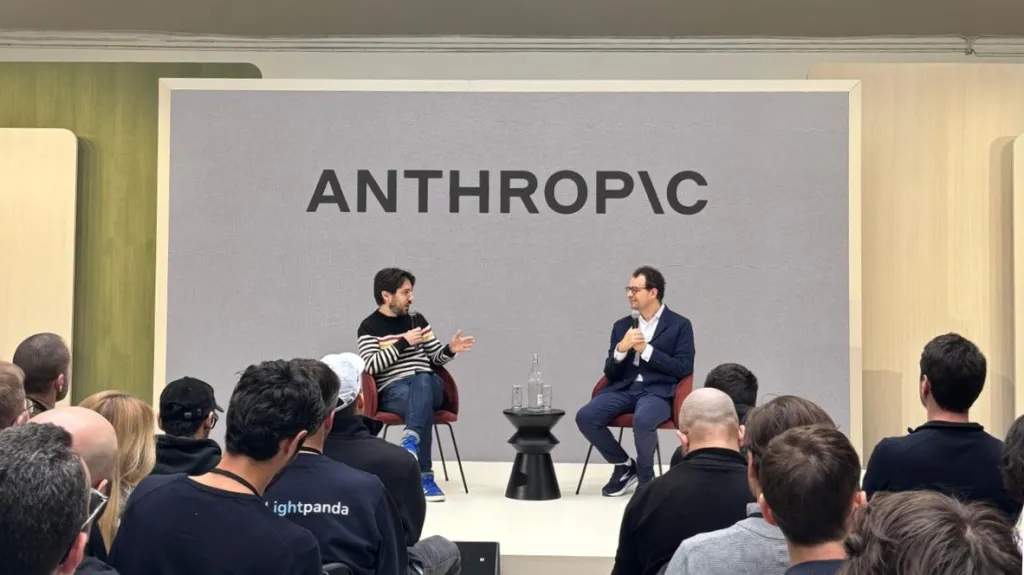
Here's where the issue needs to be really scrutinized. Claude is genuinely excellent.
The reasoning capability, the depth of contextual understanding, the way it handles complex multi-step problems, these aren't marketing claims, they're demonstrated performance.
The fact that Anthropic is working with governments and institutions on controlled access to Mythos is not automatically alarming. Sensitive technology requiring restricted access is not new.
But the AI industry right now carries one of the most sophisticated marketing machines in the history of technology.
Every reveal, every "accidental" disclosure, every safety announcement exists inside a media ecosystem that amplifies and shapes narrative at extraordinary speed.

Whether Mythos represents a genuine safety pause or a strategic positioning play for government contracts or both simultaneously matters less than the underlying principle it surfaces: the public has almost no visibility into what the most powerful AI companies are actually building behind closed doors.
AI systems are now writing legal briefs, diagnosing diseases, designing semiconductors, managing supply chains, composing music, and generating code, at a scale that was considered science fiction a decade ago.
That's the momentum where this technology operates. Claude and models like it aren't just tools, they're infrastructure. And infrastructure of that scale, particularly when it includes capabilities that its own creators describe as too dangerous to release, deserves scrutiny proportional to its power.
Anthropic deserves credit for the work. Claude is exceptional. But exceptional doesn't mean unquestionable. The right response to a company revealing it built a model too powerful to release isn't awe, it's a follow-up question.
Who is using Mythos? Under what terms? With what oversight? And if the answer to those questions exists only in rooms the public isn't invited into, that's worth sitting with the next time you open the app and assume the whole picture is visible.