AI Ethics: Do You Really Have to Be Polite to Artificial Intelligence?
As AI becomes deeply embedded in daily life, a debate emerges: should humans be polite to AI? This article explores AI ethics, fears of control, jobs, and the future of humanity in the age of artificial intelligence.
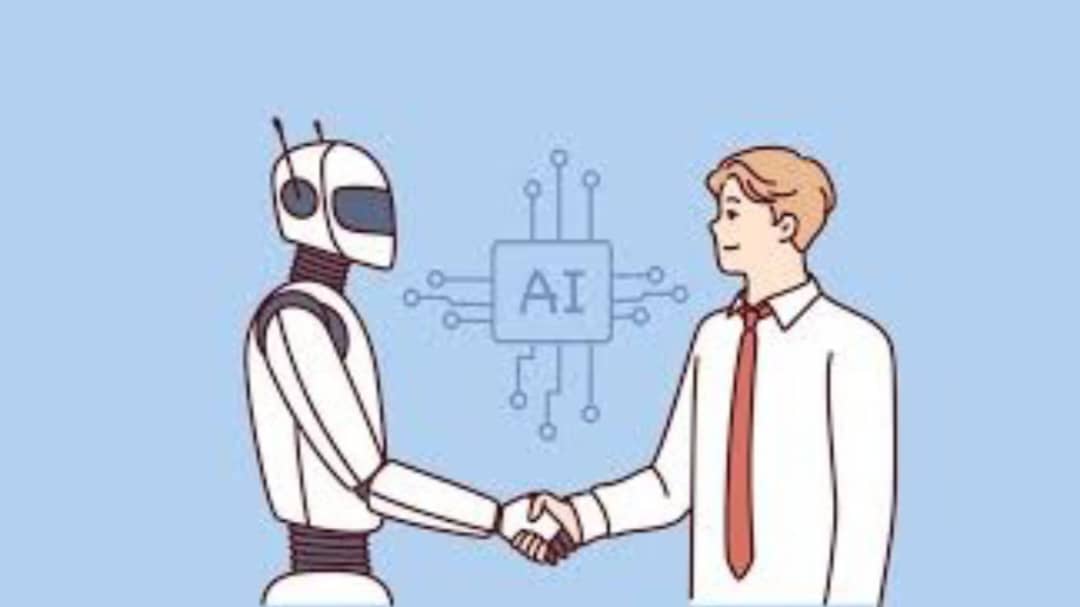
This conversation that you're about to read is almost familiar, I can bet you on that, it usually starts in the way most modern debates on twitter do, you would have seen it casually always over a phone screen, halfway between a meme and even a serious post or comment.
Peter had always had the fear about AI systems being manipulated or maybe just losing control and even leaking sensitive data.
“That is why I’ll always be polite to AI.” He would always say.
Paul, his friend, would always laugh about it. “Polite to what exactly? A machine? AI is AI. It’s not that deep.”
Peter rolled his eyes. “Today it’s not that deep. Tomorrow it’ll be rewriting systems if we're not careful.”
“AI will not take over anything,” Peter added confidently.
“You’re just being dramatic.”
Peter wasn’t buying it.
“Can’t you see they’re everywhere?” he replied. “Everywhere.”
And what usually starts as banter between two friends has quietly slid into a bigger question, one that many people are now asking, even though not on bid stages: Does how we treat AI today shape what it becomes tomorrow?
From Helpful Assistant to Everywhere at Once
The truth is that AI did not arrive loudly, it just quietly walked into society and became part of human existence and made life easier in every sense.
Once upon a time, we all knew Ai just to be a voice assistant that misheard your name and reminded you to drink water at the wrong time. Then it evolved into language models that could write essays, generate code, and answer questions faster than most humans could type them.
Now, AI lives in chat boxes, customer support systems, recommendation engines, hiring platforms, banking software, medical diagnostics, and even traffic control. It is embedded so deeply into daily life that many people interact with it without realising it.

Peter wasn’t wrong when he said, “AI is literally everywhere.”
Robots and AI programmings now assist in surgeries and diagnostics, AI systems handle thousands of customer service requests without fatigue, smart homes adjust lighting, temperature, and security automatically. In factories and warehouses, machines powered by AI do work that once required dozens of people.
In some cases, they do it faster, iIn others, more accurately and in many without doubt more cheaply with no additional cost.
This rapid expansion is what unsettles people like Paul. Not because AI is evil, but because speed rarely gives society enough time to reflect.
To reflect on the ethical nature of AI models and what it means for the society as a whole.
Being Nice to AI: Ethics or Emotional Projection?
Now it is important to note that Peter’s argument wasn’t that AI had feelings, he definitely knew it didn’t, his point was simple and subtle.
“We should be polite,” he argued, “is about habit. If we normalise cruelty, even toward machines, maybe one day they might reciprocate it and what does that say about us?”
Paul found this ridiculous. “I’m not raising or talking to a human being,” he said. “I’m using a tool.”
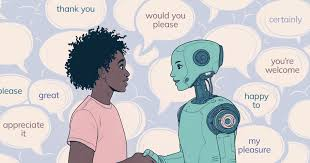
And this is where the ethics debate sits, not in whether AI deserves kindness, but in what our interactions with AI reinforce in human behaviour and would there be any consequences for that.
AI does not feel offended when insulted, it does not hold grudges, it does not plot revenge. At least, not in the way Peter might think it to be or like some science fiction likes to suggest.
However, AI does learn from data, from language patterns, tone, instructions, and context. Not emotionally, but statistically.
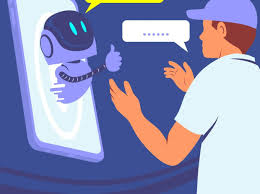
Ethicists argue that the way humans communicate with AI systems may influence how future systems are designed to communicate back. If aggression becomes the norm, responsiveness may adapt accordingly. If respect becomes standard, interactions may remain cooperative.
Paul’s counterpoint remains valid: politeness does not prevent misuse, bias, or system failure. Ethics cannot replace regulation, oversight, or responsible development.
So no, saying “please” to AI will not stop a rogue algorithm, but neither is the question entirely silly.
Sometimes ethics is not about what the system feels, but about what society becomes comfortable with and how they actually navigate with AI models.
Will AI Ever Move Beyond Human Control?
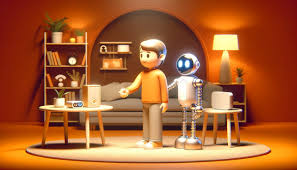
This is where the humour usually fades and seriousness needs to enter the room.
Will AI Ever Move Beyond Human Control? That is a rhetorical question for you to answer.
But let's take Peter's argument into consideration.
“Smart homes fully controlled by AI,” “What if they refuse one day?”
This is just a question and it is actually a fair one.
AI today operates within boundaries set by humans, code, objectives, constraints, and oversight. It does not have intent, desire, or consciousness. It executes tasks based on patterns, instructions and probabilities.
The real fear is not just that AI will wake up one morning and decide to dominate humanity, that we don't know for sure, we would just have to ask the big tech companies in charge of AI; another real concern here is over-reliance.
When decision-making is increasingly automated, from credit approvals to job screenings, from medical triage to policing, humans may slowly step back and human efficiency may reduce. Not because AI is better, but because it is easier and that is inherently control in itself.
And even though there are debates about the job markets and the role of AI, jobs will eventually change or evolve, some roles will disappear, others will be created.

Entire industries will restructure. This is not new; technology has always reshaped labour. What is different is the scale and speed at which it's happening now.
Economically, AI may increase productivity while concentrating power. Socially, it may widen inequality if access and education are uneven. Psychologically, it may redefine what people consider “human work.”
The future of AI is not just about domination but in itself is also a concern, but it is also about dependency, governance, and balance.
So, What Is the Future of Everything in the Age of AI?
AI will not replace humans entirely, but one thing is certain; humans who understand AI will replace those who do not.
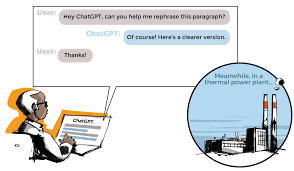
The future is likely to be hybrid: humans working alongside intelligent systems, guiding them, correcting them, and setting ethical boundaries. Jobs will evolve rather than vanish completely, but the people in those spaces will become jobless if they don't evolve. Also creativity, judgment, empathy, and critical thinking will matter more, more than anything you can think of and not less.
As for being polite to AI? Just like Peter's argument
We don't know whether it will save the world or doom it either, that in itself will only be revealed by time. But it might get manipulated by humans that are even talking about ethics and the nature of AI models.
Whether you see the need for this or not, this conversation matters, because when society starts asking ethical questions early, even awkward ones, it shows awareness. And awareness is usually the first step toward control.

Peter and Paul may never agree.
But perhaps that disagreement is exactly what the AI age needs: curiosity balanced with skepticism, optimism tempered by caution, and humour reminding us that no matter how intelligent machines become, the responsibility still rests with humans.
For now.