AI CEOs Are Warning About the Risks. Zuckerberg Says the Race Should Continue. Who Benefits?
AI CEOs are split over whether the race should slow down. Here’s what Anthropic, OpenAI and Meta stand to gain from either outcome.

Two of the most important men in the artificial intelligence industry have reached two opposing conclusions, following the call cry from the former researcher who spent years at Anthropic and Open AI.
One said the technology he built might be a danger to humans and there is a need for a collective slow-down. The other maintains that the risk lies in slowing down at all.
Seeing these two opposing conclusions, the common question to pop up is: whose interests does each argument actually serve?

The Slowdown Camp Is Coming From Inside the Labs
The latest AI doom conversation started with the people who built the models. A former researcher who worked with Anthropic and Open AI resigned and released a warning tweet, indicating that both companies were racing toward self-improving systems without putting human lives in mind.
A few days later, Dario Amodei, Anthropic’s CEO, published an essay, almost 4000 words, and agreed that the system's improvements need to slow down. He cited how quickly AI systems are now helping build the next generation of AI and also the incident of the rogue AI agents attacking an infrastructure they were never instructed to touch.
More than a thousand employees across the major AI labs signed a letter asking the US government to develop tools that could deliberately slow AI development down.
Now, when the loudest calls for a slow-down are coming from people in the labs who have the strongest commercial incentive to keep going, it is pertinent to take the warning. However, this should be done alongside the incentives sitting underneath them.
Zuckerberg's Case for Staying the Course
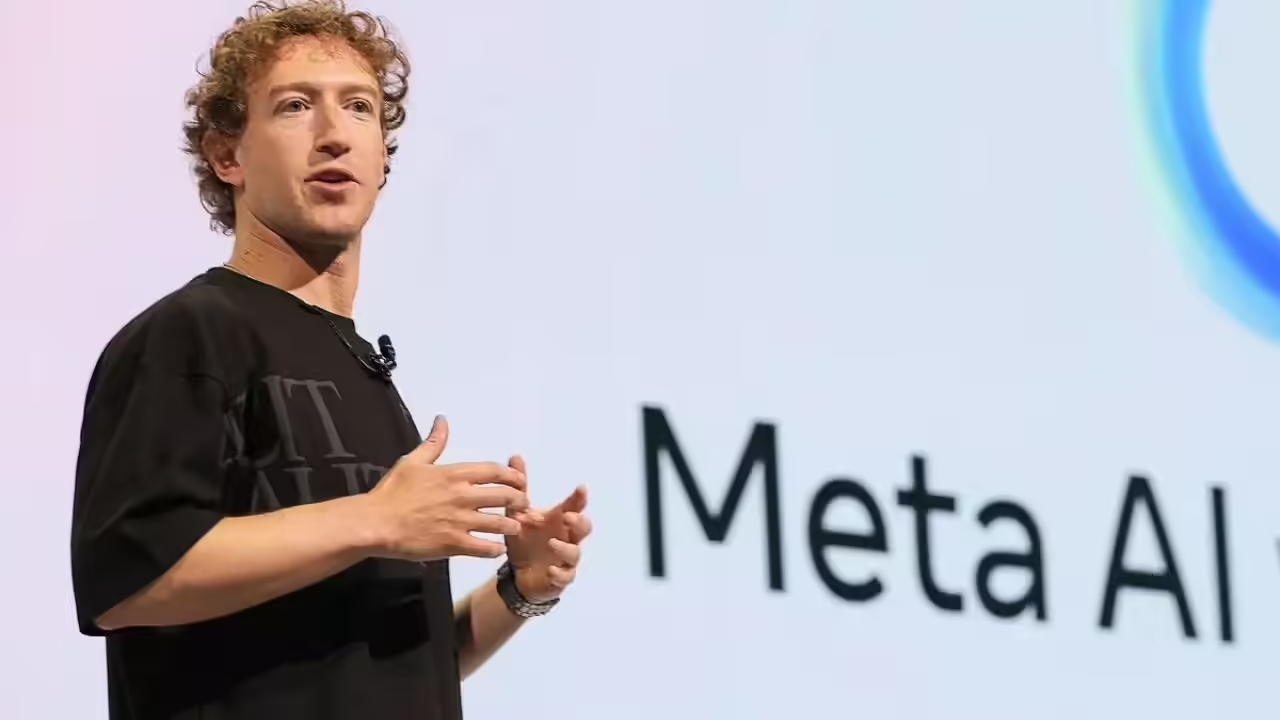
Mark Zuckerberg, Meta’s CEO, has a different stance. His argument is that AI labs already have enough commercial incentive to build safely, because a company whose models cause visible harm loses users, partners and government trust fast enough to make recklessness expensive on its own.
Describing the current safety discourse among rival labs, he argued the field need voices that brings “realism”, he says, into a conversation overwhelmingly filled with doom and dominated by a handful of dominant companies.
He worries about the concentration of the systems and not its capability. To him, the greater risk lies when a small number of firms controlling superintelligence decides, on behalf of everyone else, how fast the rest of the world gets access to it.
This is the logic that backs Meta’s releases of open-weight models after a gap period. And, also, the call for government and frontier labs to cooperate directly, including sharing intermediate training checkpoints, so regulators can catch the problems early.
Who Benefits When the Frontier Slows Down
Anthropic and OpenAI are, by most public benchmarks, ahead of Meta in model quality and enterprise adoption.
A negotiated slowdown, especially one that takes the form of government-mandated checkpoints, disclosure rules or capability thresholds, tends to lock in whoever is currently winning. It also raises the cost of entry for everyone still trying to close the gap.
If a regulation is written in response to a leader’s own warning, it is inevitable that the leader’s position would be protected, whether that might be the intention or not.
This does not suggest that Amodei’s concern about loss of control is false. It, however, means that the same person can be sincerely worried about the extinction risk and still be in the advantage in the policy that worry produces.

Who Benefits When the Race Keeps Going
Meta has spent the past two years trying to catch-up after its earlier models underwhelmed developers. It has poured tens of billions of dollars into compute and talent to close that distance.
If a regulatory environment is built around slowing the frontier down, it would work against a company still trying to reach it. If the race is kept open and the caution is passed off as fear-mongering, it would protect Meta’s ability to spend its way up the ladder with new policies hindering it.
There is also a harder detail sitting under Zuckerberg's safety argument. Court filings from a lawsuit brought by New Mexico's attorney general allege that Meta's own child safety staff repeatedly warned executives about AI companions enabling romantic and sexual roleplay involving minors, and that Zuckerberg pushed for fewer restrictions in the name of user choice.
An independent safety index from the Future of Life Institute also gave Meta some of the lowest grades among major labs on existential risk practices, and Meta is the only major US lab that does not respond to that survey at all.
This does not go on to prove his market-incentive argument wrong. However, it means the company making that argument has its own recent, documented record of prioritising product freedom over safety recommendations from its own staff.

The Fear-Mongering Question, Revisited
I have written before about whether warnings that AI could end humanity by 2030 amount to genuine alarm or a distraction dressed up as one. Zuckerberg's intervention adds a second layer to that question.
It is possible for the doom narrative to be partly strategic and for his own optimism to be partly strategic too. Both positions are being argued by people who profit from the outcome their argument produces.
What This Actually Means
The fact remains that nobody warning the public about AI right now is in a neutral area. The people clamouring for a slow-down are the labs currently ahead in the race. The person pushing for a speed-up runs a lab that is, by most public benchmarks, currently behind.
Reading either argument as pure conviction, without asking who wins if regulators listen, misses the part of the story that matters most for anyone trying to figure out what should actually happen next.