African Banking Boom: Bank of Africa Senegal's Q1 Profits Ignite as Credit Demand Surges!
Bank of Africa Senegal reported a 10% year-on-year net profit growth in Q1 2026, driven by an expanding loan portfolio and robust customer deposit growth. Despite a notable decline in commission income, the bank's balance sheet shows strong momentum, supported by increasing assets and a promising pipeline for future credit expansion. This performance is set against the backdrop of Senegal's growing economy and significant untapped demand for financial services.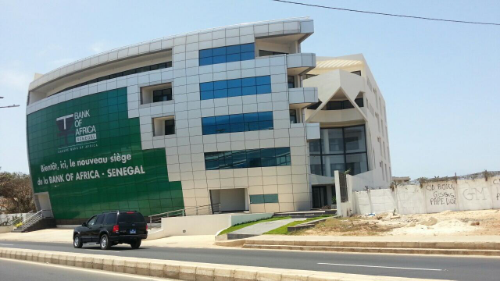
Bank of Africa Senegal (BRVM: BOAS), a Dakar-based lender within the BMCE Group, commenced 2026 on a robust trajectory, achieving a net profit growth of approximately 10% year-on-year in the first quarter, reaching 5.74 billion FCFA ($10.3 million). This performance signals a strategic expansion of the bank's balance sheet while effectively managing and containing credit losses. The positive financial outcome for Q1 underscores a period of careful growth and increasing operational efficiency for the institution.
The primary catalyst for this improved performance was a significant increase in interest income. This rise was directly attributable to the bank's successful expansion of its loan portfolio, putting more capital to work. Furthermore, a healthy dynamic was observed as customer deposits grew at a faster pace than the loan book during the quarter. This provides the bank with ample liquidity to extend credit without needing to resort to more expensive wholesale funding avenues. Total assets also demonstrated substantial growth, crossing 805 billion FCFA ($1.44 billion), an increase from 748 billion FCFA ($1.34 billion) recorded a year prior.
However, one notable area warranting close observation is the commission income, which experienced an approximate 19% year-on-year decrease. Commission income typically encompasses fees generated from services such as transfers, trade finance, and account maintenance. The filing did not provide a specific explanation for this significant drop, which could suggest various factors including lower transactional volumes, heightened competitive pressure on fees, or a unique, non-recurring event in the previous year's base figures. While this decline did not impede the bank's overall bottom-line improvement, it remains a metric that analysts and management will likely monitor closely in subsequent quarters.
Looking ahead, off-balance-sheet financing commitments to clients surged by nearly two-thirds compared to the previous year. This substantial increase is a strong indicator of a busier pipeline of credit approvals that are yet to be drawn down into formal loans. Historically, such commitments tend to precede and drive actual loan book growth by one to two quarters. Although management did not issue forward guidance, the clear direction of the balance sheet – characterized by rising deposits, increasing contingent commitments, and stable risk costs – strongly suggests that Bank of Africa Senegal is building significant momentum heading into the latter half of the year.
From a broader economic perspective, Bank of Africa Senegal operates within a banking system where formal financial access remains below 20% of the population. This low penetration rate implies that structural credit growth is not merely a possibility but a probable trend for many years to come. Moreover, Senegal's economy entered a new phase in 2024 with the commencement of oil and gas production from the offshore Sangomar and GTA fields. These developments are widely expected to bolster GDP, government revenues, and private sector activity over the medium term, all of which will translate into increased demand for comprehensive corporate and retail banking services.
The decline in commission income stands out as the sole discordant note within an otherwise highly constructive financial picture. Analysts focusing on banks in the WAEMU region will be keen to ascertain whether this reflects a sector-wide trend, perhaps due to a slowdown in remittance or trade volumes, or if it is an issue specific to Bank of Africa Senegal. Furthermore, the bank's commendable ability to grow deposits at a faster rate than its loans is a crucial advantage, as it effectively mitigates funding risk in an environment where the BCEAO has maintained an elevated policy rate to combat inflation, thereby making wholesale borrowing considerably more expensive. For retail investors, the Q1 results convey a clear message: BOA Senegal is expanding judiciously, maintaining strong asset quality, and exhibiting a robust and promising loan pipeline for future growth.