Africa's Geopolitical Remix: Beijing Takes Center Stage in Development
Africa's development landscape is undergoing a significant transformation, moving from a Western-dominated model of conditional aid to a more multipolar engagement. China's emergence as a key alternative partner, offering non-conditional financing and investment, has empowered African nations to redefine their terms of engagement and bolster their negotiating power on the global stage.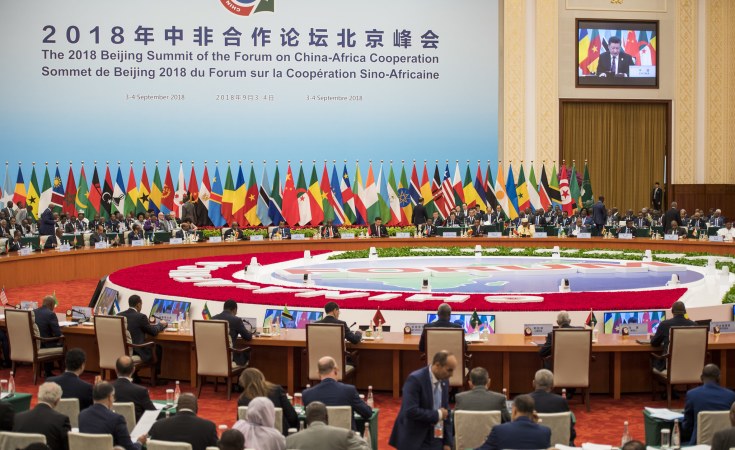
In the post-decolonisation era, Africa's development trajectory was predominantly influenced by Western partnerships. By the late 1990s and early 2000s, this Western-oriented framework manifested as policy conditionality, governance agendas, and institutional reforms inextricably linked to rotating credit agreements. This approach was largely underpinned by the reality that countries in the Global South had limited alternatives for securing substantial development financing, with the majority of foreign aid and investment flowing into Africa originating from Europe and North America. This explicit conditionality became a defining characteristic of development cooperation, often complicating support for many African governments, as it was deeply rooted in a Western-determined vision for African states' governance, economic function, and institutional structures.
While the language and specific forms of conditionality have evolved, the foundational architecture remains largely unchanged. Although Bretton Woods institutions have moved away from some of the more overt conditions of the structural adjustment era, financing continues to be tied to policy commitments, now termed 'structural benchmarks' by the IMF, which borrowing countries are expected to fulfill.
Niger offers a recent illustration of this dynamic. Following the 2023 coup, the European Union, World Bank, and United States promptly suspended assistance, explicitly conditioning renewed engagement on the restoration of constitutional governance. However, Niger's military government persisted, and notably, this did not deter Chinese engagement. Amidst funding suspensions and sanctions, China's CNPC provided a substantial $400 million advance against future oil deliveries without attaching any conditions related to domestic governance. This non-conditional approach has increasingly distinguished Chinese partnerships with African governments, offering financing and investment largely devoid of explicit demands on how countries govern themselves.
Similar patterns of conditionality were observed in Mali in 2021 and Burkina Faso in 2022. In Ethiopia, disagreements over the government's response to the Tigray conflict led the United States to remove the country from the African Growth and Opportunity Act (AGOA), citing human rights concerns. This decision underscored the principle that American development partnerships were anchored in respect for human rights. More recently, however, U.S. support for Israel during the Gaza conflict, where Palestinian rights have been widely perceived as significantly impacted and tens of thousands killed, has raised pertinent questions regarding the consistent application of these stated principles.
As Western nations have maintained their stance on conditions for financing, China has strategically expanded its partnerships across Africa. A notable example is Uganda, which passed its Anti-Homosexuality Act in 2023, prompting the World Bank to suspend new financing. President Yoweri Museveni's government subsequently sought assistance from China, including a proposed $150 million loan for digital infrastructure development. Significantly, in 2025, the World Bank resumed financing for Uganda despite the controversial legislation remaining unrepealed, an episode that highlights how alternative funding sources can diminish the leverage of Western conditionality.
The China-Africa partnership is not a recent phenomenon, with its roots traceable to the Bandung Conference of 1955. However, a pivotal moment occurred in 2000 with the establishment of the Forum on China-Africa Cooperation (FOCAC). FOCAC institutionalized China's engagement framework, fostering dialogue on peace and security, political relations, trade, and development cooperation, alongside Africa's existing relationships with entities like the OECD, World Bank, European Union, and IMF. The early 2000s also coincided with China's significant geopolitical ascent, marked by rapid economic expansion post-accession to the World Trade Organization, positioning it as a formidable development partner capable of meeting Africa's escalating demands for infrastructure, investment, and development finance.
China approached Africa with a distinct philosophy, framing the relationship more as a partnership than patronage. This perspective was partly informed by its own historical experience with foreign encroachment and unequal treaties. While Western partnerships often focused on governance, education, and health reform, China brought a unique comparative advantage in infrastructure, industrial development, and digital connectivity. Central to its partnership model with Africa have been two consistent principles: non-interference in internal affairs and the rapid delivery of development projects.
More profoundly, China has framed Africa differently from many of its Western counterparts. Rather than viewing the continent primarily through the conventional development lens of poverty, dependency, and perpetual aid, China has increasingly positioned Africa as a vibrant frontier of global economic growth. This distinction is crucial, as it recognizes Africa not merely as a recipient of development assistance but as a strategic economic and geopolitical partner with agency.
It is important to acknowledge that Africa itself has been actively pursuing diversified global partnerships for a long time. Its movement towards multipolar engagement predates China's prominence and has been reflected in existing frameworks such as the Africa-EU Partnership and the Tokyo International Conference on African Development. Therefore, the suggestion that China unilaterally created an entirely new development model in Africa is historically incomplete; rather, China completed an already evolving multipolar landscape by becoming another significant pole of partnership.
Consequently, the West has been compelled to adapt its approach. For decades, Western countries largely dictated the discourse on aid and development, establishing many of the norms expected of Africa and the broader Global South. Africa's increasingly multipolar partnership model, with China playing a particularly prominent role, has fundamentally altered this dynamic. African nations now possess meaningful alternatives, and with alternatives comes enhanced negotiating power in international relations.
While China's engagement has evolved and may not be as extensive in volume as during the peak of the Belt and Road era, its greater significance lies in the transformative shift it helped create in the development financing landscape. China's emergence as a credible economic partner ushered in an era where African countries could increasingly redefine the terms of engagement, challenging long-standing frameworks imposed by external actors. The West remains profoundly influential, but it no longer unilaterally dictates the definitions of development, acceptable parameters of institutional and governance reform, or the priorities underpinning international cooperation. This shift cannot be solely attributed to China, nor can changes in Western approaches to conditionality. However, the availability of credible alternatives has undeniably contributed to this transformation, as conditionality derives much of its leverage from the recipient's lack of choice. This ultimately means African countries, and the Global South, can substantially renegotiate terms they have sought to challenge for decades, fostering greater self-determination in their development journeys.