Africa’s Climate Plans Still Struggle — Can a New NDC Planner Change That?
In April 2026, a new NDC Investment Planner was introduced with the aim to help bridge Africa’s long-standing climate finance gap.

If you’ve followed climate discussions about Africa for even a short while, one pattern becomes obvious very quickly: the plans are rarely the problem, the money is.
Across the continent, countries have continued to develop climate strategies, set targets, and sign commitments. On paper, the ambition is there but in reality, many of those plans struggle to move beyond documents and presentations into actual projects on the ground.
And that gap between what is promised and what is funded has become one of the biggest sticking points in Africa’s climate journey.
Africa needs hundreds of billions of dollars every year to meet its climate goals, yet only a fraction of that financing is actually available.
The result is predictable: projects slow down, priorities shift, and implementation becomes uneven.
So the real issue is not that Africa lacks climate ambition, it is that ambition and finance are not meeting in the same place.
The uncomfortable reality behind the numbers
What makes this even more striking is the imbalance.
Africa contributes very little to global emissions, less than 6%, yet it continues to suffer heavily from climate impacts like floods, droughts, and extreme weather. These events are not just environmental problems; they directly affect food systems, infrastructure, and economic stability.
So while climate plans continue to grow in detail and ambition, countries are still losing a significant portion of their economic output each year because of climate shocks.
And this is where the frustration builds: the urgency is clear, but the funding doesn’t match it.
A new attempt to bridge the gap

This is where a new initiative comes in.
The African Climate Foundation and Dalberg Advisors have introduced something called the NDC Investment Planner — a framework designed to help governments rethink how climate plans connect to funding.
Instead of treating climate strategies as broad national documents, the idea is to break them down into clearer investment opportunities.
In simpler terms, it tries to answer a question many governments struggle with:
Which climate projects are actually investable — and which ones are not ready yet?
The tool helps identify, rank, and structure climate actions based on how realistic they are for funding, how much economic value they create, and how impactful they could be in reducing climate risks.
It is less about creating new climate goals, and more about reorganising existing ones so they can actually attract money.
Why this matters (beyond policy language)
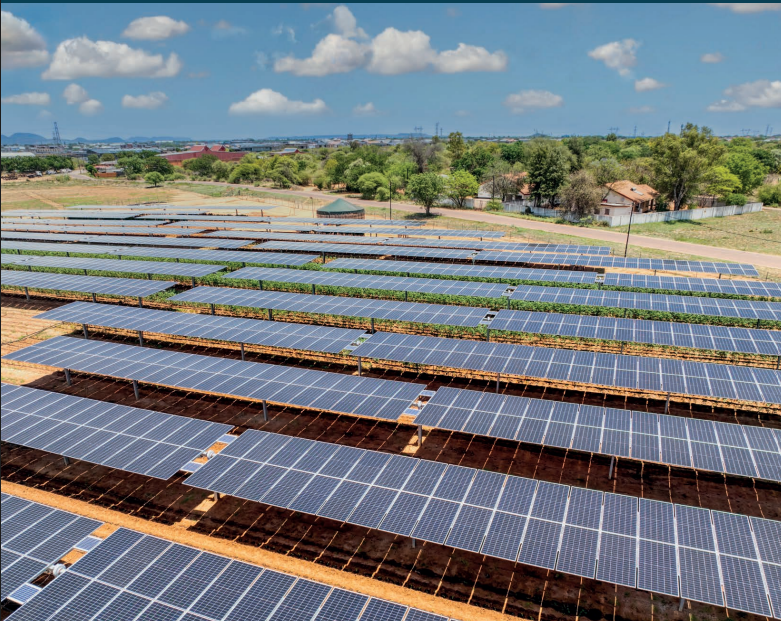

This is a very simple problem: Africa does not have a shortage of climate ideas, it has a shortage of systems that turn those ideas into funded action.
And that is where this becomes important.
If climate plans can be made clearer, more structured, and more attractive to investors, then funding becomes easier to unlock. If not, the gap between ambition and implementation continues to widen.
Still an open question
Even with tools like this, nothing changes automatically.
Governments still need capacity. Investors still need confidence. And climate risks are still increasing faster than funding is arriving.
So this new approach is not a solution in itself, it is more like an attempt to make the system slightly easier to navigate.
And that leaves the bigger question open: whether better planning alone is enough to unlock the scale of funding Africa’s climate future actually requires.
But what is clear is this: Africa’s climate challenge is no longer about making promises. It is about figuring out how to pay for them.