AfDB and AU push for visa-free Africa to accelerate economic integration
Africa’s push for visa-free travel reflects more than economic policy. It represents a shift toward integration, mobility, and a future where Africans can move freely across their own continent.
There is a quiet hesitation many Africans understand too well and you too might understand it too.
It happens at embassies, on online application portals online. In the silence of waiting rooms where passports are held longer than expected.
It lives in the uncertainty of approval emails from immigration centres and the quiet calculations of travel costs that include not just flights, but permission.
To move across your own continent should feel ordinary, at least there's ease of access for the average European, but for many Africans, it still feels conditional.
You can fly thousands of kilometres across oceans with fewer questions than crossing a border that shares your history, your geography, and sometimes even your language.
This is why the renewed call by the African Development Bank Group and the African Union Commissionfor a visa-free Africa feels less like policy and more like an attempt to restore something that should have always existed: freedom of movement within one’s own continent.
This act is not as a form of privilege but as a foundation for ease of access.
Movement Has Always Been the Missing Link in Africa’s Economic Story
Africa’s economic potential has never been in doubt. Its size, population, resources, and cultural diversity already position it as one of the most promising regions in the world.
But potential alone does not create prosperity, movement does.
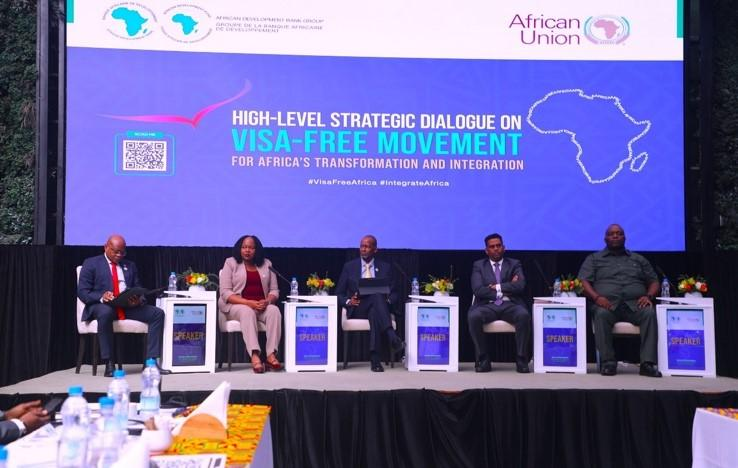
This was the central message at the High-Level Symposium on Advancing a Visa-Free Africa, held alongside the 39th African Union Summit in Addis Ababa.
Policymakers, business leaders, and development institutions gathered around a shared understanding that economic integration cannot happen in isolation.
Trade agreements open doors but people must be able to walk through them.
The African Continental Free Trade Area was designed to reduce tariffs and increase intra-African trade.
Yet, even as goods begin to move more freely, people remain restricted by visa requirements that slow down commerce, collaboration, and innovation.
According to findings from the Africa Visa Openness Index, more than half of African travel within the continent still requires visas before departure.

This creates delays, discourages entrepreneurs, limits labour mobility, and weakens regional cooperation.
Mobility is not just about tourism, it is about opportunity. It determines whether a business owner can expand into a neighbouring market.
Whether skilled workers can contribute where they are needed most. Whether ideas can circulate fast enough to create meaningful growth.
As Alex Mubiru of the African Development Bank Group explained, visa-free travel and interoperable digital identity systems are practical enablers of enterprise, innovation, and regional value chains.
The economics support openness but beyond economics, there is a human reality. Africa has always been connected by movement but borders later came.
The African Passport Represents More Than Travel. It Represents Identity

There was a symbolic moment during the symposium.
Participants signed what was called a “passport wall,” expressing their commitment to reforms that would make cross-border travel easier for African citizens.
Because the idea of a visa-free Africa has existed for years, embedded in Agenda 2063, the African Union’s long-term development blueprint.
Former African Union Commission Chairperson Nkosazana Dlamini-Zuma captured its essence clearly when she said, “If we accept that we are Africans, then we must be able to move freely across our continent.”
This is where the African Passport becomes more than a document. It becomes a statement.
A statement that identity should not stop at national borders. A statement that economic integration requires human integration.
Industry leaders, including Ethiopian Airlines CEO Mesfin Bekele, have also emphasised the importance of aligning visa liberalisation with broader initiatives like the Single African Air Transport Market.
Because seamless travel requires more than policy declarations. It requires infrastructure, digital systems, and sustained political will.
Visa openness is not an isolated reform, it is part of a larger transformation.
One that affects trade, labour mobility, tourism, investment, and the everyday lives of millions.
A Visa-Free Africa Is Not Just About Economics. It Is About Possibility
Every restriction creates distance, not just physical distance, but psychological distance.
It quietly reinforces the idea that movement must be negotiated, rather than assumed.
But the push by the African Development Bank Group and the African Union Commission signals something different.
It signals recognition that Africa’s integration cannot remain theoretical.
It must become a lived reality.
Visa-free movement would allow entrepreneurs to expand faster, professionals to collaborate easier, and industries to grow stronger.
It would strengthen regional markets and create a more competitive and resilient continent.
But beyond economics, it would restore something deeper. A sense that Africa is not just a collection of separate destinations, but a connected home.
The African passport may still be a promise but the intention behind it reflects a future where movement is no longer restricted by permission, but enabled by belonging.
And when Africans can move freely across Africa, integration will no longer be a policy goal. It will be a daily experience.