Zambia's Hichilema Kicks Off Second Term: Unity, Economic Vision, and Political Undercurrents
Zambia's President Hakainde Hichilema has been sworn in for a second term, emphasizing national unity and an ambitious "Grow Zambia Agenda" focused on economic growth. His inauguration comes amidst congratulatory messages from regional bodies like SADC, but also international concern over the detention of opposition figures on treason charges, highlighting the nation's political complexities. Hichilema's challenge is to translate macroeconomic stability into tangible benefits for all Zambian households.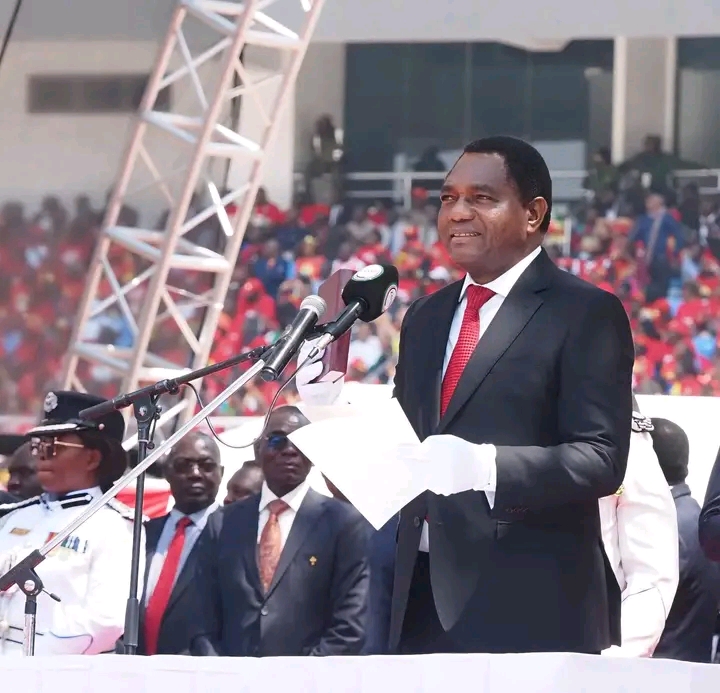
Zambia is navigating a complex political landscape following the August 13, 2026, general elections, which saw Hakainde Hichilema sworn in today as President for a second term, running from 2026 to 2031.
His victory was acknowledged by various regional and international stakeholders, including the Southern African Development Community (SADC), which congratulated him on his election as the seventh President of the Republic of Zambia and recognized the outcome of the electoral process.
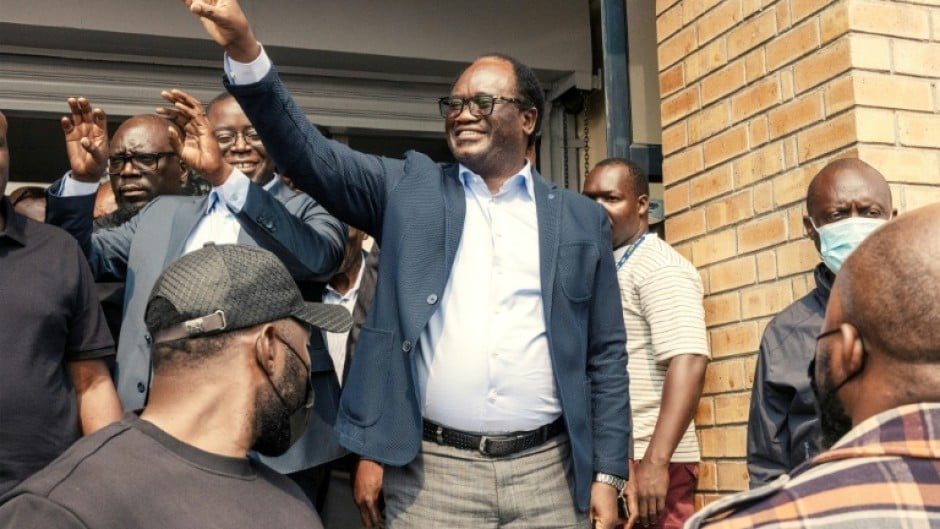
However, this pivotal moment for the nation is underscored by a backdrop of political tension, as opposition figures, including National Reconciliation Party for Unity and Prosperity (NRPUP) presidential candidate Brian Mundubile and his running mate Makebi Zulu, spend their third day at Mukobeko Maximum Correctional Facility in Kabwe.
The duo, along with 16 others, were formally charged last week with treason under Section 43 of the Penal Code, Chapter 87 of the Laws of Zambia, a serious offence carrying a life imprisonment sentence upon conviction. The State is yet to present its evidence in court.
Adding to the concern, international bodies and figures, including the UN Human Rights chief Volker Türk, the European Union, the African Union, SADC, and the Commonwealth, have voiced deep disturbance over the detention of a number of opposition figures.
Among these is Bishop Trevor Mwamba, the retired Anglican Bishop of Botswana and leader of Zambia’s United National Independence Party (UNIP), whose wife, Mmasekgoa Masire-Mwamba, a former diplomat, raised the alarm after his disappearance before his detention at a Lusaka police station was revealed.
These groups have called on Zambian authorities to end arbitrary arrests, respect due process, and allow detainees access to decent sanitation, reading material, and other human necessities.
Appeals have also been made for dialogue and respect for the democratically-expressed wishes of the Zambian people.
President Hichilema, sworn in alongside Vice President Mutale Nalumango at Heroes Stadium in Lusaka, extended a clear hand of unity to political competitors. He stressed that elections should not be a source of permanent division and urged citizens to respect different political choices.
Emphasizing a post-campaign shift towards governance, Hichilema stated, “The person who voted against us is not our enemy,” and reinforced that “Whatever our political choices, we remain one people.”
He called for an end to the humiliation of political opponents, referring to them as “brothers” and “sisters,” signifying a commitment to national reconciliation and inclusivity in his new administration. He pledged to ensure every voice mattered and to deliver tangible development.
Hichilema’s appeal for unity has sparked mixed reactions on social media, and many welcomed his message as a timely reminder for Zambia’s unity to transcend political differences, with users praising his consistent calls for harmony.
However, others felt the appeal was premature, arguing that supporters who had faced political taunts before the election deserved time to celebrate. The online debate reflected the contrasting emotions following the elections, highlighting both an embrace of reconciliation and the persistence of political wounds.
Economically, President Hichilema framed his second term as a transition “from stabilisation to growth,” building on the economic repair and stabilization achieved during his first term. His administration’s focus will be the “Grow Zambia Agenda,” aiming for economic growth, wealth creation, job opportunities, and shared prosperity.
The key sectors for deepening economic reforms include mining, agriculture, tourism, and energy, alongside infrastructure development and industrial transformation. Hichilema outlined an ambitious “10-10-5-3-3-1-1-1 vision” targeting 10 million tonnes of maize, 10,000 megawatts of electricity, five million tourist arrivals, three million tonnes each of copper and soybeans, one million tonnes each of wheat and sugar, and at least US$1 billion in beef exports.
He stressed that economic growth must translate into tangible benefits for citizens through jobs, reliable markets for farmers, increased business opportunities, and greater revenue for national development.
The President also criticised the “tantameni syndrome,” advocating for a shift from dependence on handouts towards production, investment, and long-term economic participation, urging Zambians to “think of tomorrow and not only consuming today.”
This approach carries political risk, as citizens facing immediate economic pressure will still expect government intervention, posing a challenge in balancing fiscal discipline with household demands.
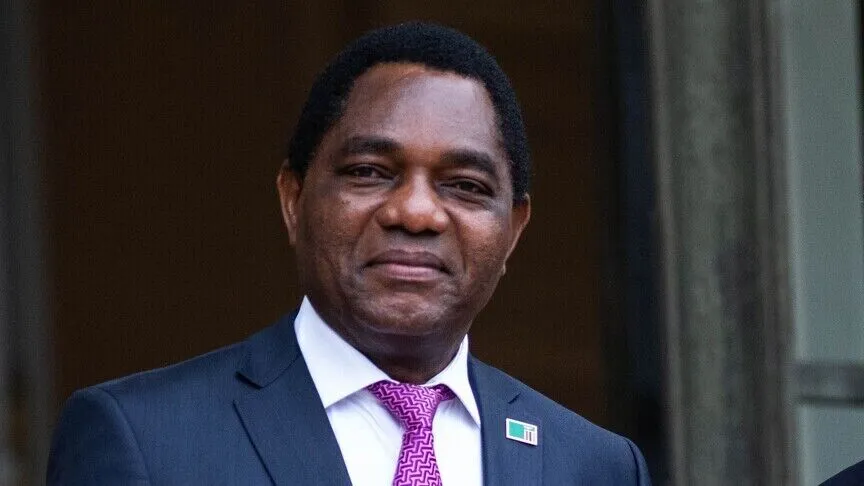
On the social front, Hichilema highlighted strategic interventions such as free education, improved healthcare, enhanced Constituency Development Fund resources, social protection, and economic empowerment programmes for women and young people.

He noted the return of 2.6 million out-of-school children to education and pledged to strengthen decentralisation by transferring greater responsibility and resources to local communities.
The proportional Representation was also noted as a measure to enhance participation in governance by women, young people, and persons living with disabilities. He affirmed continued investment in education, skills development, and healthcare, alongside a mindset shift prioritizing future generations.
In terms of governance, President Hichilema promised to transform the public service through improved service delivery, digitisation, accountability, professionalism, and innovation, while strengthening the fight against corruption and safeguarding public resources.
He called upon public officers to prioritize national interest and uphold integrity. On foreign policy, Zambia will continue pursuing economic diplomacy, peace, security, and stability, strengthening cooperation regionally and internationally, cementing its position as an investor-friendly destination and a dependable international partner.
Business and economic stakeholders have urged President Hichilema to ensure his second term translates macroeconomic stability into stronger domestic production, investment, jobs, and improved household incomes.
Economist Kelvin Chisanga highlighted that the real test of the Grow Zambia Agenda would be converting stability into productive growth and better household welfare.
The Copperbelt Mining Policy Monitoring Team (CMPT), through its Executive Director George Jere, specifically called for building on mining sector reforms, particularly the effective implementation of the local content framework to empower local enterprises and strengthen linkages with the wider domestic economy.
President Hichilema has thus set a high standard for his second term: to convert macroeconomic stability into tangible improvements that households can genuinely feel.