Your Body Is Not a Classroom: When Student Training Crosses the Line
When student training in healthcare lacks proper supervision and consent, patients can pay the price. Where should we draw the ethical line?

Imagine going to a physiotherapy session for a knee problem and leaving with a broken ankle.
It sounds like a nightmare. But for some patients, it is a reality, one that quietly unfolds in clinics and teaching hospitals every day, tucked behind curtains and wrapped in the normalcy box of medical routine.
The question nobody seems to want to ask out loud is this: at what point does training the next generation of healthcare workers come at too high a cost to the patients in the room?
This is not an attack on medical education. The world needs doctors, physiotherapists, nurses, and every skilled hand in the medical field.
But it is a conversation worth having, one that the healthcare system has been too comfortable avoiding.

The Case For It — And It Is a Real One
We all know clinical training on real patients is not optional. It is the foundation of every competent healthcare professional alive today.
You cannot learn how to manipulate a joint, read a patient's pain response, or adjust pressure in real time from a textbook or a mannequin. At some point, the student has to work with a real human body, and that is simply the truth.
Teaching hospitals and training clinics also argue, with some evidence, that patients in these settings often receive more thorough care. More eyes on a case, more time spent and more questions asked.
A supervising professional is theoretically present to catch errors before they become injuries.
There is also the bigger picture to consider. If students never practice on patients, the quality of healthcare degrades over time.
The experienced professionals of tomorrow are the nervous students of today. Society benefits when they are properly trained.
So yes, student involvement in patient care has genuine, defensible value. That part is not up for debate.
But It Gets Complicated
The system built around student training relies heavily on one word: supervision. And supervision, in practice, is not always what it is on paper.
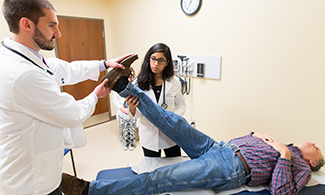
When a student performs a hands on procedure, whether it is drawing blood, administering therapy, or manipulating a limb,a licensed, experienced professional is supposed to be present, watching, and ready to intervene.
That is the agreement. That is what makes the whole arrangement ethical.
The problem is that in busy clinics and understaffed hospitals, that standard slips.
Students are left to handle procedures with minimal oversight. They are eager, they are trying, and they are also, by definition, still learning. That combination, without proper checks, is where patients get hurt.

And then there is the matter of consent. Patients have the right to know when a student is involved in their care. They have the right to say no.
But in some cases, that conversation never really happens. Patients assume the person treating them is fully qualified and nobody corrects that assumption.
The Effects Are Real and They Run Deep
When student training goes wrong, the consequences are not just physical. A patient who comes in with one condition and leaves with an additional injury does not just suffer physically, they lose trust.
Trust in the clinic, trust in the profession, and sometimes trust in the entire healthcare system.
That erosion of trust has effects. People delay seeking care. They avoid hospitals.
They self-medicate or turn to unverified alternatives because the formal system once hurt them or someone they love. Public health suffers quietly as a result.
For the students themselves, unsupervised errors can also be damaging. A mistake made without guidance does not teach the right lesson, it may teach the wrong technique, or worse, build false confidence.
Proper supervision protects the patient and shapes a better professional at the same time.

So Where Do We Draw the Line?
The line is not between "students treat patients" and "students do not treat patients." That binary is too simple and, frankly, too impractical.
The line is drawn at accountability. Patients must be told, clearly and before any procedure begins, that a student is involved and they must be given a genuine choice.
Supervisors must be physically present, not just available down the corridor. Students must be matched to tasks that reflect their actual skill level, not the clinic's workload demands.
Your body is not a classroom. But it can be a learning environment, one built on transparency, proper oversight, and respect for the person in the treatment chair.
That distinction matters. And until the system takes it seriously, patients will keep paying the price for lessons they never agreed to teach.