World Bank Fuels Kenya's Digital Future with $550M Fibre Network Investment
Kenya has secured $550 million from the World Bank to expand fibre optic infrastructure and upgrade roads in its Northern region, aiming to connect 3.2 million residents. This critical project will bring cheaper and more reliable internet to underserved communities, bridging the digital divide and fostering economic growth, education, and healthcare access.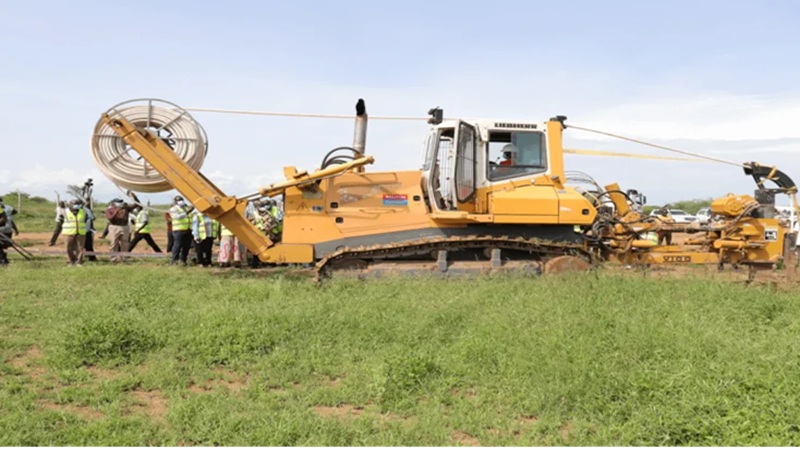
Kenya has secured a significant funding boost from the World Bank, totaling $550 million, to dramatically expand its fibre optic infrastructure across the country's Northern region. This crucial initiative aims to connect 3.2 million residents in an area historically recognized as one of Kenya's most underserved in terms of digital access.
The funding, approved by the World Bank’s Board of Directors in late March, is earmarked for a comprehensive road and digital connectivity project. This project forms an integral part of a much broader strategic initiative focused on developing the vital Isiolo-Mandera corridor. Specifically, the $550 million will facilitate the installation of 1,270 kilometres of high-capacity fibre optic cable, alongside significant upgrades to 508 kilometres of existing roads, creating a dual-benefit infrastructure development.
The overall project, which includes this digital expansion, represents a substantial investment. The World Bank's contribution to the larger Isiolo-Mandera corridor project stands at Ksh 97.05 billion ($750 million), with the International Development Association (IDA) providing additional credit, bringing the total project cost to an estimated Ksh 115.9 billion ($895 million). The financial disbursements for this multi-year undertaking commenced in 2021 and are scheduled to continue in stages until June 30, 2028, ensuring sustained progress and implementation.
Kenyan authorities have outlined clear objectives for this digital transformation: to connect essential public institutions such as schools, hospitals, and markets. The Kenya National Highways Authority (KENHA) is tasked with the civil engineering aspects, including the critical trenching, ducting, and laying of infrastructure for the fibre cables along the newly upgraded road corridors. Concurrently, the Information and Communications Technology Authority (ICTA) will take charge of overseeing the development and implementation of the digital connectivity infrastructure. This specific component of the project, managed by ICTA, is estimated to cost Ksh 3.1 billion ($24.1 million) and encompasses crucial activities like feasibility studies, supervising cable installations, and constructing comprehensive fibre optic networks designed to link government offices and other public institutions. The project aims to connect a minimum of 341 public locations to the internet, including educational facilities, healthcare centers, markets vital for nomadic herders, roadside rest areas, and community hubs throughout Northern Kenya.
The urgent need for this infrastructure is underscored by the current digital landscape in the region. Presently, there are limited land-based fibre optic connections between Kenya and neighboring Ethiopia, and no such connections with Somalia. Consequently, residents in Northern Kenya predominantly rely on mobile internet, or in many cases, expensive and less reliable satellite and microwave links to access online services. The project's core focus is to deliver significantly cheaper internet access and vastly improved connectivity, thus addressing a critical digital divide.
A key strategic benefit of this integrated approach is the expected reduction in service delivery costs. Combining road construction with fibre optic cable installation is projected to lower these costs by an impressive 40%, a saving that is anticipated to translate into similar price reductions for end-users and customers. Qimiao Fan, the World Bank’s Director for Kenya, Rwanda, Somalia, and Uganda, emphasized the broader societal impact. Fan stated that "multisectoral interventions that enhance connectivity, support livelihoods, create jobs, and strengthen resilience are essential to fostering inclusion, a shared sense of benefits, and, ultimately, fostering greater peace, security and economic growth."
This initiative is specifically designed to provide internet access to vulnerable and marginalized communities in northeastern Kenya, a region that has historically suffered from limited digital infrastructure despite a rapidly increasing demand for internet connectivity. By expanding the fibre network, the project intends to bridge the significant digital divide separating Kenya’s urban centers from its remote northern regions. This connectivity is expected to unlock new opportunities across various sectors, including education, healthcare delivery, and the facilitation of economic activities that are increasingly reliant on reliable internet access.