Why Does Trump Want to Call AI “Super Intelligence” Now?
Trump’s proposed “Super Intelligence” label raises bigger questions about AI’s history, AGI, superintelligence, economic competition, and the future of human intelligence.
Imagine spending seventy years building a language, then someone walks in and says: actually, I think we should call it something else.
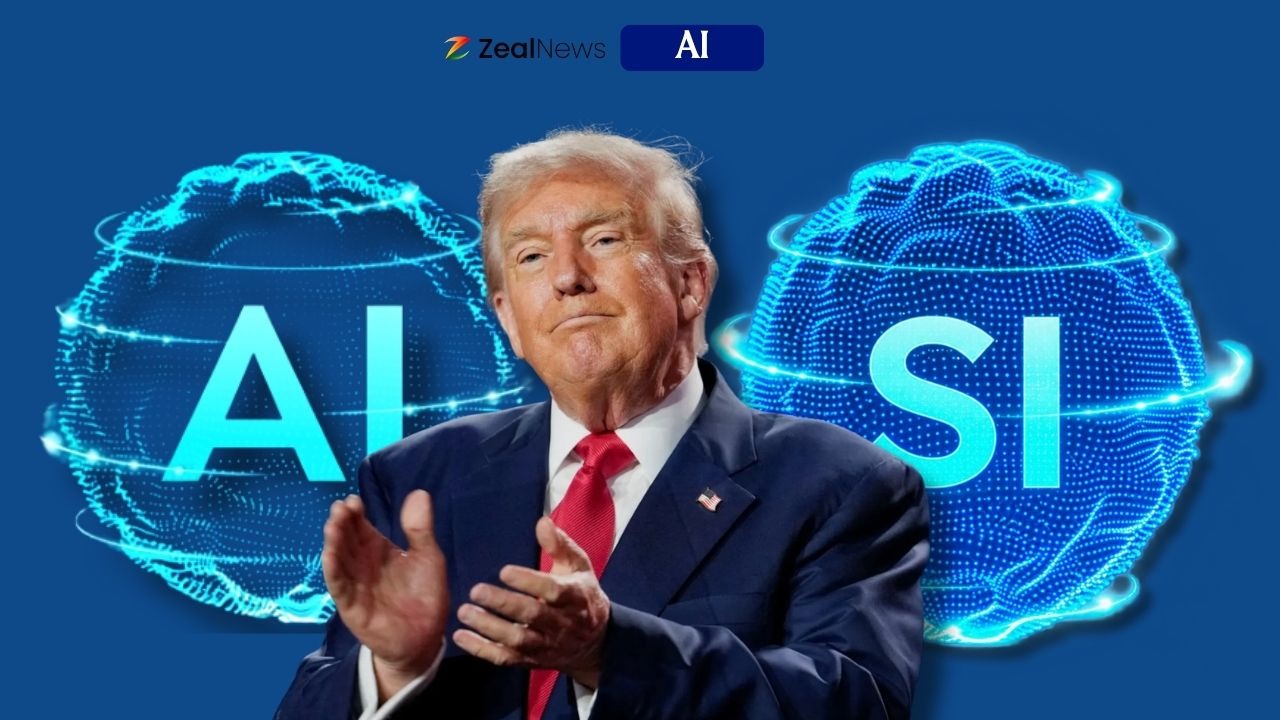
That is roughly where the world finds itself after Donald Trump announced at the United Nations General Assembly that the United States would refer to artificial intelligence as “Super Intelligence” in government documents. His explanation was simple: “artificial” makes intelligence sound fake. He also said he hoped the rest of the world would adopt the terminology.
It sounds like a naming argument. It is more than that.
Words matter, especially when they are attached to technologies already reshaping economies, workplaces, national security and the balance of power between countries. So why “super”? And why now?
Before It Will Ever Be Super, It Was First Artificial
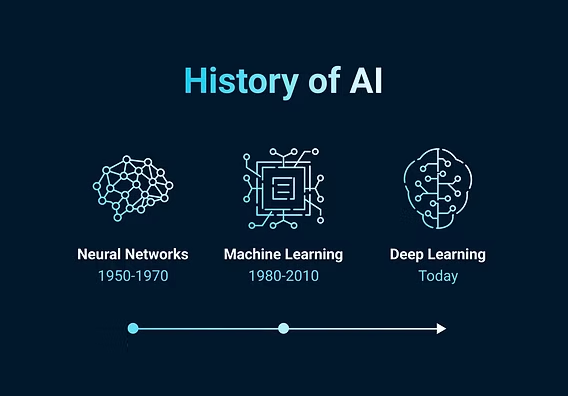
The term “artificial intelligence” was coined by computer scientist John McCarthy in a 1955 proposal for a 1956 research project at Dartmouth, where McCarthy, Marvin Minsky, Nathaniel Rochester and Claude Shannon helped establish AI as a field of research.
The name was never supposed to mean fake intelligence. “Artificial” meant intelligence produced by an artificial system rather than a biological human brain.
For decades, AI looked nothing like the systems people use today. Computers were taught to solve specific problems. Machines learned to play games, recognise patterns and assist with calculations. Progress came in bursts, followed by periods when enthusiasm collapsed because the machines could not deliver the grand promises surrounding them.
Then computing power grew. Data became abundant. Neural networks became more capable. Machine learning moved from laboratories into search engines, recommendation systems, translation tools, medical applications, and autonomous technologies.
Generative AI accelerated that journey.
ChatGPT reached 100 million users in two months, a pace that showed just how quickly AI could move from specialist technology into ordinary life. Today, AI can generate images, write software, analyse documents, translate languages, reason through complex problems and operate tools.
So Trump is right about one thing: AI is no longer a distant science-fiction idea. But “not fake” does not automatically mean “super.”
SuperIntelligence Is Already a Technical Term
This is where the proposed rename becomes more interesting.
In AI research, superintelligence already means something specific. It generally describes a hypothetical system whose intellectual abilities surpass those of humans across virtually all domains.
That is not what most people are using today.
The AI in your phone can beat you at some tasks. A model can analyse millions of pieces of information faster than a human. An AI system can outperform experts in particular areas, such as protein-structure prediction or games.
But being exceptionally good at particular tasks is not the same as possessing intelligence superior to humans across the board.
Then there is AGI: artificial general intelligence. AGI generally refers to a hypothetical system capable of matching or exceeding human cognitive abilities across a broad range of tasks. OpenAI, for example, defines AGI around highly autonomous systems that outperform humans at most economically valuable work.
And this is where the language starts becoming important.
If AI is renamed “Super Intelligence” before superintelligence exists, the name is no longer merely describing a technology. It is making a statement about where the technology is going.

It takes the destination and puts it on the label.
That may sound harmless. But imagine calling a research programme “human-level medicine” before it can reliably cure diseases. The name begins to carry expectations.
We Should Really Be Asking What We Are Racing Towards
There is an even stranger part of the timing.
The world is currently having a serious argument about whether AI development is moving too quickly. Earlier in September 2026, Anthropic CEO Dario Amodei called for measures to slow the pace of frontier AI development, and OpenAI CEO Sam Altman, Elon Musk, and Google DeepMind CEO Demis Hassabis have also supported stronger safety measures or a coordinated slowdown. Other technology leaders, including Meta’s Mark Zuckerberg and Nvidia’s Jensen Huang, have resisted a regulated slowdown.
At the same time, governments are treating AI leadership as an economic and national-security race.
So while some people are asking, “Should we slow down?”, others are effectively asking, “Who gets there first?” And now, the president of one of the world’s largest economies is arguing that we should even rename it.
Calling AI “Super Intelligence” can make the future sound inevitable: more capable machines, greater productivity, stronger economies and a technological race that countries cannot afford to lose.
But progress is not measured only by how quickly machines become more capable.
It is also measured by what those capabilities do to human work, education, privacy, security, inequality and power.
Who owns the models? Who controls the computing infrastructure? Who earns from the productivity gains? Which countries provide the data, minerals, electricity and talent, and which countries own the companies capturing the largest share of the value?
The more human question: what happens when a machine becomes better than us at more and more of the things we once used to define our usefulness?
The world does not need to start arguing about the word “super.” But we should be careful about allowing language to turn a possibility into an expectation.
Artificial intelligence was named when machines were barely beginning to imitate pieces of human intelligence. Seventy years later, we have machines that can do extraordinary things, but we are still debating what intelligence itself means.
Before we rename the technology, we should decide what kind of future we are actually naming.
Because if the goal is no longer artificial intelligence, but super intelligence, the question is no longer simply what machines can do.
It is what we want humans to remain able to do.