Why Cooking With Moldy Tomatoes Can Kill You
Those white lines on your tomato are active fungal contamination, and cooking does not make them safe. With food prices rising across Nigeria, many families are cooking with damaged tomatoes without knowing the real health risk.
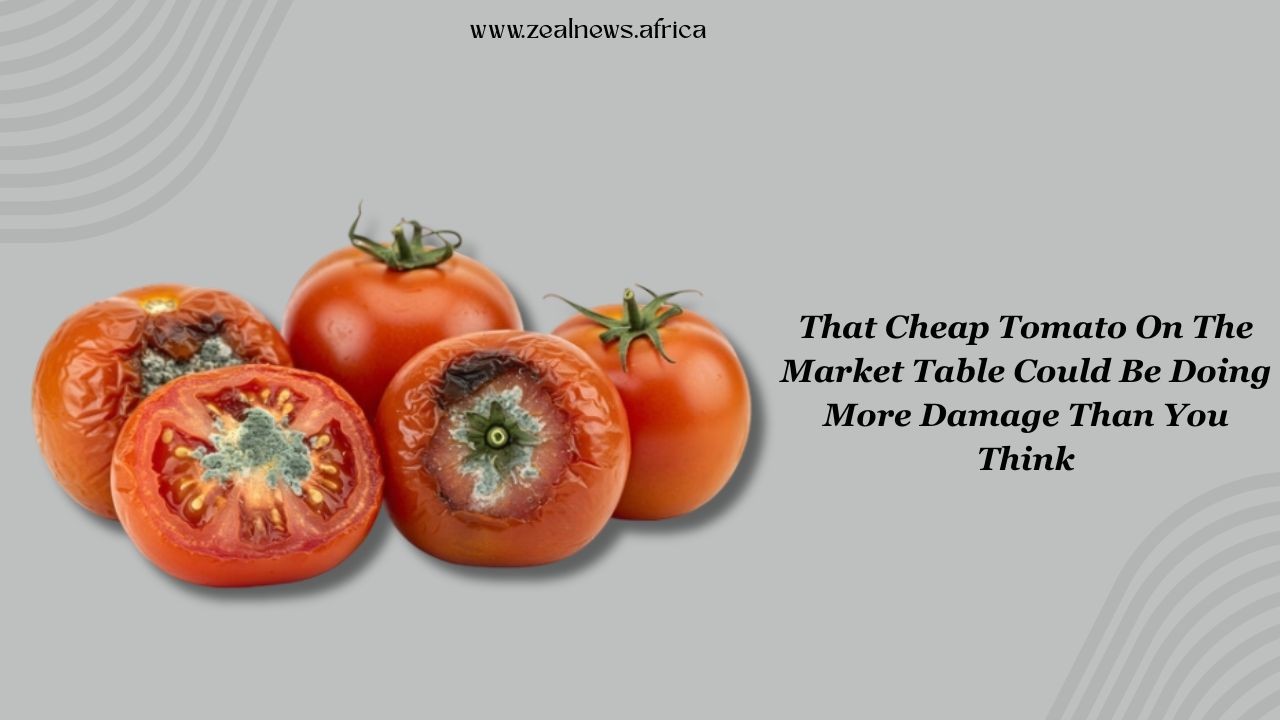
Amaka usually buys the soft ones, not because she does not know better. She knows exactly what those white lines running through the flesh mean, what that slightly fermented smell rising from the pile tells her.
She buys them anyway because the firm, fresh ones cost nearly three times as much, and she has a pot of stew to make and five children to feed, and the money in her hand is the money in her hand.
This is not ignorance, this is economics. If you ask the average Nigerian, but it is quietly making people sick across kitchens all over Nigeria and the rest of Africa.
What Those White Lines Actually Are
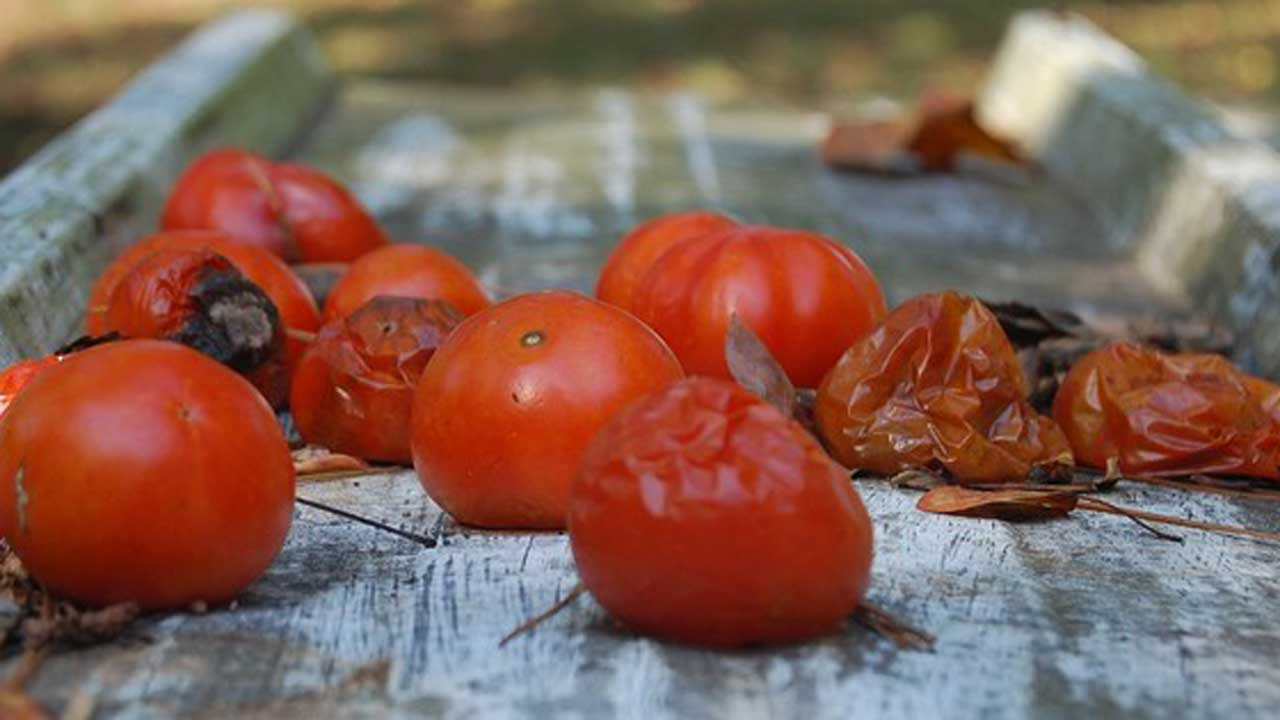
The white streaks, spots, and fuzzy patches visible on tomatoes are not just cosmetic damage. They are active fungal colonies, most commonly Aspergillus and Fusarium species, that have already begun breaking down the tomato's internal structure.
By the time white or grey mould is visible on the surface, the contamination has spread well beyond what the eye can see.
These fungi produce mycotoxins, toxic compounds that do not die when you apply heat. Cooking the tomato does not neutralise them; boiling, frying, and blending — none of them eliminates mycotoxins once they have formed. You cook the mould away visually, but the poison technically still stays.
Aflatoxin, one of the most dangerous mycotoxins, is classified as a Group 1 carcinogen by the International Agency for Research on Cancer. Long-term, low-level exposure has been linked to liver cancer, immune suppression, and stunted development in children.
Short-term exposure to heavily contaminated food can cause aflatoxicosis — nausea, vomiting, abdominal pain, and, in severe cases, acute liver failure.
The Economy That Puts Rotten Tomatoes On The Table
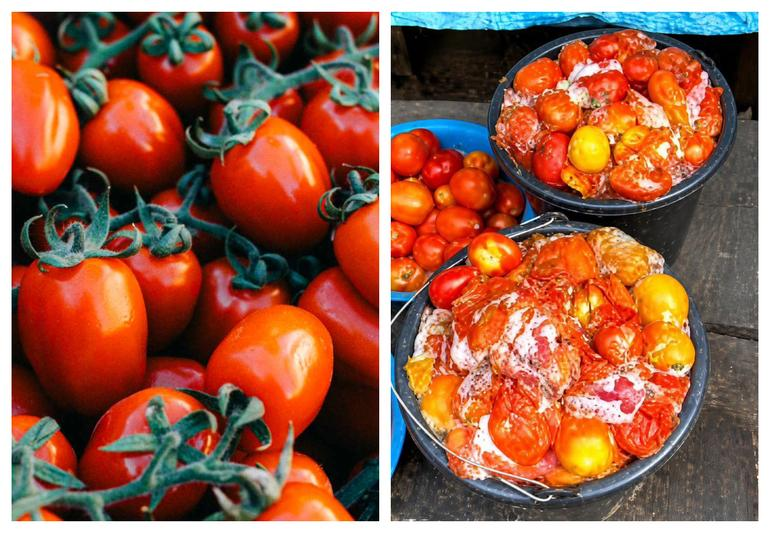
Nigeria is one of Africa's largest tomato producers, yet tomato prices remain brutally volatile. Post-harvest losses from poor storage, bad roads, and inadequate cold chain infrastructure mean that a significant portion of harvested tomatoes rot before reaching a market in good condition.
Sellers discount damaged stock to recover something rather than lose everything. Buyers with stretched budgets take the discount because fresh produce has become a luxury item in the same economy where inflation hit 34.8 per cent in December 2024.
The result is a market where rotten tomatoes are not an anomaly. They are a category. Vendors sort them openly, fresh on one side, soft and marked on the other, priced accordingly.
Buyers make their choice based on what they can afford, not what they should eat. Nobody in that transaction is villainous. Both are just responding to a broken system.
What Happens Inside Your Body
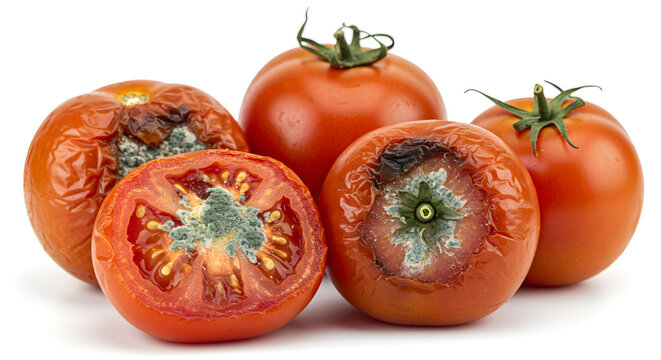
Beyond mycotoxins, a decomposing tomato carries bacterial contamination, Salmonella, E. coli, and Listeriaare commonly found on damaged produce.
These bacteria cause food poisoning with symptoms ranging from severe stomach cramps and diarrhoea to dangerous dehydration, particularly in children and elderly people.
The liver takes the heaviest hit from repeated mycotoxin exposure. It is the organ responsible for filtering toxins from the bloodstream, and chronic low-level aflatoxin ingestion stresses it continuously.
In a population where hepatitis B is already prevalent, Nigeria has one of the highest hepatitis B burden rates in the world, and adding consistent mycotoxin exposure is compounding an already serious public health risk.
Kidney damage, chronic fatigue, poor nutrient absorption, and weakened immunity are also associated with prolonged consumption of mould-contaminated food. These symptoms are diffuse enough that most people never connect them to the tomatoes. They chalk it up to stress, malaria, or just the general difficulty of living.
What To Do When Fresh Is Not Always Possible
If budget constraints make perfectly fresh tomatoes difficult, there are harm-reduction steps worth knowing.
Cut away damaged sections generously, not just the visibly mouldy part but a wide margin around it.
Smell the tomato before cooking; a fermented or off odour is a sign the whole fruit is compromised.
Never blend a damaged tomato with a fresh one, the contamination spreads through the blender and into everything.
When tomatoes are in season and prices drop, buy in bulk and make a large batch of blended tomato paste to freeze. It is cheaper in the long run and eliminates the daily compromise at the market.
The deeper fix is not in the kitchen. It is in cold storage infrastructure, better road networks, functional preservation systems, and an economy where a woman feeding her children does not have to choose between safe food and enough food.
Until that changes, the soft tomatoes will keep selling. And people will keep buying them, because the alternative is nothing at all.