Why Being the World's Largest Generation Could Actually Be Bad for Gen Z
Gen Z is the world's largest generation, but population size has not translated into economic power. From unemployment to rising costs, discover why Africa may face the biggest impact.

Gen Z did not ask to be the biggest generation alive, yet at 2.04 billion people, roughly a quarter of the planet's population, that is exactly what it has become.
Being the largest cohort in human history sounds like leverage that should translate to political weight and economic bargaining power. Instead, Gen Z is inheriting the sharpest job cuts, the steepest cost-of-living spikes, and the widest gap between qualification and opportunity of any generation on record.
Size, it turns out, is not the same thing as strength.

How Gen Z Became the World's Largest Generation
Fertility rates stayed high across Sub-Saharan Africa and South Asia through the late 1990s and 2000s, even as birth rates in North America, Europe, and East Asia kept falling.
At the same time, decades of progress in maternal healthcare and child survival meant that more of the children born between 1997 and 2012 actually lived to adulthood than in previous generations.
The result is a generation leaning heavily toward the Global South and mostly concentrated in exactly the regions where economies were least prepared to absorb them.
A generation spread evenly across strong, high-employment economies would carry very different prospects than one concentrated in fragile labour markets.
Gen Z's size is a demographic bet placed almost entirely on countries still building the institutions needed to employ that many young people at once.
A Youth Bulge Is Not Automatically a Youth Dividend
When a country has more working-age people than dependents, it is calledthe demographic dividend. In theory, a young and large population becomes an engine of growth, filling factories, offices, and classrooms in numbers that fuel productivity for decades.
But that dividend only pays if job creation keeps pace with population growth. When it doesn't, the same numbers become a liability, producing underemployment, informal labour, and a permanent backlog of graduates with nowhere to go.
Gen Z is currently living the downside of that equation. Being the largest generation ever born means competing against the largest applicant pool ever assembled and for a share of entry-level jobs that has actually shrunk relative to demand.
The Economic Crises Stacking Up on Gen Z
Social Insight
Navigate the Rhythms of African Communities
Bold Conversations. Real Impact. True Narratives.
Gen Z entered adulthood during a uniquely brutal sequence of shocks: a pandemic that disrupted schooling and early career starts, an inflation surge that outpaced wage growth almost everywhere, and now an AI-driven restructuring of the very entry-level roles young workers rely on to build experience.
Across parts of Asia, youth unemployment already runs two to three times higher than national averages.
In North Africa, unemployment among young people with university degrees can reach roughly a third of that population. This is a signal that the problem is not a lack of skills but a lack of absorption capacity in the economy itself.
When housing costs, stagnant pay, and student debt are also considered, it becomes clear that Gen-Z is the first generation forced to compete for opportunity at a scale the global economy was never built to accommodate.
Why Africa Carries the Heaviest Weight of This Math

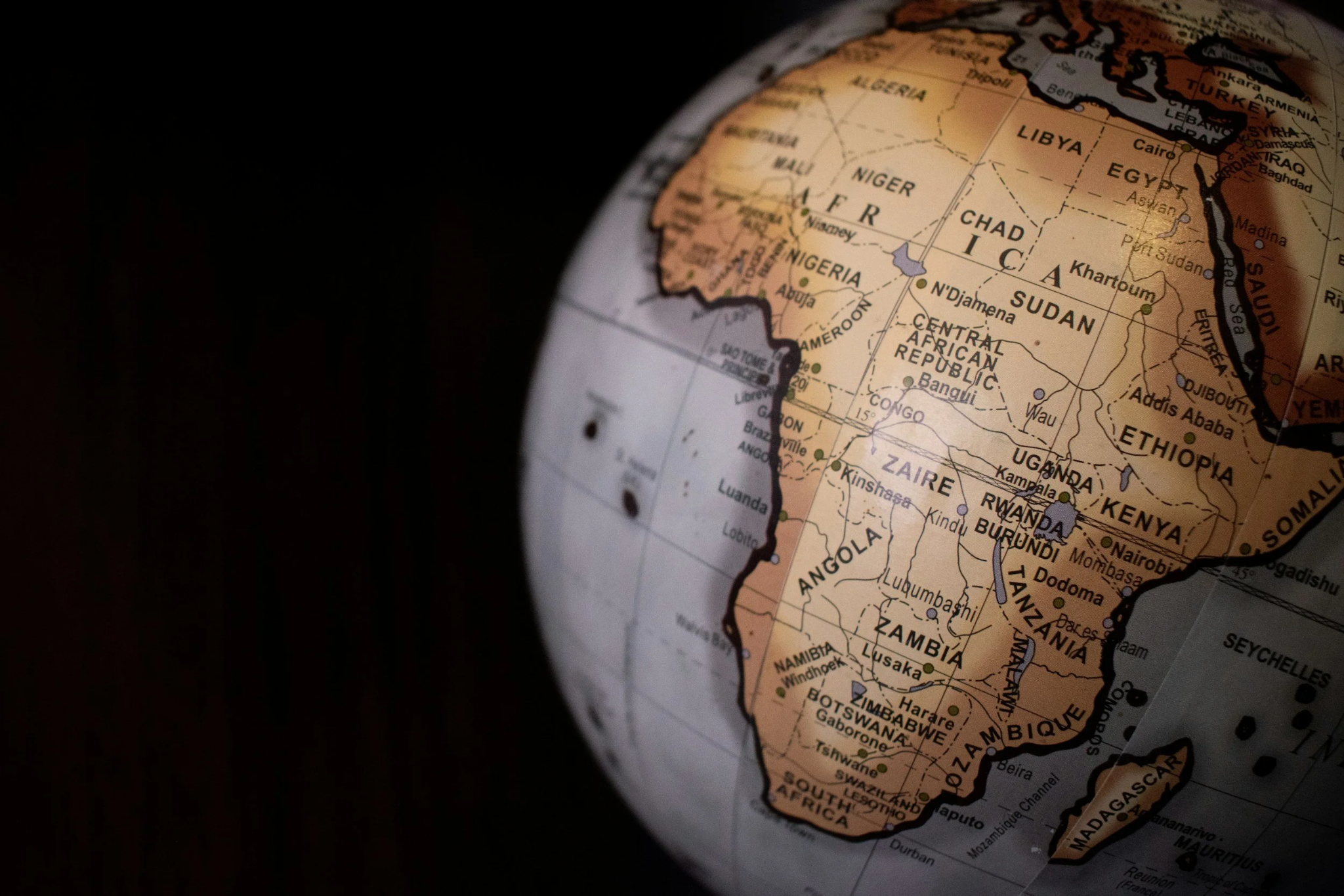
This tension is sharper in Africa which is currently the home to the youngest and fastest-growing population on the planet. Roughly 70% of the continent is under 30, and that working-age population is projected to double by mid-century.
That should make Africa the biggest beneficiary of the demographic dividend. Except in reality, it has become the clearest case study in what happens when population growth outruns job creation.
In South Africa, youth unemployment has climbed past 60%. Elsewhere on the continent, the broadcast employment numbers look strong, with well over half of young people counted as "employed," but a microscopic look shows most of that work is informal, low-paying, and offers little security.
Analysts have started calling it a hidden crisis of the working poor: young people who technically have jobs but not livelihoods.
Nigeria, along with much of West Africa, sits on this wall, with a Gen Z population large enough to reshape the region's economy but a formal job market still too small to hold it.
When a Generation Is Big Enough to Matter but Not Loud Enough to Change Policy
Political and economic systems across Africa and much of the Global South were not designed around populations this young or this large, and they have been slow to adapt.

Frustration has increasingly spilled into the streets instead of the ballot box or the boardroom and situations of youth-led protests like the ones held in Kenya and Madagascar, Morocco's Gen Z demonstrations over unemployment and public services are what is being witnessed.
These movements are what happens when a generation large enough to define a continent's future still has no formal channel to influence it.
Being the world's largest generation was supposed to be Gen Z's advantage. Instead, it has exposed just how unprepared global economies, and African economies in particular, are to convert population size into real opportunity.
Social Insight
Navigate the Rhythms of African Communities
Bold Conversations. Real Impact. True Narratives.
Numbers alone will not fix that gap. Only deliberate investment in jobs, skills, and institutions built for the generation that already exists can.