Whose Money Is It Anyway? A Love Story Between Women and Other People’s Wallets
A humorous and insightful social commentary on why women often prefer spending men’s money, blending psychology, storytelling, sarcasm, and relatable scenarios.

Money, they say, reveals character. But in relationships, families, and sibling dynamics, money reveals more than that it reveals an unending series of comedy. Somewhere between love, entitlement, survival instincts, and premium enjoyment lies a curious social phenomenon: many women appear far more comfortable spending other people's money, especially men’s money, than their own. Not always maliciously, not always consciously, but consistently enough to inspire memes, arguments, laughter, and lifelong financial trauma. From brothers to boyfriends, husbands to unfortunate male friends, the pattern repeats itself with alarming confidence.
This is not an attack piece. It is not a courtroom trial. It is social psychology dressed in humor, sprinkled with sarcasm, and rooted in lived experience. Because if you have never heard a woman say, “My money is my money, but your money is our money,” then you are either very lucky or very single or worse you're not a human living on earth and especially in Africa.
The Philosophy of “My Money Is My Money”
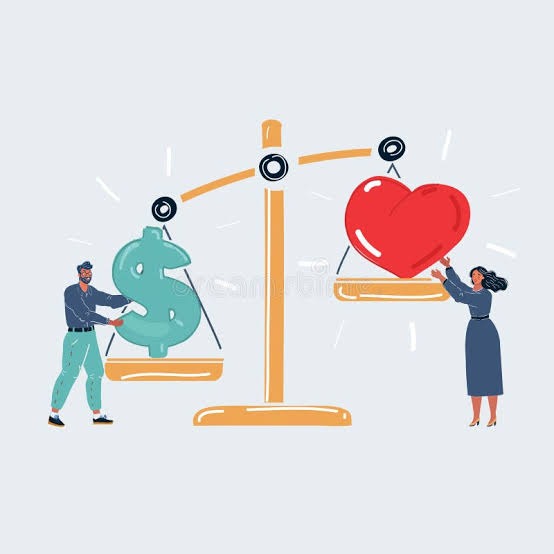
At the heart of this phenomenon lies a financial ideology so powerful that I daresay it actually deserves academic recognition. “My money is my money, but your money is our money” is not just a statement; it is a worldview. A complete economic system. A theory of redistribution executed flawlessly without legislation.

In this system, a woman’s money is sacred. It has plans. Visions. A destiny. It is reserved for hair appointments, skincare routines that cost like rent, emergency outings, birthday slayings, and future oblee that must not be interrupted by any spendings whatsoever. Spending her own money feels like a loss. Spending someone else’s money feels like a strategy more like a soft landing.
This is why a woman can complain about the economy while holding your ATM card because according to this logic e be like say you de immune to this economy wey she de talk about. This is why she can say she is broke while ordering food with confidence. She can say the economy is not smiling but her savings are stacked up. Her money being intact equals financial discipline. Your money being spent equals partnership.
And the funniest part? She will defend this logic with a straight face. Calmly. As if it is universally understood.
Last Born Energy and the Luxury of Not Fearing Poverty
Then there is the infamous defense: “Why I go fear spending? I be like last born and I be girl.”
This statement alone deserves sociological research. Last-born daughters move through life with an audacity forged by years of collective family indulgence. They have grown up watching older siblings suffer consequences while they were protected by vibes and cuteness. Spending recklessly feels natural when rescue has always been nearby.

For them, money is not something you stress about; it is something that appears. Brother will send. Uncle will help. Daddy will sort it out. If they eventually get married their husband will handle it. The fear of financial consequences is minimal because history has taught them that someone always comes through.
This does not mean they are irresponsible. It means their relationship with money is less anxious and more optimistic. They trust the system. Unfortunately, the system is usually a man and in some instances an older sister.
Borrowing, Returning, and Other Creative Interpretations
Nothing exposes this matter more than borrowing stories, you might have seen, heard or even experienced it first hand. Take this classic case for example: your wife borrowed you 100k, but you have not finished paying—even after the 100k.
You borrowed money from your own wife, yet repayment feels like a mortgage that you might be paying for a lifetime. Each attempt to reduce the debt is met with a reminder of what you still owe. Somehow, the money you borrowed has multiplied emotionally. Interest was added, not financially, but psychologically. Every argument suddenly remembers that loan.
Then there is Paul. Poor Paul, as I am even writing this I'm pitying him honestly and laughing at the same time. So long story short , my dear brother Paul borrowed 5k from his girlfriend. Simple. Clean. Manageable. But to his surprise yesterday morning, his girlfriend called and told him to send her 10k from the 5k he borrowed from her. As how na? From where to where, who be your juju plug?
Paul was dumbfounded, e nor just make sense, the more he tried to think about the matter the more he got confused, because it's so obvious that logic left the chat. Mathematics seemed to have resigned from their locality with his knowledge. Paul is now in debt to a debt that came from him. This is not borrowing; this is financial sorcery, one that only an experienced financial sorcerer can pull off. A woman’s ability to restructure money conversations deserves applause and if possible a global recognition from the Grammys.
Did Paul pay? Yes he did. Will he borrow money anytime in the future? Yes he will, and so this shocking experience for Paul turns to an unending cycle of uneven sweet experience.
And siblings are not spared. Many men can testify that their first financial heartbreak did not come from a girlfriend but from a sister. Money collected under the banner of “I’ll return it” mysteriously transforms into “We are family, why are you asking?” The audacity is consistent, and the confidence is impressive. Even mothers have played a fast one on their children, when told to return money, emotional statements like “after everything I have used to train you or after carrying you for nine months, you are asking for your money” becomes the other of the day.

Like they always say “if skin nor full no put body” because the money dynamics with these women cannot be understood by even a professor sef.
Is It Greed, Strategy, or Social Conditioning?
The easy conclusion is to call it greed or even manipulation. But that would be lazy and actually lame if you ask me. The truth is more layered. Social psychology offers a clearer lens.
For generations, women were discouraged from earning aggressively but encouraged to secure stability through relationships. Men were raised to provide, women to manage. Even as society evolves, these old scripts still whisper in behavior. Spending a man’s money does not always feel wrong because history normalized it.
There is also emotional labor involved. Many women justify spending men’s money because they believe they contribute in other ways, care, emotional support, domestic planning, social coordination. In their minds, the exchange is fair. You bring money, I bring peace. Or chaos. Depending on the day and what they think you deserve.

And let us be honest: many men enable this behavior. Spending on women is often tied to masculinity, pride, and validation. Complaining after spending does not erase the enjoyment of being needed.
So you see this isn't an issue of either greed, strategy, or even social conditioning, it's a whole thrill of comedic play of how money is spent, who spends it and who gets to enjoy the benefits of the spending.
Also it's important to face another fact that when you actually need money from this women they actually come through, yes they may be a handful when it comes to disturbing you to give them your Atm card or send them money, but when you need those urgent financial help that you can't say out loud they are always there in the background coming through for you and so you see it's a win-win situation, but e be like say some people de win pass some people oo.
Conclusion: The Thrill of It All
Beyond logic, there is thrill. Spending someone else’s money carries a unique joy, even if you're a man sef you know say na true, that high blood pressure of debit alert is avoided and you can eat without recalculating the cost. It is guilt-free enjoyment. No internal debate. No long-term regret. The dopamine hits harder when the cost is external.
This is why the phenomenon persists even among financially independent women. Earning your own money does not automatically remove the thrill of someone else paying. Independence and enjoyment are not enemies. A woman can pay her own bills and still prefer her partner’s card.

What makes it funny is not the act itself but the confidence surrounding it. The way it is normalized. The way it is joked about openly. The way everyone laughs while quietly checking their bank balance.
The relationship between women and money, especially other people’s money, is not a crime. It is a cultural dance shaped by history, psychology, family dynamics, and humor. It is messy, unfair at times, deeply funny, and strangely enduring.
Men complain, but they comply. Women joke, but they enjoy. And society watches, laughs, and continues the cycle. Perhaps the real issue is not who spends whose money, but how comfortably we have accepted the script.
After all, in this economy, if love does not cost you something, are you even doing it right? Abi am shouting too much?
So if you're man reading this, your money is not your money oo, it's our money. Thank you