What Was Nigeria’s National Football Team Called Before It Became the Super Eagles?
The Nigerian team that travelled to England in 1949 as the UK Tourists later became the Red Devils, Green Eagles and the Super Eagles known today.
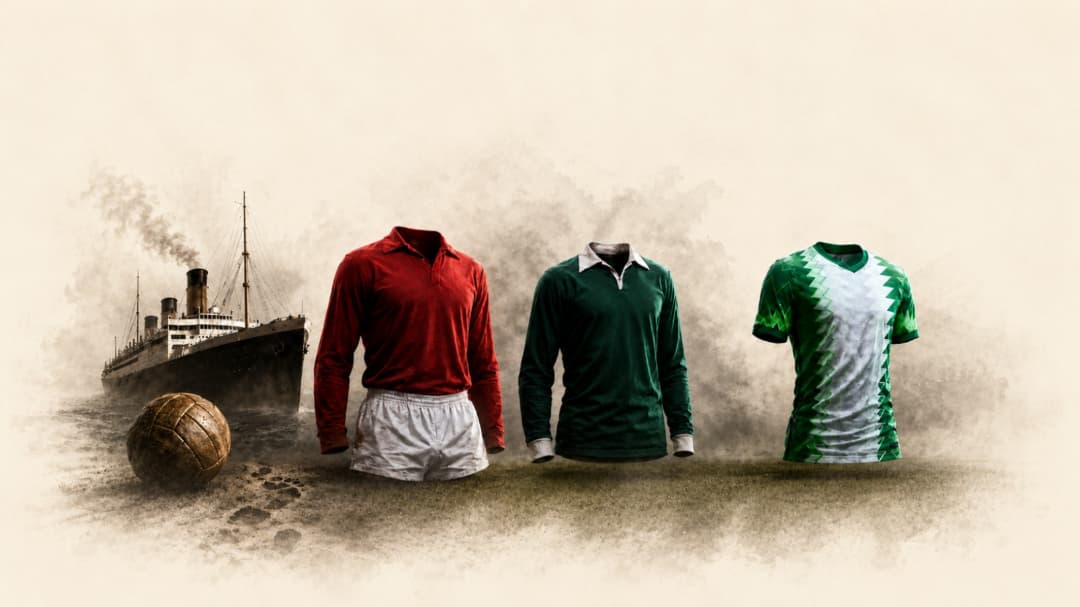
On August 16, 1949, Nigeria’s first national football team boarded the RMSS Apapa and travelled to England for a football tour.
The players were known as the UK Tourists.
Nigeria was still under British colonial rule, and this was the team’s first trip outside the country. Some of the players competed without boots during the early matches of the tour. They were footballers selected to play for Nigeria abroad for the first time.
The UK Tourists: Nigeria’s First National Team
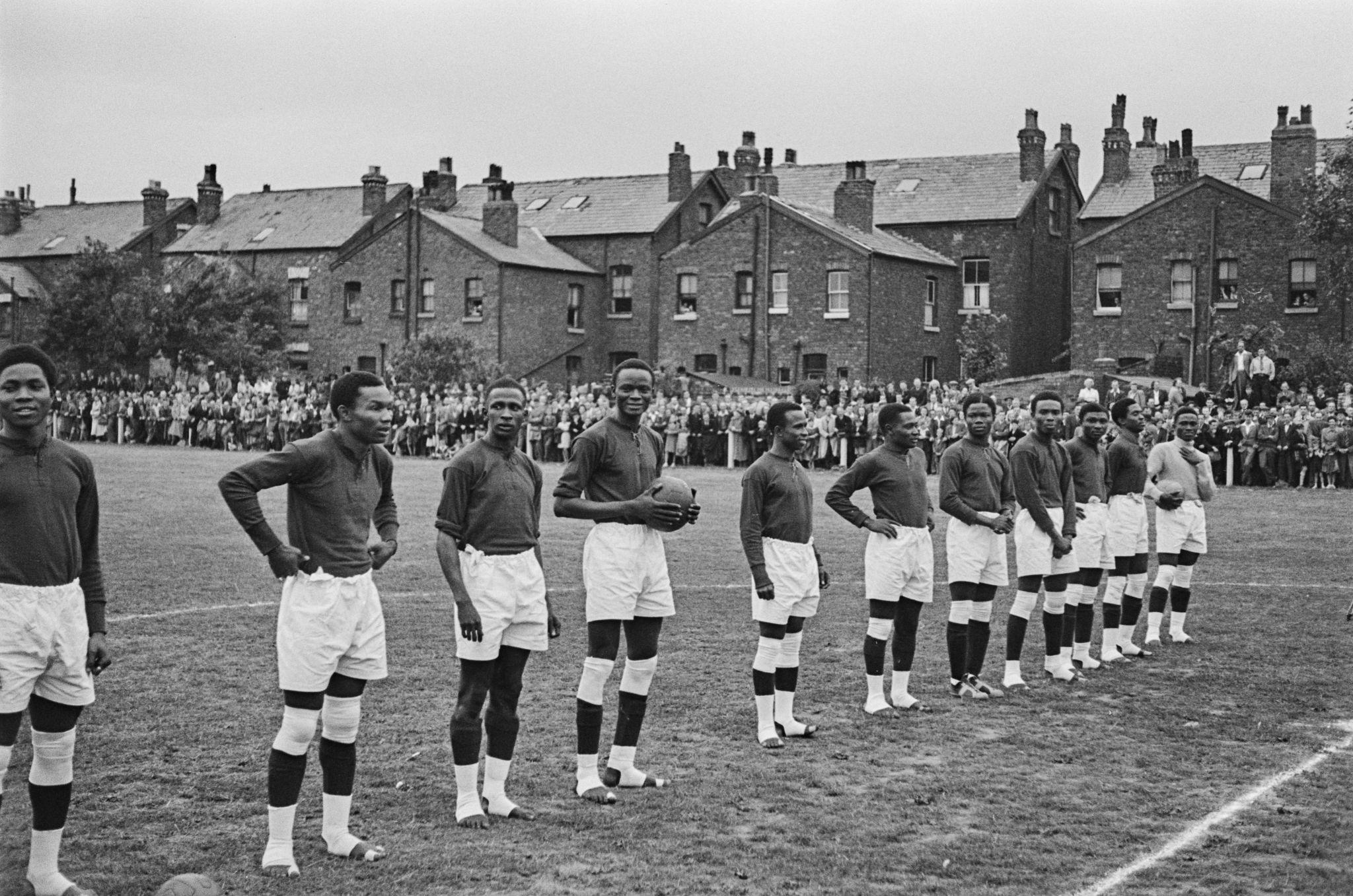
Circa 1949 - Nigerian -UK Tourists- national team
Before the national team was formed, football clubs across Nigeria were already producing players through domestic competitions such as the Governor’s Cup.
These competitions provided many of the players selected for Nigeria’s first national side in 1949.
The squad included Teslim Balogun, Dan Anyiam and Peter Anieke. Etim Henshaw captained the team, becoming Nigeria’s first official national team captain.
After leaving Lagos on the RMSS Apapa, the UK Tourists played nine matches during their England tour.
They won two games, drew two and lost five. Their first match ended in a 5–2 victory over Marine FC in Crosby. In another match, organisers insisted that the Nigerian players wear boots before the game against an Athenian League XI side could proceed.
The tour was Nigeria’s first football trip outside the country. The team faced English clubs and representative sides before returning home.
The Red Devils: Before Independence
After the England tour, the national side became known as the Red Devils, a name linked to the red-topped kits worn by the players.
The Red Devils name remained until Nigeria gained independence in 1960.
On October 8, 1949, Nigeria played itsfirst officially recognised international match when the team faced Sierra Leone in Freetown.
History
Rewind the Stories that Made Africa, Africa
A Journey Through Time, Narrated with Insight.
Nigeria won 2–0, with Titus Okere scoring the first goal and Teslim Balogun adding the second.
In the years that followed, Nigeria played other West African sides, while domestic competitions continued producing players for the national team.
When Nigeria gained independence in 1960, the team adopted a new name.
The Green Eagles: A Team After Independence
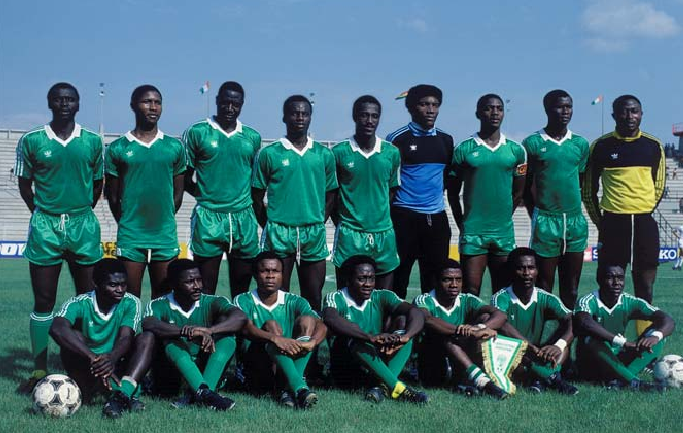
The national team moved away from the red colours associated with the earlier years and began using green, reflecting Nigeria’s national colours. The eagle in the name also connected with the eagle on Nigeria’s coat of arms.

The team became known as the Green Eagles.
Nigeria joined FIFA in 1960 and made its first Africa Cup of Nations appearance in 1963. The tournament ended in the first round, with Nigeria conceding 10 goals in three matches.
During the 1970s, Nigerian football developed through domestic competitions and the emergence of players such as Segun Odegbami, Christian Chukwu, Muda Lawal and Emmanuel Okala.
With that group of players, Nigeria won bronze medals at the 1976 and 1978 Africa Cup of Nations tournaments.
In 1980, Nigeria hosted the competition, and the Green Eagles won the Africa Cup of Nations for the first time. Nigeria defeated Algeria 3–0 in the final at the National Stadium in Lagos.
The Super Eagles
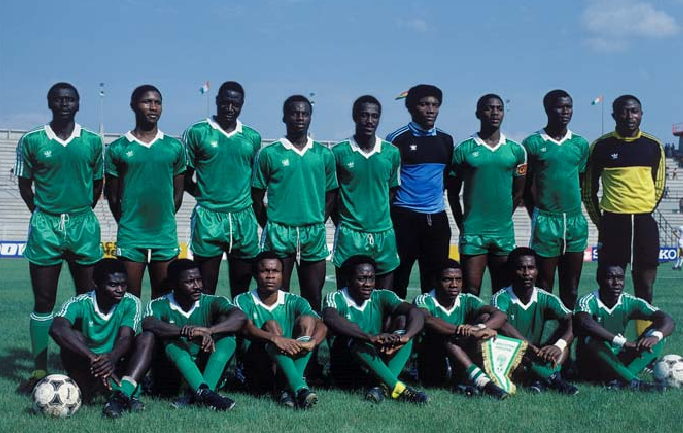
The Super Eagles name came in 1988 after Nigeria reached the Africa Cup of Nations final in Morocco.
The team lost 1–0 to Cameroon, but returned home to a reception in Lagos. During the event, then Vice-President Augustus Aikhomu announced the change from Green Eagles to Super Eagles.
Six years later, the Super Eagles qualified for Nigeria’s first FIFA World Cup.
Before the tournament began, Nigeria had reached fifth place in the FIFA world rankings in April 1994, the highest position achieved by an African national team at the time.
History
Rewind the Stories that Made Africa, Africa
A Journey Through Time, Narrated with Insight.
At the World Cup in the United States, the squad featuring Rashidi Yekini, Daniel Amokachi, Jay-Jay Okocha and Finidi George reached the Round of 16 before losing to Italy.
The same period also included Nigeria’s Olympic success in 1996. The Dream Team, Nigeria’s under-23 side featuring several senior national team players, defeated Brazil and Argentina to win gold at the Atlanta Olympics.
The triumph made Nigeria thefirst African country to win an Olympic gold medal in football.
The names changed as Nigeria changed.
The UK Tourists belonged to the colonial years, the Red Devils carried the colours of that period, and the Green Eagles emerged after independence.
By the time the team became the Super Eagles, the name carried decades of Nigerian football history with it.