Zambia Ignites Diplomatic Row with EU Over Fiery Post-Election Resolution
A recent European Parliament resolution on Zambia's post-election situation has sparked debate, with the Zambian government describing it as premature and lacking engagement. While some misinterpreted the resolution as punitive, experts clarify it's a political opinion, not binding law or sanctions, consistent with past precedents. Both parties, despite disagreements, affirm commitment to their strategic partnership.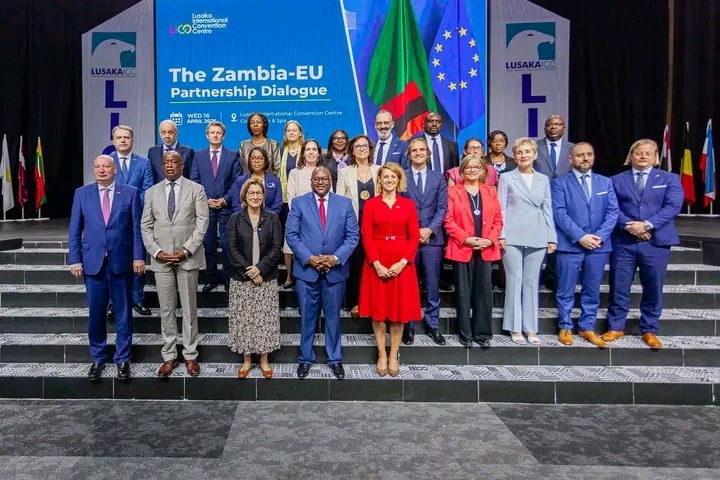
A recent resolution adopted by the European Parliament concerning Zambia's post-election situation on September 17th has ignited significant debate and, according to various analyses, considerable misinformation. Many voices, particularly from opposition factions and social media, misinterpreted the resolution as a declaration of sanctions, a cut in EU funding, or an imminent economic collapse for Zambia. However, a deeper understanding of institutional protocols and diplomatic precedents reveals a different reality.
It is crucial to understand the nature of a European Parliament resolution. The European Union comprises three main institutions: the European Parliament, the European Commission, and the Council of the European Union. A resolution from the European Parliament is fundamentally a political opinion; it is not binding law, a sanction, or a change in trade policy. Decisions pertaining to sanctions, aid cuts, or alterations in trade agreements are the prerogative of the European Commission and the Council, not the Parliament acting alone. Historical examples reinforce this distinction. In 2006, the European Parliament passed a resolution on the United States regarding the Guantanamo detention facility, urging its closure and adherence to international law for prisoners, yet the United States remained a key EU partner. More recently, in November 2025, a similar resolution on post-election human rights concerns in Tanzania called for investigations and dialogue, but did not terminate Europe's relationship with Tanzania. Therefore, claims that "the EU has punished Zambia" are inaccurate and contribute to misinformation.
Central to this discussion is the principle of national sovereignty. Zambia is an independent state, responsible for resolving its internal affairs through its own established institutions, including its courts, Parliament, and media, all operating under the Zambian Constitution. A resolution passed in Brussels does not dictate governance in Zambia; the country is governed by Zambians. While Zambia values its diplomatic and economic relationships with international partners like the EU, its electoral processes, legal cases, and constitutional matters are domestic issues. Outsourcing political disagreements to external bodies detracts from the domestic mechanisms available for addressing genuine concerns.
The Zambian Government has formally responded to the European Parliament's resolution, deeming its adoption premature and expressing concerns over a perceived lack of prior engagement with Zambian authorities. In a statement issued by the Ministry of Foreign Affairs and International Cooperation, the government underscored that serious conclusions regarding a sovereign state should be based on verified facts and informed by direct dialogue. It has proactively requested the EU Delegation in Lusaka to facilitate a formal partnership dialogue involving the European Commission and the European External Action Service (EEAS), aligning with the principles of mutual respect and shared responsibility enshrined in the Samoa Agreement.
Addressing specific concerns raised in the resolution, the Zambian Government clarified its position on the death of Mutotwe Kafwaya, stating that Zambian law permits law-enforcement officers to use force in lawful duties under specific conditions, subject to legal safeguards and principles of necessity and proportionality. The government argued that it would be premature to label specific incidents as murder before investigations are concluded and competent authorities render their determinations. Furthermore, the timing of the European Parliament's resolution was questioned, particularly given that investigations and judicial proceedings related to the stated concerns remain ongoing, emphasizing that courts are constitutionally mandated to establish facts and resolve legal issues.
Despite these disagreements, Zambia has reaffirmed its steadfast commitment to its longstanding strategic partnership with the European Union, encompassing crucial areas such as trade, investment, development, and critical raw materials. The Zambian Government has urged European institutions to respect the independence of constitutionally mandated institutions, allowing them to conduct their work without undue external influence. It has also pledged continued engagement to ensure Zambia's perspective is accurately represented in ongoing dialogues.
Ultimately, a mature and constructive response to such resolutions involves neither dismissing the European Parliament's concerns nor exaggerating their implications. It is possible to acknowledge legitimate allegations, demand thorough investigations, and uphold Zambia's sovereignty and institutions, all while recognizing that disagreements with European bodies do not automatically sever diplomatic, economic, or development ties. Zambia's international standing should reflect the robustness of its institutions, the credibility of its investigative processes, its adherence to the rule of law, and its capacity to address difficult questions effectively, rather than being solely defined by the existence of a single parliamentary resolution. The focus should remain on national development and governance, allowing the Zambian Constitution to serve as the ultimate legal framework for the nation.