Unveiling the Legacy: The Saga of Physical Bitcoin's Past and Future
The quest to create physical Bitcoin has seen various innovations, from Casascius Coins to Opendimes and Satodimes, each tackling challenges like private key management and trust. While significant progress has been made in hardware-based solutions like Coinkite's Tapsigner, the inherent digital nature and cost of secure chips still present fundamental hurdles to achieving truly cash-like physical Bitcoin.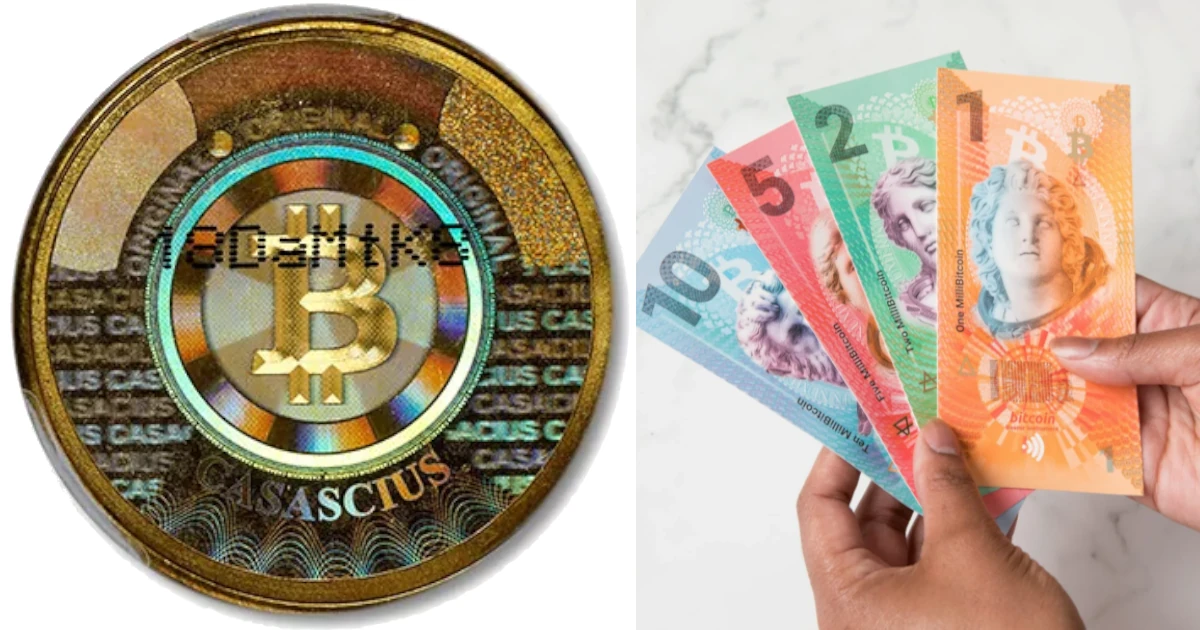
Bitcoin's inherent digital nature offers significant advantages, including unparalleled speed for global value transfer and robust self-custody practices that make theft and confiscation exceedingly difficult due to its programmable cryptographic foundation. However, this very digital essence has presented a long-standing challenge: Bitcoin cannot be physically held or touched, existing solely as an abstract concept. This lack of tangibility has been a significant barrier to mainstream adoption, inspiring over a decade of entrepreneurial and artistic endeavors to bridge the gap between digital Bitcoin and the physical world, aiming to imbue it with cash-like properties.
Among the earliest and most iconic attempts are **Casascius Coins**, first minted in September 2011 when Bitcoin was valued at a mere $8. Named after developer Mike Caldwell, these precious metal coins contained a private key, generated on an air-gapped machine and securely attached, then covered by tamper-proof stickers that would visibly alter if removed, allowing buyers to verify the key's integrity. Caldwell's meticulous security precautions and transparency fostered trust, and the coins gained legendary status, commanding a premium beyond their Bitcoin and metal value. However, their production ceased in November 2013 after FinCEN classified Caldwell as a money transmitter business, highlighting the regulatory complexities and centralizing trust issues inherent in such physical representations.
A year after Casascius Coins were discontinued, **RavenBit Coins** emerged, attempting to decentralize the 'trusted mint' problem. These coins were structurally similar to Casascius but were sold with the tamper-proof sticker unpeeled, allowing users to generate their own private keys, attach them, and seal the coin. While theoretically decentralizing the minting process, this approach practically created a multitude of untrusted mints, as it became impossible for recipients to verify the precautions taken by the key generator. The RavenBit project was ultimately abandoned, but it underscored the need for more sophisticated technological solutions for physical Bitcoin.
To circumvent the trusted mint problem at both central and individual levels, hardware wallet manufacturer Coinkite developed the **Opendime**. This tiny, purpose-built computer acts as a Bitcoin bearer asset. It features a secure computer chip capable of generating and securely storing a private-public key pair, protected by a silicon tamper-proof mechanism. Users contribute entropy during setup, enhancing the randomness of key generation. The public key is always visible when connected via USB, allowing users to verify its balance. To withdraw Bitcoin, the device must be physically punctured, which visibly unseals it and grants access to the private key. Opendimes, priced around $20, represented a major breakthrough in bearer asset technology and have achieved iconic status in Bitcoin art and meme culture. Despite their innovation, their price point and USB stick form factor limit their viability as everyday cash, as they are not fungible and require a significant amount of Bitcoin (e.g., $100+) to justify the hardware cost for transactional use.
Building on the Opendime concept in a more familiar form factor, Belgian manufacturer Satochip created the **Satodime**, an open-source, credit card-like Bitcoin wallet. It shares similar capabilities, generating key pairs and, in some versions, signing transactions. Users interact with it via NFC-enabled phone apps. Other form factors like rings and coins also incorporate the same chip. At around €13, Satodime is cheaper than an Opendime, bringing it closer to, but still far from, the cost-effectiveness of everyday cash. These devices are primarily intended as high-security hardware wallets, and the inherent cost of powerful, small computer chips remains a significant barrier to achieving cash-like pricing.
The fundamental limits of creating truly cheap, physical Bitcoin hardware are stark. The U.S. Federal Reserve estimates production costs for dollar bills range from 4.1 to 11.3 cents. To justify a 20,000 Satoshis bill (roughly $16), the hardware would need to cost well under a dollar. Most chips capable of Bitcoin cryptography exceed this target. While chips like NXP's NTAG X DNA, available in thin sticker form factors for about $3, demonstrate the potential for low-cost cryptographic functions, they do not natively support Bitcoin's secp256k1 curve. Furthermore, traditional cash-like flexible bills are highly damaging to delicate computer chips, a lesson learned through experience in developing Bitcoin bearer assets.
The **OfflineCash** company has produced visually stunning, collection-worthy Bitcoin-denominated bills featuring NTAG-style NFC chips. These bills store a user-generated key, which, combined with a second company-generated, time-locked key on their servers, creates a 2-of-2 multisignature wallet. The server key eventually time-locks and degrades to a 1-of-1 wallet, allowing the user to withdraw Bitcoin. While innovative in form factor and an attempt to circumvent the trusted mint issue, it ultimately replicates the