UN Declares Transatlantic Slave Trade Gravest Crime: Mahama Hails Historic Resolution for Ghana and Africa
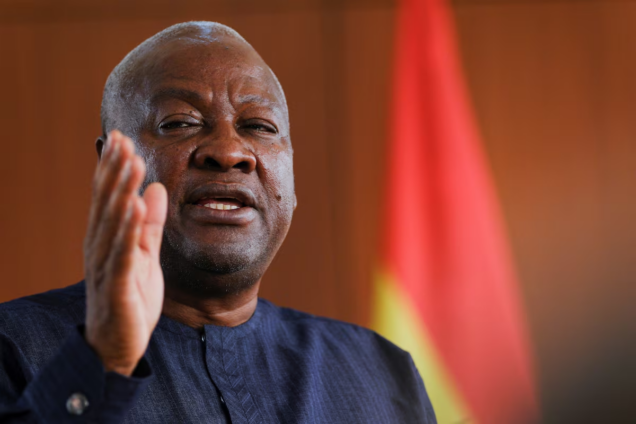
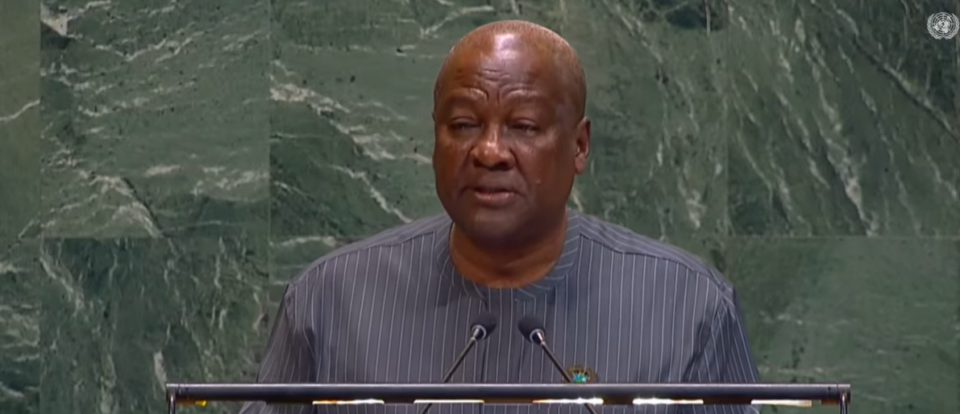
The United Nations General Assembly, on March 25, 2026, adopted a landmark resolution declaring the transatlantic slave trade and racialized chattel enslavement as the gravest crime against humanity and one of the greatest injustices against humanity. This historic resolution, spearheaded by Ghana and its President, John Dramani Mahama, marks a profound moment for Ghana, Africa, and people of African descent worldwide, affirming long-standing calls for truth and justice at the highest global level.
President Mahama, upon his return from the UN, described the development as a "proud and defining moment" and a "historic moral victory." He stressed that the resolution is not merely about the past but about justice, dignity, and truth, highlighting Ghana's commitment to advancing dialogue, remembrance, and reparative measures. The resolution, passed with 123 member states voting in favour, three against (United States, Israel, Argentina), and 53 abstentions, represents a major diplomatic victory for Ghana and reflects growing global momentum to confront the historical atrocities of the slave trade and its enduring impact.
The resolution explicitly recognizes the transatlantic slave trade, which spanned from the 16th to the 19th century (approximately 1526-1867), as a horrific tragedy that subjected millions of Africans and people of African descent to centuries of suffering, violence, economic exploitation, and dehumanization. It further acknowledges that the legacy of slavery continues to manifest in systemic inequalities, racial discrimination, and developmental challenges affecting African countries and diaspora communities. This normative framing strengthens the legal and moral case that the slave trade constituted a violation of fundamental principles of humanity.
Ghana worked closely with partners, including the African Union and Caribbean nations, to build consensus around this resolution. President Mahama emphasized that many supporting countries were not directly involved in the slave trade but chose to stand on the side of moral conscience and justice. He pointed to the CARICOM 10-point plan on reparations as a critical framework for advancing global discussions, stating that Ghana would continue to engage allies towards dialogue, education, remembrance, and ultimately reparative action.
Legally, while General Assembly resolutions are non-binding and recommendatory in nature, they play a crucial role in the development of international law, as affirmed by Articles 10 to 14 of the UN Charter. The International Court of Justice (ICJ) has recognized such resolutions as evidence of opinio juris – the belief by states that a particular rule reflects a legal obligation, which is a key element of customary international law. The 2026 resolution, adopted by a large majority, goes beyond earlier instruments by explicitly categorizing the transatlantic slave trade as the "gravest crime against humanity," challenging arguments that historical legality bars contemporary claims for responsibility or reparations.
For African states, this resolution provides a strengthened legal and diplomatic foundation for pursuing reparatory justice. While not creating a direct right to compensation, it serves as authoritative international recognition of the historical wrong's scale and gravity. This is particularly relevant for negotiations concerning the restitution of cultural property, development partnerships, and formal apologies from former colonial powers. In potential contentious proceedings before the ICJ, African states could cite the resolution as evidence of the contemporary international community's assessment of the slave trade's legal character, supporting arguments for an emerging customary norm of historical slavery as an internationally wrongful act.
The states that voted in favour (123) have publicly accepted its normative conclusions, which may limit their ability to deny the legal or moral significance of the slave trade under the doctrine of estoppel. Conversely, the states that voted against (United States, Israel, Argentina) have preserved their legal position, potentially invoking the persistent objector doctrine against an emerging customary norm. The near-universal condemnation expressed in the resolution contributes significantly to the consolidation of the already well-established customary prohibition of slavery, supporting arguments that the transatlantic slave trade was contrary to general principles of law even before its formal abolition.
Looking ahead, one of the most significant potential consequences of the resolution is its capacity to serve as a normative foundation for establishing an international reparations mechanism. African Union institutions or coalitions of affected states could leverage this international consensus to advocate for a specialized reparations tribunal or commission, drawing inspiration from historical precedents like the Nuremberg and Tokyo Tribunals or the United Nations Compensation Commission.
Furthermore, the General Assembly could request an advisory opinion from the International Court of Justice under Article 96 of the UN Charter, addressing questions such as whether the transatlantic slave trade violated international law at the time and what legal consequences arise today. Such an opinion, while non-binding, carries significant legal authority and could influence the Court’s reasoning on obligations erga omnes and the continuing legal effects of historical injustices. The resolution also contributes to the broader evolution of international legal doctrine concerning historical responsibility, intergenerational harm, and the legal consequences of colonialism and racial domination, reinforcing the understanding that certain acts engage the interest of the international community as a whole.
In conclusion, the UN General Assembly's resolution on the transatlantic slave trade, though not immediately creating binding legal obligations, profoundly shapes the normative environment of international law. By consolidating global recognition of the magnitude and enduring consequences of the slave trade, it strengthens the moral and legal foundations for claims of reparatory justice, paving the way for future judicial and institutional developments. This resolution represents a crucial step in an evolving legal and political process aimed at addressing one of the gravest injustices in human history.
You may also like...
Nigeria vs Jordan: Super Eagles Pre-Match Buzz, Injury Scare & Viewing Guide

Nigeria's Super Eagles will face Jordan in the decisive final of a four-nation invitational tournament, with the trophy ...
Margot Robbie's Divisive Blockbuster: $236M Film Hits Digital This Week!

Margot Robbie and Jacob Elordi headline the latest adaptation of Emily Brontë's <i>Wuthering Heights</i>, a film that ac...
Cavill's 007 Bid: Star Reportedly Eyeing James Bond Role in Villeneuve's Reboot!

Henry Cavill, a perennial fixture in James Bond casting talks, has revealed a surprising shift in his ambitions for the ...
Shocking Sci-Fi Twist! 'Paradise' Finale Sets Up Explosive Season 3 Revealed by Star Thomas Doherty

The second season of Hulu's 'Paradise' introduced significant shifts, including Link's pivotal role and the reveal of hi...
African Travel Faces Dire Threat: Nairobi Summit Confronts Payment Fraud Crisis

The African travel sector faces escalating payment fraud threats amid its digital growth, as highlighted by the KTRIPS 2...
Air Algérie Soars: Massive Order for Boeing Jets Signals Major Expansion

Air Algérie has confirmed a major new aircraft order, acquiring ten Boeing 737 MAX 8 jets as part of its expansive fleet...
Alarming Ozempic Side Effects: 'Skinny Jabs' Linked to Pancreatitis and Tumours, Doc Warns!

A heated debate surrounds GLP-1 weight loss drugs in Ireland, with experts clashing over costs, risks, and the need to '...
Cybersecurity Emerges as Core Driver for Africa's Industrial Future

Africa's cybersecurity market is rapidly expanding, yet the continent's industries are digitizing faster than they can s...