Trump's Budget Blitz: Congress Approves Sweeping $9 Billion Spending Reductions
House Republicans have successfully passed a $9 billion spending cuts package targeting foreign aid and public broadcasting, a significant win for President Trump achieved through an obscure budget law. The move, celebrated by conservatives, has drawn strong criticism from Democrats who warn it jeopardizes future bipartisan cooperation on government funding and could lead to a shutdown.
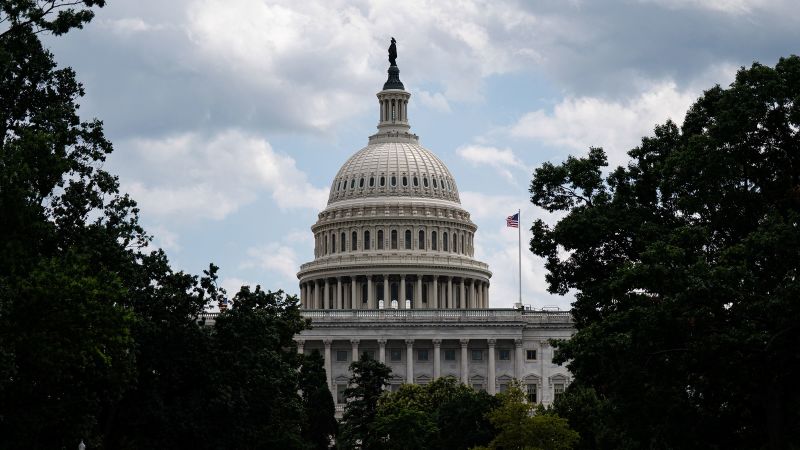
House Republicans delivered a significant legislative victory to President Donald Trump early Friday morning by approving a package of $9 billion in spending cuts. This measure specifically targets foreign aid and public broadcasting, and was passed under an obscure presidential budget law designed to circumvent the Senate filibuster. This marks the first time in approximately 30 years that a president has successfully utilized this maneuver, showcasing a notable deference from the legislative branch to the White House on matters of fiscal policy.
The package allocates roughly $8 billion in cuts from congressionally approved foreign aid programs, aligning with the White House's broader efforts to reorganize the US Agency for International Development. An additional $1.1 billion will be cut from the Corporation for Public Broadcasting, which provides crucial funding to public media entities such as NPR and PBS. The final vote tally in the House was 216-213, with only two Republican representatives, Mike Turner and Brian Fitzpatrick, dissenting.
This spending cuts package, which codifies some of the recommendations from Trump's Department of Government Efficiency (DOGE) initiative, was a key priority for the President and fiscal conservatives who have consistently advocated for reducing federal spending. However, prior to its final passage, the bill encountered unexpected complications in the narrowly divided House. Some members demanded a separate, unrelated commitment from GOP leadership for increased transparency regarding the Jeffrey Epstein files, creating an awkward division between Trump and some of his most loyal House Republican supporters.
The issue of Epstein file transparency had simmered on Capitol Hill for days, prompting Speaker Mike Johnson and his leadership team to engage in prolonged negotiations with members of the House Rules Committee. Ultimately, the committee voted to advance both the DOGE cuts package and a non-binding resolution calling for the release of additional Epstein files. However, this non-binding resolution lacks any mechanism to compel it to the floor for a vote.
Following the House's approval, President Trump, Speaker Johnson, and other congressional Republicans quickly touted the achievement. Trump proclaimed "THIS IS BIG!!!" on Truth Social, while Johnson expressed his delight, affirming the Republican commitment to downsizing government and ensuring it is "accountable and efficient and effective for the people." While this vote honored Trump's campaign pledge to rein in runaway spending, the cuts represent only a tiny fraction of the $1 trillion in annual savings that tech billionaire Elon Musk, who initially spearheaded DOGE, had vowed to find before his departure from the initiative.
Democrats, however, vehemently opposed the bill, framing it as a betrayal of the bipartisan government funding process and expressing concerns about future implications. House Minority Leader Hakeem Jeffries, along with other top Democrats, warned that the vote makes it clear that House Republicans are "determined to march this country toward a painful government shutdown later this year." Senate Minority Leader Chuck Schumer characterized it as a "dark day for any American who relies on public broadcasting during floods, hurricanes, tornadoes, and other disasters." He also expressed skepticism about Senate Majority Leader John Thune's assurances of bipartisan cooperation on future government funding, particularly after White House Office of Management and Budget Director Russ Vought suggested the appropriations process should be "less bipartisan."
The passage of this bill raises significant questions about the prospects for Democrats and Republicans to collaborate on keeping the government funded beyond the September 30 deadline. Despite Republican appropriators arguing that the rescissions package should not impact future spending talks, the White House budget chief Russell Vought indicated that the administration is likely to send additional rescissions packages to Congress, suggesting a continued focus on spending reductions that could further strain bipartisan relations. The original bill included $400 million in cuts to PEPFAR, a global AIDS program, but this funding was ultimately saved due to a rebellion by moderate Republicans.