Trump Brokerage: Historic DRC-Rwanda Peace Deal Set for White House Signing
United States President Donald Trump is set to host the leaders of Rwanda and the Democratic Republic of the Congo (DRC) for the signing of a “historic peace and economic agreement” aimed at resolving years of conflict in Eastern Congo. The pact follows extensive negotiations, though several implementation protocols remain. Kenya's President William Ruto will also attend to witness the signing and discuss broader Kenya-U.S. cooperation.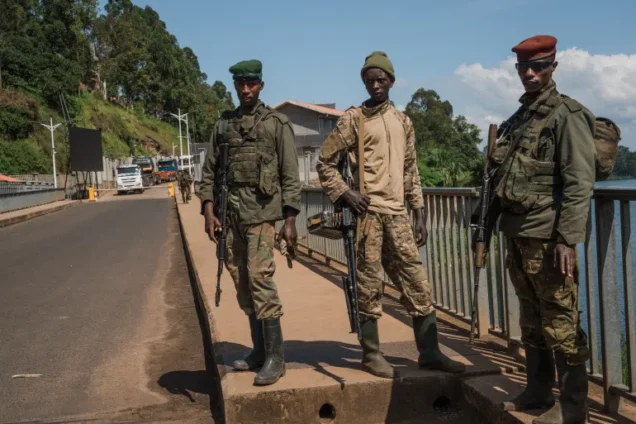
United States President Donald Trump is scheduled to host the leaders of Rwanda and the Democratic Republic of the Congo (DRC) on Thursday for the signing of a “historic peace and economic agreement,” as announced by White House spokesperson Karoline Leavitt. DRC President Felix Tshisekedi and Rwanda President Paul Kagame will formalize this pact, which President Trump claims to have brokered, following extensive diplomatic efforts.
This significant event is the culmination of months of intense negotiations. A preliminary peace agreement and economic pact were first signed by the foreign ministers of the two African nations at a White House event in June. Subsequently, in November, delegations met in Qatar where they signed a framework agreement with the overarching goal of ending years of conflict in the region.
The deep-seated conflict in eastern DRC, particularly in North Kivu province, has spanned over a decade, primarily involving the M23 rebel group against the DRC government. The roots of this violence are often traced back to the 1994 Rwandan genocide, as the M23 rebels are largely composed of ethnic Tutsis, a community targeted by Hutu forces in Rwanda. The group saw a resurgence in 2021, with Kinshasa alleging direct support from Rwanda. Kigali, however, vehemently denies these claims, asserting that Rwandan forces act solely in self-defense against the DRC’s military and ethnic Hutu fighters in the volatile border region.
The human toll of this conflict has been immense, with thousands of people, many of them civilians, killed. Violence escalated significantly during an offensive earlier this year, which saw the M23 seize control of two of the DRC’s largest cities. Sporadic fighting has persisted even as peace talks progressed. The United Nations Office of the High Commissioner for Human Rights (OHCHR) reported at least 319 civilian deaths in North Kivu province in July alone, attributed to “M23 fighters, aided by members of the Rwanda Defence Force,” shortly after the initial White House deal.
While the Doha meeting in November yielded two of eight implementation protocols, specifically concerning ceasefire monitoring and prisoner exchange, several crucial issues remained unresolved. These included a definitive timeline for peace, details for humanitarian aid delivery, the safe return of displaced populations, restoring state authority in contested areas, implementing economic reforms, the reintegration of various armed groups into the government, and the elimination of foreign militant groups. A DRC presidential spokesperson emphasized in November that any final agreement must unequivocally guarantee the “territorial integrity” of the country.
Kenya’s President William Ruto will also travel to Washington, D.C., at President Trump's invitation to witness the signing. The pact is being hailed as the most significant step towards ending decades of conflict in Eastern Congo, building upon previous regional peace initiatives such as the Nairobi and Luanda processes, as well as the joint EAC–SADC initiative. The Washington signing is anticipated to consolidate support from all key parties for plans concerning disarmament, demobilisation, humanitarian access, and long-term regional stabilization.
Beyond witnessing the peace accord, President Ruto is expected to engage in a series of discussions aimed at strengthening Kenya’s cooperation with the United States across various sectors, including trade, investment, health, and security. During his visit, President Ruto will also witness the signing of a new Kenya–U.S. Health Cooperation Framework. This framework is designed to transition their 25-year health partnership into a sustainable, government-led model, with the ambitious goals of advancing Universal Health Coverage and establishing a self-reliant health system in Kenya by 2030.
President Ruto will further highlight Kenya’s economic transformation agenda, which prioritizes human capital development, infrastructure expansion, agro-industrial growth, and expanded irrigation through large-scale dam projects. He intends to seek Public–Private Partnership investments in these critical sectors and foster enhanced collaboration on energy security, all in support of Kenya’s long-term development objectives. Despite the lingering complexities and unresolved issues, President Trump has consistently highlighted this conflict resolution as one of several achievements during his tenure.