Tinubu's Historic Deal Has Resolved The OPL 245 Dispute, Unlocking Deepwater Wealth
President Bola Tinubu has announced the resolution of a decades-long dispute over Oil Prospecting Licence (OPL) 245, a significant deepwater oil block. This historic settlement, involving the Federal Government, Eni, and Nigerian Agip Exploration Limited, is expected to add 150,000 barrels per day to Nigeria's production capacity and restore investor confidence, addressing a major legacy issue in the country's energy sector.
President Bola Tinubu on Thursday announced the resolution of a decades-long dispute over Oil Prospecting Licence (OPL) 245, one of Nigeria’s most commercially significant deepwater oil blocks.
The presidency said the agreement paves the way for a development that could add approximately 150,000 barrels per day to the country’s production capacity.
Details of the agreement were not made public, but the president’s office described it as a “historic settlement” that would unlock the development of one of Nigeria’s most strategically important deepwater resources.
OPL 245, a vast deepwater offshore asset in the Niger Delta, holds an estimated nine billion barrels of crude and has remained largely untapped for nearly three decades, mired in corruption and multi-jurisdictional legal battles spanning Nigeria, Italy, the United Kingdom, and the United States.
The disputes, centring on the block’s acquisition and ownership, have resulted in court cases in multiple countries between the Federal Government of Nigeria, Shell, Eni, and Malabu Oil and Gas.
Presidential spokesperson Bayo Onanuga said in a statement that the agreement “restores clarity and stability” to an asset widely recognised as one of Nigeria’s most commercially promising deepwater blocks.
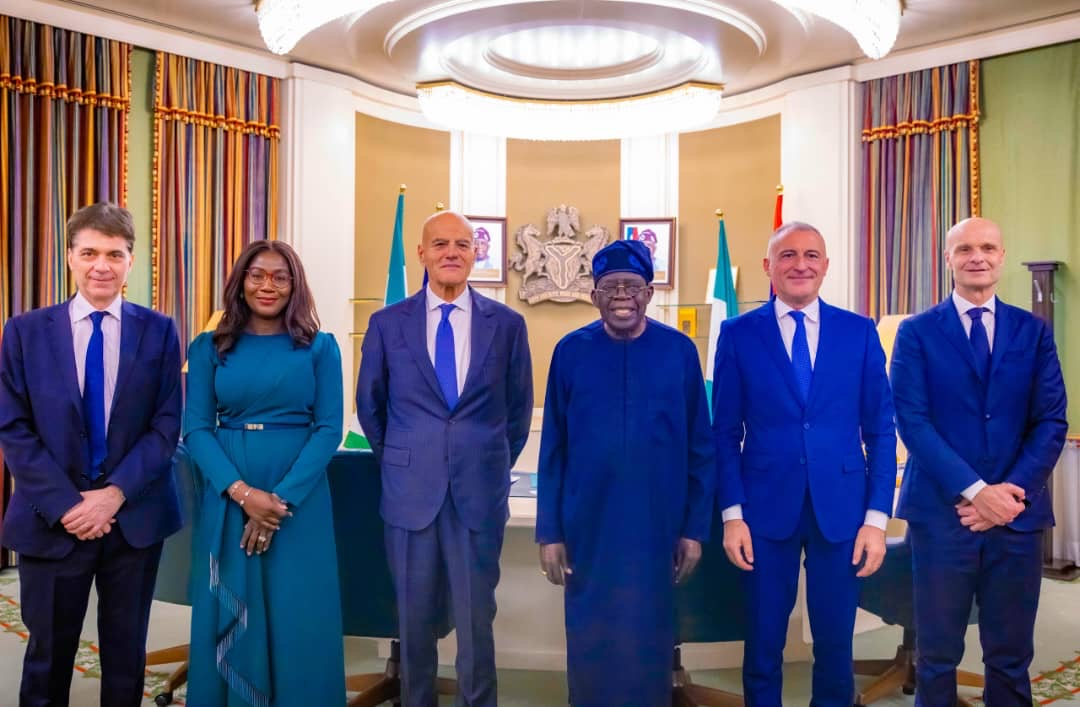
The signing ceremony brought together top leaders from the Italian oil giant Eni, including CEO Claudio Descalzi, along with Nigeria’s Special Adviser on Energy, Olu Arowolo-Verheijen.
With this long-standing dispute finally settled, the way is now clear for the massive Zabazaba–Etan oil project to move forward.
President Tinubu called the deal a major win for his economic reforms, noting that it proves Nigeria is serious about fixing old legal battles and winning back the trust of global investors.
By resolving these "legacy issues" transparently, the President believes Nigeria is sending a clear message to the world: the country is a stable, law-abiding place for big companies to invest their money for the long term.
It aligns perfectly with the Petroleum Industry Act (PIA) and the government's latest energy reforms.
The goal was to find a "win-win" balance: giving big investors the clear rules they need for deepwater projects while ensuring Nigeria gets a much better deal and stronger protections.
This resolution is just one piece of a larger plan started in 2023 to make Nigeria a top choice for global energy investment again.
These reforms are already working, bringing new money and interest back into the country's oil and gas sector.
By finally settling the OPL 245 dispute, the government has removed one of the biggest "red flags" for investors.
It proves that Nigeria is committed to fair rules, honest leadership, and making sure big projects are actually profitable for everyone involved.
The history of the OPL 245 oil block is one of the most complicated and controversial sagas in Nigeria’s energy sector.
Here is a simplified look at how this decade-long dispute unfolded and why the new resolution matters.

The story began in 1998 when the block was awarded to Malabu Oil and Gas, a company linked to the son of former dictator Sani Abacha and his oil minister, Dan Etete.
Shortly after, the government revoked Malabu's license and gave it to Shell. This sparked a massive legal battle, as Malabu accused Shell and the government of working together to steal the block.

To avoid a $2 billion lawsuit from Shell, the government eventually flipped its decision again, giving the rights back to Malabu.
This created a stalemate where Shell sued for its lost investment while Malabu held onto the rights, all while the public demanded transparency.
Under President Goodluck Jonathan in 2011, a settlement was finally reached where Shell and Eni paid roughly $1.1 billion to the Nigerian government.
The government then passed that money to Malabu to get them to walk away, allowing Shell and Eni to take control.
However, this deal immediately raised red flags. Italian prosecutors and Nigeria's EFCC alleged that the money didn't go to the state but was funneled to middlemen and politicians.
High-ranking officials, including former Attorney General Mohammed Adoke and Eni CEO Claudio Descalzi, faced years of criminal trials.
While they were eventually acquitted or had charges dismissed due to a lack of evidence, the scandal remained a major "black mark" on Nigeria's reputation.
President Tinubu’s administration has now stepped in to finally close this chapter. By creating a new agreement that follows the modern Petroleum Industry Act (PIA), the government has fixed the flaws of the 2011 deal.
This new resolution removes the legal "dark cloud" hanging over the block, allowing Nigeria to finally develop these natural resources while proving to the world that it can handle major energy deals with transparency and stability.