The Ongoing Debate on State Police as the Next Step in Tackling Insecurity in Nigeria
State police in Nigeria promise better security—but at what cost? Between hope for safer communities and fears of political misuse, the debate raises one big question: can Nigeria fix its security without risking its democracy?
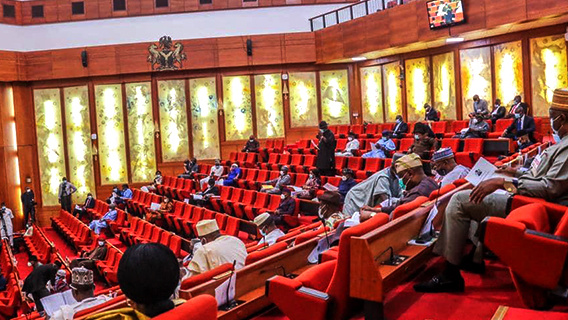
The ongoing debate over the creation of state police in Nigeria has continued to generate strong public interest as the country grapples with persistent insecurity.
Across different regions, citizens continue to experience challenges such as kidnapping, armed robbery, banditry, and communal clashes, making security one of the most pressing national concerns.
For many people, the idea of state police represents hope for a faster, more responsive security system that is closer to the communities it is meant to protect.
At the same time, policymakers and citizens remain divided on how such a system would function in practice.
While supporters believe it could improve efficiency and local intelligence gathering, critics are concerned about the possibility of political interference and uneven implementation across states.
There is also ongoing discussion about whether existing institutions have the capacity to coordinate effectively with a new layer of policing without creating confusion or overlap in responsibilities.
These mixed reactions highlight the complexity of Nigeria’s security situation, where the demand for immediate solutions must be balanced with the need for careful planning and strong safeguards.
This made the debate not just political, but it is also about survival, safety, and restoring peace to everyday life.
Fear of Political Misuse and Power Abuse
One of the strongest concerns raised by critics of state police in Nigeria is the possibility that it could fall under the influence of political leaders.
In a country where politics is often highly competitive and emotionally charged, there are fears that a state-controlled security force might not remain neutral in its duties.
Instead of focusing purely on protecting citizens, it could potentially be used to serve political interests.
Many Nigerians worry that during elections or politically sensitive periods, state police officers could be pressured to intimidate opposition groups, restrict gatherings, or influence voter behaviour.
This raises serious questions about fairness and democracy, especially in situations where those in power also control security structures within their state.
There is also concern about accountability, and if abuse of power occurs, citizens may find it difficult to report or challenge it, particularly if the security system is closely tied to political leadership.
This could create a situation where fear replaces trust, weakening the very purpose of policing.
Because of these risks, many observers believe that if state police is eventually introduced, it must come with strong safeguards, independent oversight, and clear rules to prevent political interference.
Without these protections, critics argue that the system could deepen existing tensions rather than improve security.

Funding and Operational Challenges

Another major concern surrounding state police in Nigeria is how the system would be funded and sustained over time.
The Police is not just about recruiting officers, but it requires continuous investment in training, equipment, salaries, intelligence systems, vehicles, and communication networks.
All of these demands place a heavy financial burden on any government, even at the national level.
Because of this, analysts worry that some economically weaker states may struggle to properly maintain their own police forces.
In such cases, security quality could vary significantly from one state to another, creating inequality in protection across the country.
The wealthier the states will be able to build well-equipped and effective forces, while poorer states could face shortages of resources, poorly trained officers, or delayed responses to emergencies.
There are also concerns about sustainability in the long term, and security funding is not a one-time expense, but it requires consistent budgeting year after year.
If states experience economic downturns or political instability, funding for policing could be affected, which may weaken the entire system.
Another important issue is training and professionalism, and experts stress that officers would need proper education in law enforcement, human rights, conflict management, and modern policing techniques.
Without strong training standards, there is a risk that officers may not be fully prepared to handle complex or high-pressure security situations.
A new analysis by Business Day suggests that establishing and sustaining a functional state policing system could cost Nigerian states N120 billion ($87m).
The analysis is based on globally referenced police that the population benchmarks and current estimates for police training and operational equipment is conclusive.
But Nigeria indicates that a medium sized state with a population of 5 million people could require nearly 50 billion naira ($36m) simply to recruit, train and equip a police force excluding infrastructure, salaries, vehicles, weapons and technology.
Perhaps, the biggest challenge which the state policing system in Nigeria would face when it eventually becomes operational is provision of funds required for its take – off.

Coordination Between Security Agencies
Security experts have raised important concerns about how state police would work alongside existing federal security agencies in Nigeria.
For example, the global security strategist Amb. (Dr.) Sylvester Okere, CEO of Champion Investigations & Security Consulting Services (USA), who made a statement on TruthNigeria, saying that creating state police in Nigeria is a “commendable and long‑overdue step toward addressing the nation’s security challenges.”
At the moment, the country already relies on multiple institutions such as the police force, civil defense, and other specialized security units.
Introducing state police could add another layer to an already complex system, making coordination more difficult if roles are not clearly defined.
One major worry is the risk of confusion over jurisdiction, and in case of emergency situations, it may not always be clear whether state or federal officers should take charge, especially in cases that cross state boundaries or involve serious crimes.
Without a well-structured system, this could lead to delays in response or disagreements over authority, which may weaken overall security effectiveness.
There is also the concern of duplication of efforts, but if both state and federal agencies are operating in the same space without proper coordination, it could result in overlapping duties, wasted resources, and inefficiency.
In some cases, agencies might even work at cross purposes, reducing trust and cooperation between them.
To prevent these issues, experts emphasize the need for clear communication channels, well-defined responsibilities, and a strong legal framework that outlines how each security body should operate.
Without this level of planning, the introduction of state police could create more complexity instead of solving existing security challenges.
Conclusion
The debate over state police in Nigeria continues to grow because it speaks to something deeply personal for many citizens, safety is the number one thing in everyday life.
While the idea offers real hope for faster response and stronger local security, it also comes with serious questions about power, control, and accountability.
For the reform to succeed, it cannot be rushed or taken lightly, because it will require clear laws, strong oversight, and safeguards that ensure security forces protect citizens rather than serve political interests.
More importantly, it will require trust between the government and the people.
In the end, the real question is not just whether state police are needed, but whether Nigeria can build a system that makes people feel safe without weakening democracy or citizens’ rights.
That balance will determine whether this idea becomes a breakthrough—or another unfinished promise.