The Invisible Force That Holds the Universe Together: The Science of Gravity
A captivating science article explaining the hidden power of gravity, how it shapes the universe, influences time, and reveals some of the greatest mysteries in modern physics.
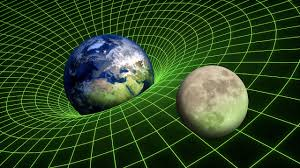
Humanity lives every second under the influence of a force we cannot see, smell, or touch, yet it shapes the course of stars, the orbit of planets, the function of our bodies, and even the formation of galaxies. This force is gravity, one of the most remarkable and misunderstood scientific phenomena. It keeps the Earth spinning predictably around the Sun, pulls oceans to create tides, and prevents us from floating aimlessly into the sky. But despite how familiar gravity feels, science continues to reveal that it is anything but simple.
Gravity, as we know it today, is defined as the force of attraction between two masses. Isaac Newton famously described it in the 17th century after observing an apple fall, proposing that every object, no matter how small, pulls on every other object in the universe. This explanation transformed how humans understood the cosmos. However, centuries later, Albert Einstein introduced an even deeper explanation: gravity is not just a force, but a curvature of spacetime. According to Einstein’s theory of general relativity, massive bodies like Earth bend the fabric of space around them, and smaller objects simply follow the curved path. The result? Orbits, tides, weight, everything we associate with gravity.
What makes gravity especially fascinating is its paradoxical nature. It is the weakest of the four fundamental forces of nature, yet the most far-reaching. A simple magnet can lift a paperclip against the entire gravitational pull of Earth, showing how weak gravity is on small scales. But on cosmic scales, its combined effect governs the structure of the universe. Galaxies form because gravity pulls dust and gas together. Stars ignite because gravity compresses atoms until nuclear fusion begins. Even black holes, regions where gravity becomes so strong that not even light can escape, are extreme demonstrations of gravity pushed to its limits.
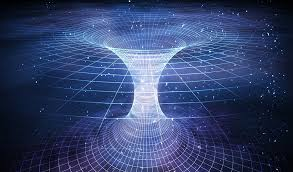
“One of the most fascinating facts about gravity is its delicate precision. If gravity were even slightly stronger, Earth’s structure could collapse under its own weight, altering the planet beyond recognition. If it were even slightly weaker, matter would drift apart and the world as we know it could not hold together. This fine-tuning of gravitational force suggests a universe that isn’t random, but calibrated with extraordinary accuracy, a structure that some argue reflects intentional design or a higher governing order.”
Gravity also determines the experience of time. Einstein’s theory predicts that time passes more slowly the closer you are to a massive object. This isn’t just theory, scientists have measured it. For example, clocks on airplanes tick a little faster than clocks on Earth’s surface. This phenomenon, known as gravitational time dilation, is so precise that without accounting for it, GPS systems would be inaccurate by several kilometers every single day. In other words, your smartphone only knows your location because Einstein was right.
Another surprising fact is that gravity is not the same everywhere on Earth. Depending on where you stand, you weigh slightly more or less. This is due to variations in Earth’s density, rotation, and shape. According to measurements by NASA, gravity is stronger in places with dense rock formations and weaker in regions with deep ocean trenches or underground cavities. The difference is small, usually less than 0.5 percent, but it reminds us that gravity is dynamic, not fixed.
Modern science is still trying to solve one of the biggest mysteries: What exactly causes gravity at the smallest scales? Newton described what gravity does. Einstein described how it behaves. But neither fully explains why gravity exists in terms of quantum physics. While electromagnetism and nuclear forces can be described at atomic scales, gravity resists such explanation. Physicists suspect a particle called the “graviton” may transmit gravitational interactions, but it has never been detected. Finding it could unlock new understanding about the origin of the universe.
Gravity also helps scientists search for unseen objects. In 2015, the first detection of gravitational waves, tiny ripples in spacetime created by the collision of massive black holes, confirmed another prediction of Einstein. These waves travel at the speed of light and carry information from the most violent events in the universe. This breakthrough earned the Nobel Prize in Physics and opened a new era of astronomy, allowing humans to “listen” to the universe, not just look at it.
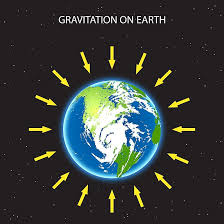
So we can see that the science of gravity shows that the universe is held together by something far more complex than a simple downward pull. It is a cosmic architect shaping motion, time, structure, and energy. Every falling object, every orbiting planet, every heartbeat that depends on blood settling in your body, all of it traces back to gravity quietly doing its work.
The beauty of science lies in this paradox: the deeper we understand something, the more mysterious it becomes. Gravity is a reminder that even the most ordinary experiences are rooted in extraordinary physics, and that the universe still holds countless secrets waiting to be uncovered.