The Berlin Conference Divided Africa's Kingdoms. A New Scramble for Its Minerals Has Begun
The Berlin Conference carved up Africa's borders. Today, cobalt, lithium, farmland and other resources are driving a new scramble for the continent, raising questions about who benefits.
In November 1884, European powers sat down in Berlin and divided an entire continent among themselves and not a single African in the room.
Kingdoms were split based on what the land mass they wanted. Enemies were merged, and ethnic nations like the Maasai woke up to find cousins on the same land now separated by a border they never agreed to.
That division is one of the factors that still shapes conflict and identity across Africa today.
Now, more than a century later, the same borders are becoming the map for a different kind of scramble but this time it is fought over the cobalt, lithium, and farmland beneath and on top of it.
How the Berlin Conference Redrew African Borders
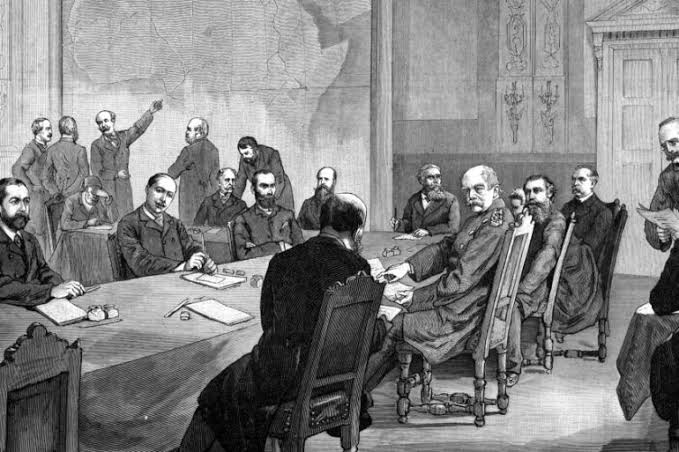
Between November 1884 and February 1885, European powers met under German Chancellor Otto von Bismarck to divide African territory among themselves. The goal was resource control, not governance.
Tribal boundaries, trade routes, religious regions, and language groups were ignored in favour of straight lines and negotiated spheres of influence.
Enemies were merged into single colonies. Allies were split across different empires and Africans experienced the violent erasure of existing political systems.
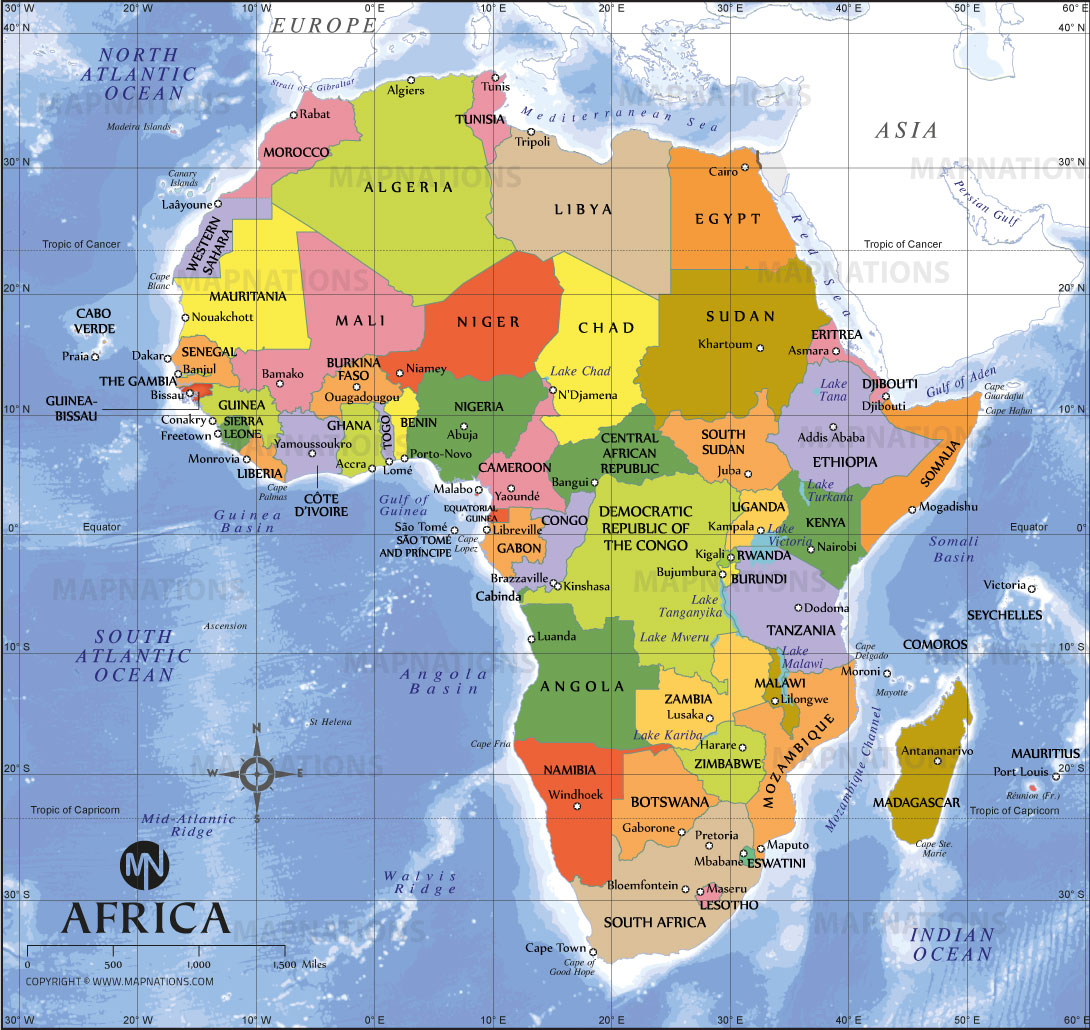
The Somali people are now spread across Somalia, Ethiopia, Djibouti, and Kenya. This isa single ethnic nation that was somehow turned into fragmented minorities in four separate states.
That fragmentation has fed decades of unrest with instances from the Ogaden War in Ethiopia and Kenya's Shifta insurgency.
The Maasai were split between British East Africa and German East Africa. This means policies involving land rights, grazing access, and education policy now differ depending on which side of an invisible line a Maasai family lives on.
The Ewe people, spread across Ghana, Togo, and Benin, hold different levels of political power and cultural freedom in each country, despite sharing one language and one set of customs.
Colonial Borders and Africa's Civil Wars
Fragmented ethnic boundaries did more than create inconvenience. They created some of the deadliest conflicts in modern African history.
Belgian colonial policy elevated Rwanda's Tutsi minority over the Hutu majority and this planted the resentment that erupted into the 1994 genocide, where roughly 800,000 people were killed in 100 days.
In Nigeria, British colonial administrators merged over 250 ethnic groups, including the Hausa-Fulani, Yoruba, Igbo, Bini, and Itsekiri, into a single territory with no shared political history.
That forced union resulted into the Nigerian Civil War in 1967, when the Igbo people attempted to secede as Biafra.

Same thing happened in Sudan. British-drawn borders trapped Arab-Muslim communities in the north with Black African Christian and animist communities in the south. This tension produced decades of civil war and ended with South Sudan's secession in 2011.
National Identity Versus Ethnic Identity in Africa
Independence did not resolve the identity crisis colonialism created. Being Nigerian, Congolese, or Tanzanian meant adopting a national identity built on borders that often clash with ethnic loyalty.
A Maasai in Tanzania and an Igbo speaker discriminated against outside their home region face the same question: what does citizenship mean when the nation was never built around them?
Kwame Nkrumah of Ghana pushed for a United States of Africa, with one currency, one passport, and shared governance.
That vision never materialized, partly because colonial borders that once served European empires now protect the political elites who inherited them.
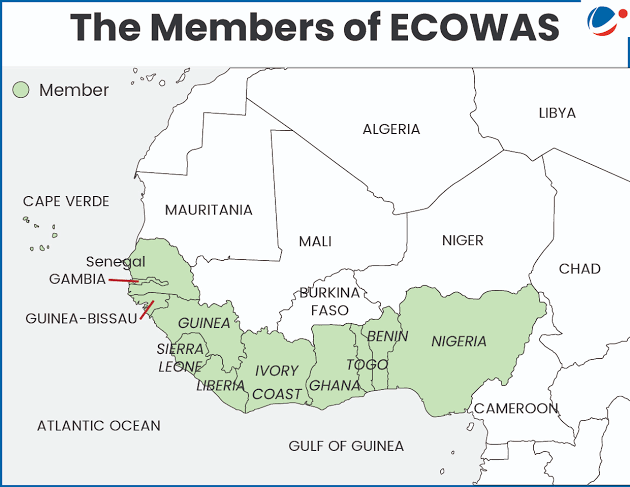
Regional blocs like ECOWAS, SADC, and the East African Community are modest steps toward integration, but economic rivalry and old mistrust keep full unity out of reach.
The New Scramble for Africa: Minerals and Agriculture
Africa's borders are no longer just a political inheritance. They are now the map for a new resource contest.
This time the target is what lies in their soil and the soil itself. For instance, minerals like cobalt, lithium, coltan, and rare earth minerals are essential to electric vehicles, smartphones, and renewable energy technology. Then, there is a heightened need for vast stretches of fertile, underused farmland.
The Democratic Republic of Congo holds a significant share of the world's cobalt reserves and this is the mineral central to battery production.
Global demand for critical minerals has drawn intense interest from China, the United States, the European Union, and Gulf states, all competing for mining rights and supply contracts across countries whose borders were never designed with economic development in mind.
Then, there is agriculture. Foreign governments and private investors have acquired large tracts of farmland across countries like Ethiopia, Sudan, and Mozambique, often through long-term leases that raise concerns about food sovereignty and local displacement.
Much like the original Scramble for Africa, these deals are frequently negotiated with political elites, with limited input from the communities whose land and resources are actually at stake.
The pattern from 1884 is repeating. External powers identify what they need, negotiate with whoever holds power, and leave local communities to absorb the consequences, dressed today in the language of green energy transitions rather than outright colonization.
Can Africa Rewrite the Terms This Time
Redrawing colonial borders outright is widely seen as impractical and destabilizing. A more realistic path involves decentralizing power, protecting cultural autonomy, and strengthening regional governance over mineral and land deals.
Dual citizenship frameworks, cross-border trade policy, and stronger local ownership in mining and farming ventures will not erase colonial history, but they can shift who actually benefits from Africa's land and resources.
The borders drawn in Berlin were never meant to serve African people. Whether the new resource deals being signed today serve them any better depends entirely on who is at the negotiating table this time.