Cobalt Mining: What If Our Future Is Being Mined From Someone Else’s Childhood?
Cobalt powers the technology we love, but behind the batteries are Congolese children facing dangerous mining conditions. Who really pays for our progress?
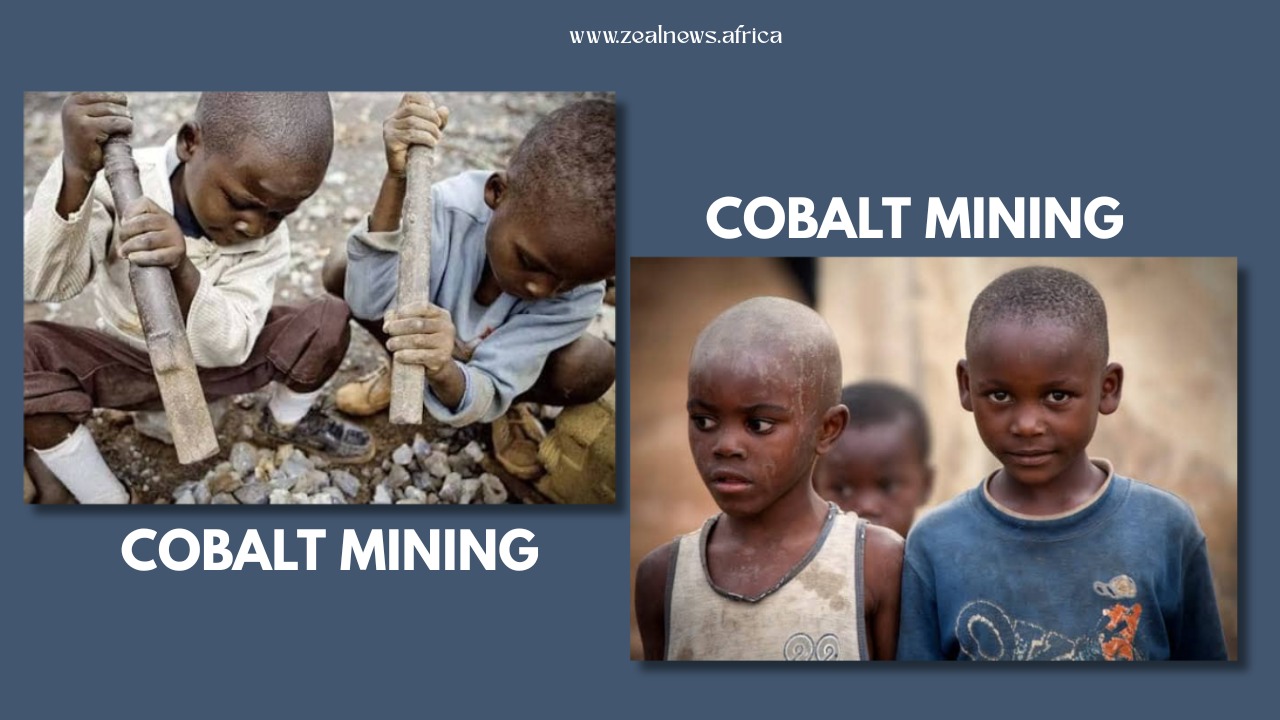
Do children work in mines so the rest of us can have better technology?
It sounds like a question from another century, the kind of thing we would read about in a history book and wonder how people ever allowed it to happen.
We like to believe we have moved past that kind of exploitation. We have smartphones, electric cars, artificial intelligence, smart homes and devices that can practically do everything except wash the dishes. Surely, progress must have made us better people too.
But somewhere in the Democratic Republic of Congo, a child may be spending the day in a mine instead of a classroom, digging through the earth for cobalt, a mineral that helps power the rechargeable batteries inside many of the technologies that have become almost impossible to live without.
Imagine a child getting ready for school. Maybe there is a uniform hanging somewhere in the house, a half-finished assignment on a table, a football waiting outside, or an examination coming up that has been causing the usual teenage panic.
Imagine instead that the child wakes up knowing that the day's work involves carrying rocks, sorting minerals or entering a dangerous mining site because the money is needed at home.
That is the part of the cobalt story that is easy to miss when we talk about the future of technology. We see the finished product. We see an iPhone, a MacBook, an electric vehicle or a laptop with a battery that lasts for hours.
We see sleek designs, faster processors and increasingly powerful machines. What we do not see as easily is the enormous chain of people, minerals, factories and decisions that make those products possible.
And at one point in that chain is Congo.
How Did A Mineral Buried In Congo Become Part Of The World’s Technological Future?
The Democratic Republic of Congo is the world's largest producer of cobalt, accounting for roughly three-quarters of global mined cobalt production in 2024 and about 73 percent in 2025.
The country also holds a huge share of the world's cobalt reserves. That makes Congo incredibly important to the technology and energy industries, because cobalt is a key component in many lithium-ion batteries used in phones, laptops, electric vehicles and other rechargeable devices.
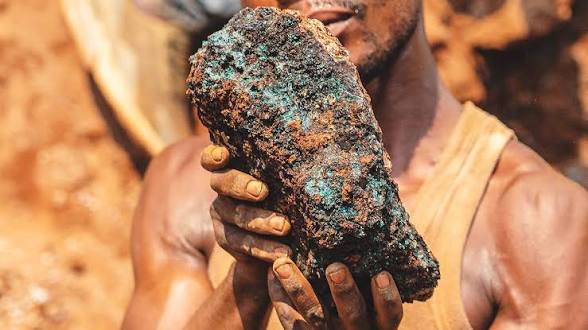
The mineral itself is not evil. Cobalt is not responsible for what happens to the people who mine it. The problem is the system surrounding it, particularly in parts of the artisanal and informal mining sector where poverty, weak protections and dangerous working conditions can collide.
For some families, mining is not a romantic choice between two career paths. It is survival. Children can enter the industry because their families need money, because schools are inaccessible or unaffordable, or because mining is one of the few ways to earn an income in communities where other opportunities are scarce.
UNICEF has documented how mining can expose children to serious health risks while also keeping them away from education and the protection that childhood should provide.
And the conditions can be brutal. Children working in cobalt mining have been reported to carry heavy loads, work for long hours and operate in environments where tunnel collapses and other accidents can cause serious injury or death.
Some families have described children working for only a few dollars a day.
Think about that for a moment. The same global economy capable of producing a phone that costs hundreds or thousands of dollars can depend, somewhere along its enormous supply chain, on a child whose daily reality may be measured in dollars.
This is where the story stops being about a mineral and becomes about inequality.
The child is at one end of the supply chain. The consumer is at the other. Between them are traders, mining companies, processors, refiners, manufacturers, suppliers and some of the world's most powerful technology and automotive companies.

By the time the cobalt becomes part of a finished product, the person who dug it out of the ground can feel almost invisible.
That invisibility is part of the problem.
If Companies Know What Happens In The Supply Chain, Where Does Responsibility Begin?
This is where things become complicated, because saying that a particular company directly used cobalt mined by children can be much harder to establish than simply saying that child labour exists in Congo's cobalt industry.
Apple, for example, has faced years of scrutiny over its cobalt supply chain. The company says it requires suppliers to meet strict standards, conducts audits and investigates allegations involving its supply chain.
It has also made a major move toward reducing its dependence on newly mined cobalt, announcing a goal of using 100 percent certified recycled cobalt in batteries designed by Apple by 2025.
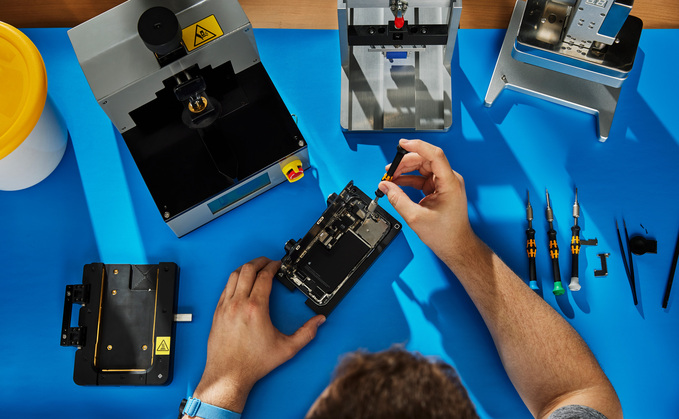
The question is not simply whether Apple, Microsoft, Tesla, Dell or another major company personally sent a child into a Congolese mine with a shovel.
The deeper question is what responsibility a company has when its products depend on a global supply chain in which exploitation is known to occur.
This question has been argued for years. Human-rights organisations have accused major technology companies of failing to do enough to ensure that cobalt connected to child labour does not enter their supply chains.
Companies have pushed back, pointing to supplier requirements, audits, investigations and efforts to trace or reform sourcing.
There is an important distinction here. A company can have policies against child labour and still operate within an industry where child labour exists.
A company can audit suppliers and still struggle to see everything happening several layers down the supply chain.
A company can make genuine progress toward recycled materials while the mining communities supplying the global industry continue to face poverty.
That is what makes the issue so difficult. It is not a cartoon where one side is entirely evil and the other is entirely innocent. It is a complicated system in which responsibility can become so distributed that everyone has a reason to say, “It is not entirely my fault.”
But if everybody is responsible for a problem, and nobody accepts enough responsibility to fix it, the problem becomes remarkably comfortable.
And the child remains underground.
Can We Really Call Technology Sustainable If Someone Else Pays The Human Cost?
We have become comfortable talking about sustainable technology through emissions, electric vehicles, recycled materials and cleaner energy. But sustainability cannot stop at the environment. A future cannot truly be called sustainable if the people helping to build it are being exploited along the way.
For one child, technology can open a classroom, provide access to information and create opportunities their parents never had. For another, the same global technology economy may mean spending the day in a mine instead of a classroom because their family needs the income. One child is using technology to reach the future. Another may be sacrificing theirs to help supply it.
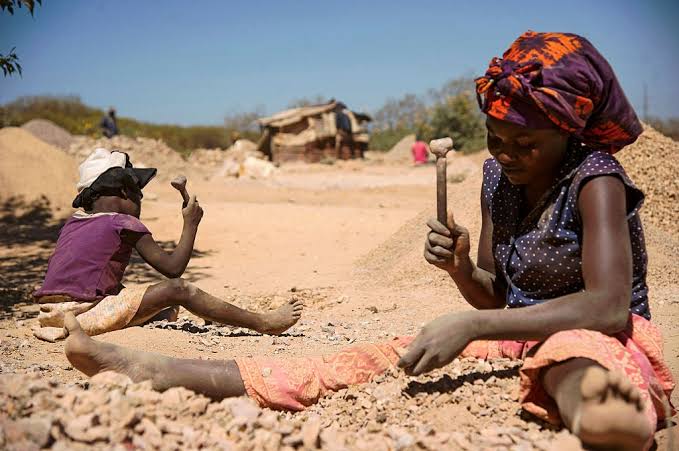
That contradiction should force us to ask harder questions about the products we call innovative and sustainable. Who extracted the materials? Who profited from them? Who was protected, and who was left vulnerable?
The answer cannot simply be for consumers to throw away their phones or abandon technology. The responsibility stretches across companies, governments, manufacturers, regulators and the systems governing mineral extraction.
The future should not require a child to surrender their childhood.
Cobalt is therefore more than a mineral powering our devices. It is a reminder that progress means very little if its human cost is paid by those with the least power to refuse it.