Test Your 60s Smarts: Beatlemania and Beyond!
The 1960s was a transformative decade defined by an vibrant counterculture, groundbreaking pop culture, and pivotal historical events. From the British Invasion and Woodstock to the Civil Rights Movement and the moon landing, this era left an indelible mark on music, film, television, fashion, and global politics, continuing to shape our collective memory.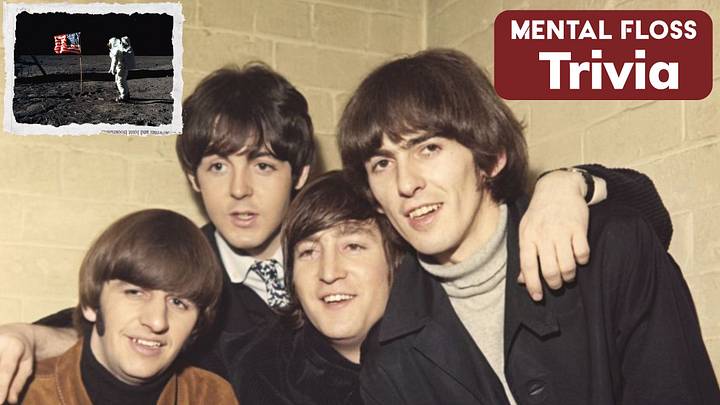
The 1960s, a decade famously encapsulated by ABBA's "flower-power" lyric, remains etched in history as a period of profound cultural and societal transformation. It was a time defined by a burgeoning counterculture, widespread protests, bold fashion statements, the seismic impact of the British Invasion in music, and a series of groovy—and sometimes somber—hallmarks. This era witnessed monumental shifts, from the burgeoning momentum of the Civil Rights Movement to Neil Armstrong's historic walk on the moon, and the tragic assassination of President John F. Kennedy.
Music played a pivotal role in shaping the decade's identity. The Beatles released "Sgt. Pepper's Lonely Hearts Club Band" in 1967, a groundbreaking work often considered one of rock history's first major concept albums. Folk icon Bob Dylan famously "went electric" at the 1965 Newport Folk Festival, shocking audiences and pushing musical boundaries. Motown's The Temptations delivered the 1965 hit "My Girl," while Jimi Hendrix and The Jimi Hendrix Experience revolutionized rock with their 1967 album "Are You Experienced." British bands like The Kinks contributed with hits such as "You Really Got Me" and "All Day and All of the Night" in 1964. The "Queen of Soul," Aretha Franklin, released her iconic version of "Respect" in 1967. The defining symbol of the counterculture movement, the Woodstock music festival, took place on a dairy farm in upstate New York in 1969, and The Beatles held their final live performance, the famous rooftop concert, in London the same year. The songwriting duo John Phillips and Michelle Phillips penned "California Dreamin'," a hit for The Mamas & the Papas, and The Rolling Stones' 1966 U.S. edition of "Aftermath" included "Paint It, Black."
The cinematic landscape of the 1960s produced many unforgettable films. Dustin Hoffman starred in the 1967 film "The Graduate," famous for the character Benjamin Braddock and the song "Mrs. Robinson." Alfred Hitchcock's 1960 thriller "Psycho" shocked audiences with its iconic shower scene, while Stanley Kubrick's 1968 masterpiece "2001: A Space Odyssey" pushed the boundaries of science fiction. Julie Andrews charmed viewers, winning an Academy Award for Best Actress for her role in 1964's "Mary Poppins" and starring as Maria in the 1965 musical "The Sound of Music." The 1969 Western "Butch Cassidy and the Sundance Kid," starring Paul Newman and Robert Redford, became a celebrated buddy film. The world was introduced to British spy James Bond in the 1962 film "Dr. No." Charlton Heston led the 1960 epic "Ben-Hur," which garnered 11 Academy Awards. Sidney Poitier's detective Virgil Tibbs graced the screen in the 1967 crime drama "In the Heat of the Night," and the 1969 film "Bonnie and Clyde" marked a landmark of the New Hollywood era.
Television also saw significant innovations. "The Flintstones" debuted in 1960 as the first successful prime-time animated series. Science fiction gained immense popularity with "Star Trek," which premiered in 1966, featuring Captain James T. Kirk and the USS Enterprise. The spy comedy "Get Smart," starring Don Adams as Maxwell Smart, began in 1965. "The Ed Sullivan Show" hosted The Beatles' first U.S. television appearance in 1964. Viewers tuned into "The Andy Griffith Show" for small-town charm and were introduced to Samantha Stephens, a witch married to a mortal man, in the 1965 sitcom "Bewitched." Children's educational programming was revolutionized with "Sesame Street," which premiered in 1969, introducing beloved characters like Big Bird and Cookie Monster. Steve McQueen starred as bounty hunter Josh Randall in the Western series "Wanted: Dead or Alive," and the colorful "Batman" series, starring Adam West, became famous for its comic-book effects in 1966. Patrick McGoohan's "The Prisoner," a 1967 series about a former secret agent known as "Number Six," captivated audiences.
The 1960s were equally defined by groundbreaking trends. The miniskirt, popularized by designers like Mary Quant, became a defining symbol of youth culture. The term "counterculture" described the movement of young people rejecting traditional social norms and embracing alternative lifestyles, with hippies bringing peace signs and tie-dye into mainstream fashion. British model Twiggy became "The Face of 1966," an icon of the era. Psychedelic art, with its vibrant and swirling designs, became closely associated with concert posters and psychedelic music. The Beatles' early image popularized the mop-top haircut, while Vidal Sassoon's sharp geometric bob haircut became synonymous with 1960s modern fashion. Children's crazes included Kenner's Easy-Bake Oven, introduced in 1963, and the dance craze "The Twist," inspired by Chubby Checker's hit song, swept the early decade. Blue jeans emerged as a powerful symbol of youth rebellion.
Globally, the 1960s were marked by critical historical events. In 1961, Yuri Gagarin made history as the first human to orbit Earth and travel into outer space. NASA's Apollo program achieved the monumental feat of landing astronauts on the Moon in 1969, with Neil Armstrong becoming the first person to walk on its surface. President John F. Kennedy delivered his famous "Ich bin ein Berliner" speech in West Berlin in 1963, only months before his tragic assassination in Dallas, Texas, on November 22, 1963. The Berlin Wall, constructed in 1961, became a potent symbol of Cold War division. The Civil Rights Movement reached a zenith with Martin Luther King Jr. delivering his iconic "I Have a Dream" speech during the 1963 March on Washington, though the nation was shaken by his assassination in April 1968. The Cuban Missile Crisis in 1962 brought the United States and the Soviet Union perilously close to nuclear war, and the 1968 Tet Offensive in the Vietnam War significantly altered American public opinion about the conflict. The 1960s were indeed packed with notable pop culture and historical events, many of which continue to be referenced and studied today, leaving an indelible mark on collective memory.