Ten Years Building the Rails, Now Flutterwave Is Running the Train
Flutterwave has secured a Nigerian banking license and the implications go far beyond the announcement. Here is what this means for traditional banks, the businesses embedded in Flutterwave's ecosystem, and Africa's fintech story at large.

Ten years ago, Olugbenga Agboola and his co-founders built Flutterwave around a single conviction: that better infrastructure changes everything.
On April 2, 2026, that conviction arrived at its most consequential destination.
Flutterwave announced it has secured a Nigerian banking license from the Central Bank of Nigeria and in doing so, the financial system is going to become something it has never been before: a direct competitor to the traditional banking system it spent a decade quietly powering.
From the Powering Systems To Owning It
Flutterwave has obtained a Nigerian banking licence, marking a major shift in its evolution from a payments-focused platform to a full financial services provider.
The license allows Flutterwave to hold customer deposits directly, offer bank accounts, manage payroll, issue lending, run multi-currency operations, and build treasury infrastructure, all under one roof.
Historically, global payment companies have operated via a "sponsorship" model, partnering with established commercial banks to access national clearing and settlement systems.
While functional, this arrangement often limits a fintech's pace of innovation and requires them to share a portion of the transaction value with the sponsoring institution.
Agboola framed it plainly on LinkedIn: "A decade ago, we started with a simple belief: better infrastructure changes everything. Payments failed too often, settlement was slow, and expanding meant rebuilding from scratch."
With the acquisition of Mono earlier this year, a Nigerian open banking startup acquired in an all-stock deal valued between $25 million and $40 million, Flutterwave deepened its data and connectivity capabilities.
The banking license is the next logical move. "Our destiny is now in our hands," Agboola wrote.
The company has processed more than 1 billion transactions and moved over $40 billion in value, supporting more than 2 million businesses across a network connecting Africa to the world.
It counts Uber, Air Peace, Bamboo, and PiggyVest among its clients. It operates in 34 African countries.
Who Is Flutterwave, Really?
Most people interact with Flutterwave without knowing it. It has never been a consumer-facing bank.
It is the infrastructure beneath the transaction, the invisible rail that moves money between a merchant's checkout page and the customer's bank account.
The banking license enhances Flutterwave's core payments business by allowing the company to optimize settlement flows and manage funds more efficiently within its ecosystem.
The explanation matters because Flutterwave's power was always structural, not visible. It did not need you to know its name.
It needed your money to pass through its pipes. And it did to the tune of over $40 billion. Now, for the first time, it can hold what passes through those pipes. That is a fundamentally different kind of power.
The Competitive Threat Nobody Is Naming Directly
Here is where the conversation gets uncomfortable for Nigerian banks. Flutterwave is already embedded in the payment systems of many financial institutions that consider themselves its partners.
It processes transactions on behalf of businesses that bank with GTBank, Access, Zenith, and others. It has deep transaction data, merchant relationships, and API connectivity across the ecosystem.

With a banking license, Flutterwave can now offer those same businesses something their current banks offer, accounts, lending, treasury management, but with one additional advantage: it already knows their transaction behaviour in granular detail.
The banking license also opens the door to advanced financial products such as data-driven lending, working capital financing, and treasury solutions powered by real transaction data.
This is because owning a bank improves margins by cutting out some intermediaries that previously took a slice of each transaction.
The trade-off is that a banking licence brings heavier scrutiny, capital and liquidity requirements, stricter governance, and more intrusive compliance checks.
Flutterwave now has to behave less like a pure software company and more like a regulated financial institution. That trade-off, Agboola appears to have decided, is worth making.
Money Is Still Moving, Faster Than Ever
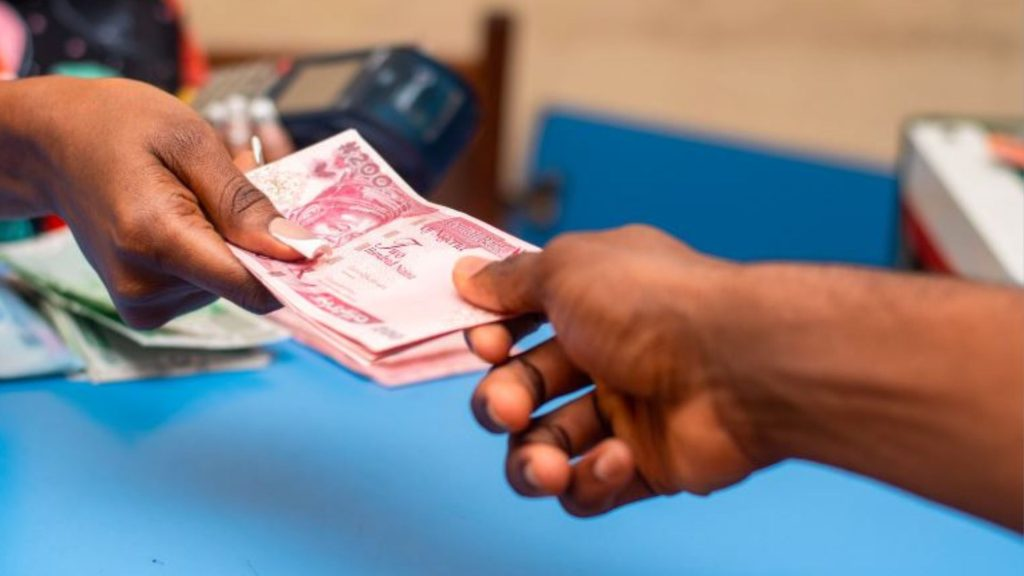
The broader view to all of this conversation is a fintech sector growing at a pace that defies the macroeconomic narrative.
Nigeria's largest fintech companies, Flutterwave, OPay, Moniepoint, Interswitch, PalmPay, Moove, Kuda, Paystack, and Paga, have a combined estimated market valuation of about $10.6 billion as of January 2026.
Flutterwave alone is valued at around $3 billion. Nigeria's fintech ecosystem attracted over $1 billion in investments in 2025, reflecting sustained investor confidence in the sector's long-term growth potential.
The digital payments segment alone is projected to contribute roughly $6 billion to Nigeria's GDP in 2026. This is happening against a reality of persistent inflation, currency pressure, and rising cost of living.
The paradox is striking, people are spending less in real terms but transacting more in volume and frequency. Digital rails have made money move faster even when there is less of it to move.
Flutterwave's banking license is a win for the company. That part is not in dispute, everyone can see it.
What deserves deeper scrutiny is the structural shift it represents, a fintech that built its business by serving the banking system is now, formally and legally, a competitor to it.
The businesses that once depended on both now have a choice and can now make the choice on their own term.
And Flutterwave, for the first time in ten years, is no longer just the powering systems and facilitating rails, it's now owning it and having a more sustainable infrastructure.