Star Trek’s ‘Starfleet Academy’ Sparks Streaming Boom and Franchise Backlash
The Star Trek franchise is once again at the center of a 'culture war' debate regarding its new series, <i>Star Trek: Starfleet Academy</i>, with original series star William Shatner humorously engaging with critics. This controversy draws parallels to <i>Star Trek: Voyager</i>, a series that similarly defied initial scrutiny to become a beloved and influential part of the franchise, showcasing how Star Trek often thrives when it takes narrative risks.
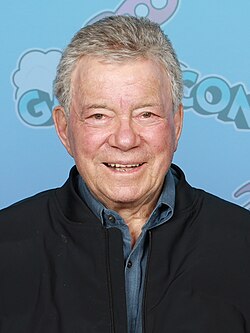
The Star Trek franchise, long celebrated for its utopian vision and exploration of humanity’s future, has once again become a flashpoint in an ongoing “culture war” debate—this time centered on the upcoming series Star Trek: Starfleet Academy. The controversy erupted after White House aide Stephen Miller, amplifying a reactionary social media account, criticized a brief clip from the show and labeled it “tragic.” He went so far as to suggest that Paramount should hand control of the franchise to 94-year-old William Shatner, the iconic star of Star Trek: The Original Series.
Shatner, responding through his social media team, replied with characteristic wit. While jokingly agreeing with the proposal, he speculated that Miller’s real grievance might lie with a specific character—Nahla Ake (played by Holly Hunter)—who wears glasses. Shatner pointed out the irony, noting that his own character, Captain James T. Kirk, wore eyeglasses in Star Trek II: TheWrath of Khan due to an allergy. He further highlighted that other prominent Star Trek figures, including Federation President (Kurtwood Smith) in Star Trek VI: The Undiscovered Country and Jean-Luc Picard (Patrick Stewart) in Star Trek: Picard, have also been depicted wearing glasses. These examples undermine the notion that vision impairments must be entirely eradicated in the Federation’s future.
Shatner’s Complicated History Behind the Camera
This is not Shatner’s first time being associated with a leadership role behind the scenes of the franchise. He previously directed Star Trek V: The Final Frontier in 1989, following the critical and commercial success of The Voyage Home, which was directed by his longtime co-star Leonard Nimoy. The Final Frontier ultimately proved far less successful.
The film followed the Enterprise crew after they were hijacked by Spock’s half-brother, Sybok (Laurence Luckinbill), on a quest to confront God at the center of the galaxy. Plagued by uneven special effects, a lackluster villain, and tonal missteps, the movie was widely panned. It currently holds a 22% score on Rotten Tomatoes and is often cited as a low point that briefly jeopardized the franchise’s cinematic future. Fortunately, The Undiscovered Country would later serve as a critically praised farewell for the original cast.
Starfleet Academy, Voyager’s Legacy, and the Franchise’s Enduring Strength
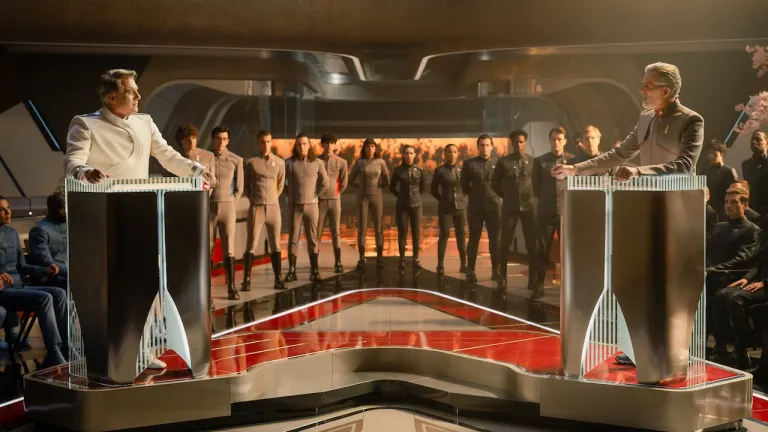
In contrast to the historical misstep of Star Trek V, Star Trek: Starfleet Academy has so far defied online detractors. The series currently holds a strong 87% “Fresh” rating on Rotten Tomatoes. Critics such as Samantha Coley of Collider have praised it enthusiastically, with Coley calling it “the best Star Trek series of the modern era.” The first two episodes are now streaming on Paramount+, with new episodes released weekly.
The scrutiny surrounding Starfleet Academy mirrors the skepticism that greeted Star Trek: Voyager upon its debut in the mid-1990s. Voyager took significant creative risks and ultimately became one of the franchise’s most beloved entries. In the first half of 2025, Star Trek: Voyager experienced a major resurgence, becoming one of the most-watched science fiction TV series and amassing 31.3 million hours streamed, according to FlixPatrol.
This renewed interest may be partly attributed to the return of Robert Picardo’s holographic Doctor, who appears as a major supporting character in Starfleet Academy, passing on his vast knowledge to a new generation of cadets.
From its pilot episode, “Caretaker,” Voyager boldly departed from established Star Trek conventions by stranding Captain Kathryn Janeway (Kate Mulgrew) and her crew 70,000 light-years away in the Delta Quadrant. This forced the integration of Maquis rebels into Starfleet ranks and introduced complex character dynamics, such as Chakotay (Robert Beltran) serving as Janeway’s first officer and B’Elanna Torres (Roxann Dawson) as chief engineer. The Emergency Medical Hologram, initially designed for temporary use, was compelled into permanent service, leading to one of the franchise’s most compelling explorations of artificial consciousness.
A defining evolution for Voyager came with the introduction of Seven of Nine (Jeri Ryan) in Season 4. A former Borg drone, Seven’s arrival recontextualized the Borg—previously portrayed as the galaxy’s most terrifying antagonists—and risked what some feared would be a “jump the shark” moment. Instead, Ryan’s nuanced performance and careful character development transformed Seven into a cornerstone of the series. Her journey to reclaim her humanity, guided by Janeway, generated fresh narrative tension and boosted ratings, while also becoming one of Ryan’s most challenging and rewarding roles.
Voyager’s influence continues to ripple throughout modern Star Trek. The Doctor’s appearance in Starfleet Academy is just one example. Other series have revisited Voyager’s legacy, including Star Trek: Prodigy, which features a holographic Janeway, and Star Trek: Picard, where Seven of Nine is a central figure. Star Trek:Lower Decks even brought back Harry Kim (Garrett Wang), while Tom Paris (Robert Duncan McNeill) has appeared in comic book form alongside other franchise legends.
The continued success and reintegration of Voyager’s elements across multiple formats underscore a vital truth about Star Trek: the franchise thrives when it takes risks, challenges its own conventions, and embraces bold, innovative storytelling. If Starfleet Academy continues on this path, it may not only withstand today’s cultural backlash but also pave the way for the return of even more beloved Voyager alumni.