South Africa’s Mega‑Loan Boost: Engineering a New Infrastructure Horizon
South Africa has secured a $1.5 billion infrastructure loan from the World Bank to boost economic growth and address pressing issues like energy shortages and slow-moving logistics. The loan is structured around three key pillars: energy security, freight logistics, and low-carbon transition, aiming to stimulate investment confidence, create jobs, and increase civic trust in government performance.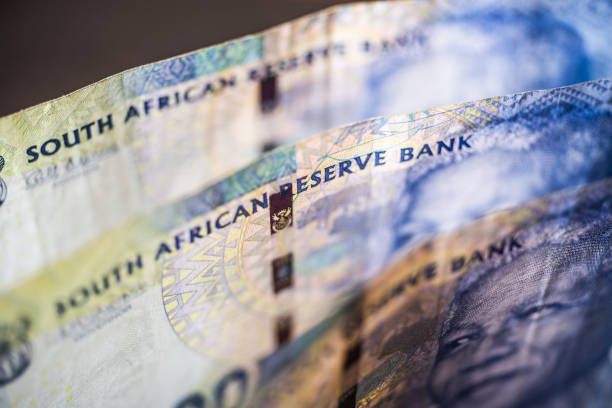

SOURCE: gettyimages
By Olajide Felix
A Lifeline for Infrastructure in Motion
In June 2025, South Africa and the World Bank signed a development agreement that quietly signaled ambition. A US $1.5 billion infrastructure loan, issued on favorable terms, set in motion a public infrastructure reset—designed to finally move the country's economic growth beyond stagnation. This is not charity. It is targeted support for a nation grappling with prolonged energy shortages, slow-moving logistics, and lagging growth. It is a reminder that modernization—when planned well—can become more than a hope: it can be a scaffold for change.
Three Pillars, One Vision
The loan is structured around three pillars, each acting as a pivot point for reform and investment. Collectively, they are said to lay the foundation for inclusive growth, job creation, and resilience. While loans and grants come and go, what matters here is the strategic architecture behind it—a clear roadmap that seeks to go beyond plugging holes and instead create systems that work.
Energy Security Elevated
The first pillar tackles South Africa’s persistent power crisis. Funds will help restructure the ailing public utility—Eskom—by separating generation, transmission, and distribution into independent entities. This unbundling process allows private investment to flow more freely and supports the integration of wind and solar power into a grid that has long resisted change. By March 2027, the country aims to add 3,500 MW of renewable energy, part of a wider shift toward decarbonization and sustainability.
Upgrades to grids and smart meters are also slated to improve efficiency, reduce technical losses, and allow households and small businesses to feed surplus energy back into the national grid. This two-way energy participation not only empowers citizens but creates a new class of micro-entrepreneurs in the energy sector.

Freight Logistics Unlocked
The second pillar focuses on cargo movement—ports, railways, and roads that have become industrial bottlenecks. The loan supports efforts to unbundle Transnet, open access to private rail operators, and establish an independent transport regulator. These reforms aim to expand rail network capacity from 25% to 65% by 2027, accelerating goods movement and making export logistics more agile and cost-effective.
This is not just an economic move—it’s a spatial justice issue. In a country with such geographic and income disparity, making goods move faster and cheaper also means making food and services accessible to those living far from economic centers. Freight reform, if done correctly, could redraw the logistical map of South Africa.
Low‑Carbon Transition Anchored
The third pillar addresses climate responsibility, not as an afterthought but as a foundation. The funds are committed to supporting a just transition—protecting coal‑affected workers and communities through fiscal tools, retraining programs, and job schemes.
Through alignment with South Africa’s Renewable Energy Masterplan, these measures support green industries, domestic manufacturing of solar panels and turbines, and climate-aligned economic transformation. This not only diversifies the energy portfolio but positions South Africa as a competitive green manufacturing hub for the region.
How the Deal Softens the Debt Burden
The loan carries low-interest terms, easing pressure on public finances. With a three-year grace period and maturity stretching over 16 years at SOFR +1.49%, it allows planning without panic. Importantly, it does not replace private-sector involvement. Instead, it is designed to de-risk projects and make them more attractive to investors, opening a $25 billion opportunity to finance major grid upgrades through a proposed $500 million credit guarantee facility.
Why This Moment Matters
South Africa has been stuck in low gear for over a decade. Growth has struggled to breach 1%, unemployment hovers above 31%, and frequent power cuts shave off GDP by an estimated 2%. Public debt sits alarmingly high—targeted to peak above 77% of GDP in 2025.

SOURCE: reuters
Yet this isn’t just about fixing potholes or powering up machines. Its industrial architecture is in motion. More rail capacity could mean less congestion at ports, quicker exports, and revived manufacturing. More reliable energy would free up businesses and communities to operate beyond blackout hours.
The potential is in ripple effects: jobs in green factories, logistics hubs, and digital installations; increased civic trust in government performance; and optimism that South Africa can move again. More importantly, these reforms can stimulate the kind of investment confidence that invites deeper engagement from development finance institutions and sovereign wealth funds alike.
Measuring Change in Real Terms
Reform plans now lay out measurable goals. Growth could rise by 1% in the near term, and potentially by up to 2–3% within a few years. Job creation is projected at around 250,000 by 2027, with nearly half-a-million by the early 2030s. The government has proposed a dashboard of indicators to track implementation, including electricity uptime, cargo turnaround time, private sector participation rates, and export volume increases.
To track progress, the loan includes formal review checkpoints. Implementation Completion Reports will compare baseline data from 2025 against future targets in energy access, export volume, and private sector participation. External monitors, including civil society groups and academic institutions, are being looped into the review process to enhance transparency.
Laying the Groundwork, Not Dollars Alone
This isn’t just grant money. It builds on two previous development policy loans—a $750 million stimulus in 2022 and a $1 billion energy transition loan in 2023. These earlier interventions helped improve Eskom’s Energy Availability Factor, boosting it from 55% in 2023 to 63% by late 2024.
Together, they reflect a strategic pivot—where infrastructure reform is no longer a box to check, but a platform to execute from. Government officials have begun framing infrastructure not as a capital expenditure, but as a human rights tool—emphasizing the role of access in economic justice.
From Planning to Transformation
On the ground, the loan supports:
Transmission expansion: potentially 200 km of new lines, and a National Transmission Company to operate independently.
Open grid integration: enabling distributed generation to feed energy back into the system.
Smart metering roll‑outs: helping municipalities improve billing and revenue collection.
Technical capacity building: training engineers and planners to manage complex power systems.
In logistics, plans include more efficient port operations and rail corridors, better regulation, and competition among carriers—all targeted to bring down economic leakage and improve export competitiveness.
As these reforms unfold, local governments will be asked to play a more visible role—managing procurement processes transparently, minimizing corruption, and ensuring that rural communities benefit as much as urban centers.
Why This Is a Moment to Watch

What makes this loan significant is not just the money. It’s the alignment of policy, finance, infrastructure, and ambition. If the reforms accelerate as planned, South Africa may emerge from a prolonged cycle of underperformance. It's an investment in trust, in the promise that infrastructure can serve people again. It’s an argument for modernization without marginalization, growth without compromise.
Whether this becomes a turning point or a series of missed opportunities will depend on follow-through. The challenges remain immense—ranging from bureaucratic inertia to potential political interference. But the architecture is now in place.
And sometimes, that is the hardest part.
The coming years will test not just how well South Africa can spend money, but how wisely it can plan for the kind of future where infrastructure becomes a shared inheritance—connecting people, powering dreams, and finally, delivering on the long-postponed promise of progress.