Skytrain Scandal Heats Up: Prosecution Rests Case in Ghana's Corruption Probe
The Attorney-General has closed its case in the Skytrain scandal trial, accusing former GIIF officials Solomon Asamoah and Prof Christopher Ameyaw-Ekumfi of causing $2 million financial loss without board approval. However, former presidential legal advisor Kow Abaka Essuman disputes claims that the funds are untraceable, asserting that documentary evidence clearly accounts for the money. The trial awaits a crucial 'submission of no case' application from the defence.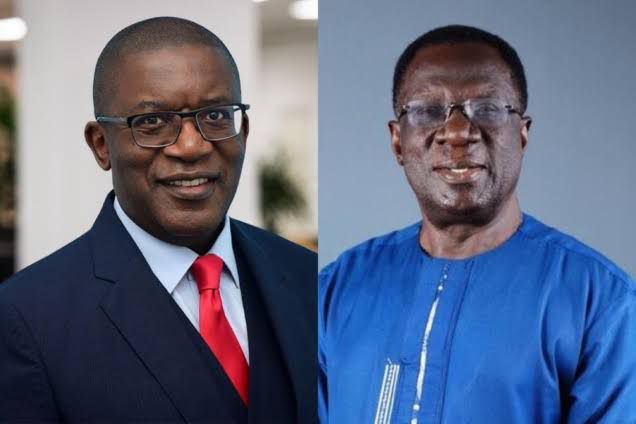
The Attorney-General has formally concluded its case in the high-profile Skytrain scandal trial, which implicates two prominent individuals: Mr Solomon Asamoah, the former Chief Executive Officer of the Ghana Infrastructure Investment Fund (GIIF), and Prof Christopher Ameyaw-Ekumfi, who previously served as the Board Chairman of the Fund.
Both are facing serious charges of allegedly causing financial loss to the state, specifically through the unauthorized disbursement of $2 million intended for the Skytrain project, a transaction purportedly executed without the requisite approval from the GIIF Board.

In support of its charges, the prosecution presented evidence through three key witnesses: Mr Yaw Odame-Darkwa, a former Board Member of GIIF, Mr Kofi Boakye, a lawyer and Acting Board Secretary of GIIF, and Mr Francis Aboagye, a Staff Officer at the National Intelligence Bureau (NIB) who spearheaded the investigation into the matter, all testified.
Their collective testimonies underscored that the GIIF Board had never granted approval for the controversial Skytrain project for which the accused persons are alleged to have sanctioned the $2 million payment.
Following the closure of the prosecution's case, legal representatives for Mr Asamoah and Prof Ameyaw-Ekumfi informed the court of their intention to file a 'submission of no case' application.
This legal maneuver seeks to persuade the court to terminate the trial prematurely, on the grounds that the prosecution has failed to present sufficient evidence to establish the offences against their clients.
The court, presided over by Justice Audrey Kocuvie-Tay, has granted the accused persons a three-week period to prepare and submit their application.
Adding another layer to the unfolding legal saga, Mr Kow Abaka Essuman, formerly the Legal Advisor to President Nana Addo Dankwa Akufo-Addo, has challenged public statements made by the Deputy Attorney-General and Minister for Justice, Dr Justice Srem Sai. Dr Srem Sai had publicly suggested that the funds involved in the GIIF “Sky Train” case were untraceable.
Essuman, however, firmly refutes this claim, asserting that the documentary records before the court demonstrate the contrary. He maintains that audited financial statements, comprehensive board minutes, and other supporting records clearly delineate the trail of how the funds were managed within the established GIIF structure.
Mr Essuman specifically highlighted signed-off audited accounts that he claims explicitly detail the transactions in question. Furthermore, he presented evidence indicating that GIIF received its allocated shares within the consortium arrangement related to the project.
He emphasized that these details are not speculative but are substantiated by formal governance documents and financial statements that have already been officially tendered as evidence in court.
Essuman's rebuttal came after the Deputy AG announced the prosecution's case closure and referenced the allegations concerning the US$2 million payment made without necessary approvals.
While the Deputy AG noted the accused's time granted for the 'no case' submission, Essuman reiterated that the existing evidence supports the defence's stance that the funds are both traceable and properly accounted for.
He concluded by stating that the court's ultimate evaluation of the totality of the documentary evidence will be crucial, and the outcome of the 'no-case' submission will serve as a significant test of how the facts are judicially interpreted.