Sedina Tamakloe Acquittal Shakes Ghana: AG Appeals, Corruption Watchdogs Roar
The Court of Appeal's acquittal of former MASLOC CEO Sedina Tamakloe-Attionu has ignited widespread debate in Ghana, overturning her 10-year conviction. The ruling, based on findings of defective charges and insufficient evidence, faces strong criticism for potentially undermining anti-corruption efforts, while the Attorney-General prepares an appeal to the Supreme Court.
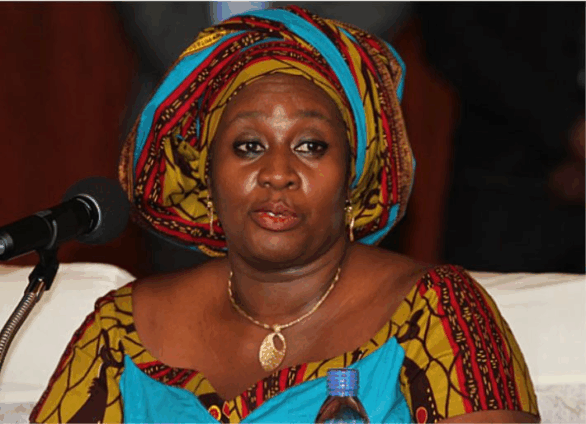
The Court of Appeal’s decision to acquit and discharge Sedina Tamakloe-Attionu, the former Chief Executive Officer of the Microfinance and Small Loans Centre (MASLOC), on Thursday, July 30, has ignited a fierce legal and political debate across Ghana. This ruling overturned her earlier conviction and 10-year prison sentence, which had been handed down by the High Court in April 2024.
Madam Tamakloe-Attionu had faced a staggering 78 criminal counts, including charges of conspiracy to steal, stealing, causing financial loss to the state, unauthorised commitment leading to financial obligations for the government, and money laundering. These allegations covered various aspects of MASLOC’s finances during her tenure from 2013 to 2017, such as a vanishing GH¢500,000 investment refund, unexplained sensitisation money, diverted disaster relief funds for Kantamanto fire victims, and allegations of buying 350 vehicles at inflated prices.
The High Court had convicted her in absentia after she left Ghana for the United States during her trial. Despite her absence, she filed an appeal in May 2024, challenging the conviction. The Court of Appeal, treating the appeal as a rehearing, meticulously reviewed the proceedings. It first addressed the objection that a fugitive should not be allowed to appeal, but found no provision in Ghanaian law to strip a person convicted in absentia of their right to appeal, provided the notice was properly and timeously filed.
Crucially, the appellate court identified significant flaws in the prosecution's case. It found that an entire category of charges, specifically those accusing her of “willfully causing financial loss to the State” and “causing loss to public property,” were legally defective. These charges lacked specific descriptions of her alleged acts or omissions, thereby violating her constitutional right to be informed in detail of the nature of the charges against her. More than 30 such counts were consequently struck out before any evidence was even weighed.
For the remaining charges that were deemed properly filed, the Court of Appeal pointed to evidential shortcomings and an improper shifting of the burden of proof. For instance, regarding the GH¢500,000 loan to Obaatanpa Microfinance, which was allegedly returned in cash to Ms. Tamakloe-Attionu, the trial judge wrongly asked if she had *disproved* signing an acknowledgment letter, instead of requiring the prosecution to *prove* she signed it. The letter itself was never properly authenticated. Similarly, the prosecution’s case on over two million cedis meant for a nationwide sensitisation programme rested on hearsay from regional directors who never appeared in court, and investigators admitted they never contacted beneficiaries. The Kantamanto fire-relief money case was further weakened when the prosecution’s own first witness, the sitting CEO of MASLOC, testified that MASLOC’s inquiries had concluded the money reached victims, a fact not included in the official report.
The Court of Appeal also found that money laundering charges collapsed because the predicate crime of stealing had not been proven. For charges related to improper payments and an unauthorised GH¢61 million vehicle contract, the trial judge again erred by assuming the burden shifted to Ms. Tamakloe-Attionu to prove authorisation. The appellate court emphasized that the prosecution must prove guilt beyond reasonable doubt, and the way a charge is worded cannot alter this fundamental principle. Evidence also showed the Finance Ministry had confirmed the vehicle contract's financing, and her successor honored it.
The ruling has drawn strong criticism from several quarters. John Darko, Legal Counsel for the Minority Caucus and Suame MP, expressed deep concern, arguing that the acquittal undermines Ghana’s fight against corruption. He questioned the timing of the appeal, given the years that elapsed since the original judgment, and voiced fears that public officials might evade accountability if such reversals become common with changes in government. Mr. Darko also alleged selective prosecution by the government, accusing it of targeting political opponents while shielding its allies.
Former Deputy Attorney General Alfred Tuah-Yeboah vehemently disagreed with the Court of Appeal’s decision, describing it as "legally flawed" and a "setback to Ghana’s fight against corruption." He insisted that the appellate court "erred big time" by not considering the extensive evidence presented during the trial. Tuah-Yeboah cited specific instances, such as Ms. Tamakloe-Attionu allegedly instructing a cash refund of the GH¢500,000 loan at a filling station, the unaccounted GH¢600,000+ from the Kantamanto fire funds, and the vast unexplained portion of GH¢1.8 million for sensitisation. He argued that technical defects in a charge sheet should not invalidate a conviction if evidence supports the offenses, suggesting a retrial as the proper remedy.
In response to the acquittal, Attorney-General and Minister for Justice, Dr. Dominic Ayine, clarified that the appeal was initiated under his predecessor in May 2024, and he had directed state attorneys to oppose it, believing the High Court's judgment had merit. Following the Court of Appeal's ruling, Dr. Ayine promptly directed the Director of Public Prosecutions to file an urgent application for a stay of execution and a notice of appeal at the Supreme Court. The state contends that the appellate court's decision contains "material errors of law and fact" and resulted in a "substantial miscarriage of justice." It was noted that Ms. Tamakloe-Attionu was extradited to Ghana in June 2026 and began serving her sentence before the July 30, 2026, acquittal, according to documents supporting the AG’s application for stay of execution.
Conversely, the Court of Appeal's judgment has been defended by others. Abraham Amaliba, former Director of Legal Affairs of the National Democratic Congress (NDC), stressed that legal decisions must be based on law, not public emotion or political sentiment. He affirmed Ms. Tamakloe-Attionu's right to appeal and highlighted the court's findings on defective charges and unproven evidence. Similarly, Felix Kwakye Ofosu, Minister for Government Communications, rejected claims that the government was responsible for the acquittal, emphasizing the judiciary's independence and urging Ghanaians to rely on facts rather than emotion.
Ebenezer Madugu, in a commentary, underscored that while public disappointment is understandable, it should not overshadow a careful examination of the court’s reasoning. He stressed that the standard of proving guilt "beyond reasonable doubt" is a cornerstone of criminal justice. Madugu emphasized that the most crucial lesson from this case lies in the quality of criminal investigations and prosecutions, which require thoroughness, credible witnesses, properly gathered evidence, and a clear presentation of facts. He warned that public confidence in the justice system suffers when legal decisions are judged by political preferences rather than legal reasoning.
As the Attorney-General pursues further legal avenues, including an appeal to the Supreme Court and a stay of execution, the Sedina Tamakloe-Attionu case continues to serve as a significant focal point for discussions on corruption, judicial independence, and the rule of law in Ghana.