Sam Bartram: The Goalkeeper Who Guarded an Empty Goal post
A throwback football history article on Sam Bartram, the Charlton goalkeeper who famously guarded his goal alone during a fog-abandoned match on Christmas Day 1937.
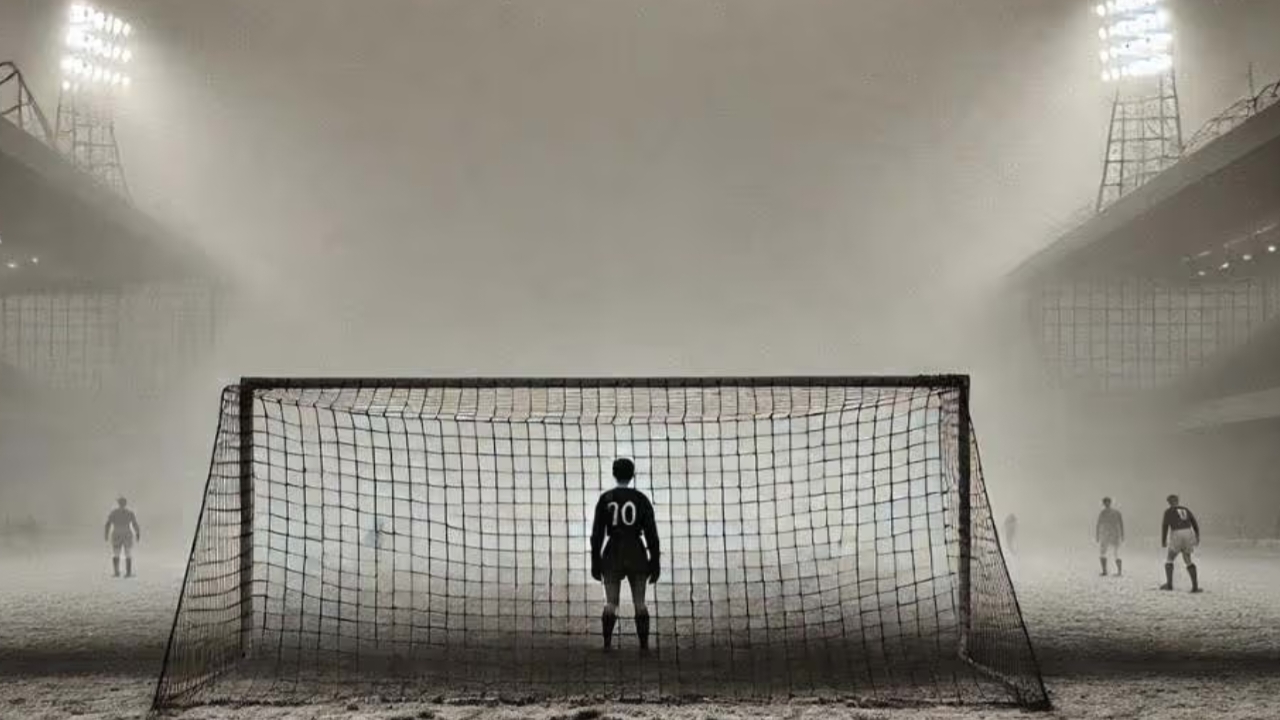
If you're a die hard football fan you already know that football history is full of moments so dramatic and tense filled, it more like the lifeline of many people determining their moods and everything concerning their live, to many individuals football is more than just ball moving between players in the football pitch, it is way more than that, yet some of its most enduring stories are born not from goals or trophies, but from quiet absurdity. One of such moment unfolded on Christmas Day in 1937 at Stamford Bridge, when a goalkeeper stood alone in the mist, faithfully guarding a goal long after the match had disappeared. His name was Sam Bartram, Charlton Athletic’s dependable last line of defense, and his story remains one of the sport’s most human and intriguing throwbacks.
This was not an era of floodlights, VAR, or instant communication. Football then was raw, physical, and deeply communal. Matches were played in winter fog, in summer, in cloudy and raining seasons, it was played anytime, you would always see crowds packed close to the pitch, and players relied on instinct and instruction. It was in this setting that Bartram unknowingly became the sole participant in a football match that had long ended before he realized it, offering a lesson in duty, isolation, and the strange poetry of the game.
A Christmas Match Lost to the Mist
On December 25, 1937, Charlton Athletic traveled across London to face Chelsea in a First Division fixture. Christmas Day football was a long-standing tradition in England, and despite worsening weather conditions, thousands of fans turned up at Stamford Bridge. As kickoff approached, a thick fog began to roll across the stadium, gradually swallowing the stands and the pitch alike.

In the first half, visibility deteriorated but play continued. By the second half, the fog had grown so dense that players could barely see each other from a short distance. Around the 60th minute, the referee made the inevitable decision to abandon the match on safety grounds. Players from both teams were called off the pitch, and spectators began filing out of the ground, disappearing into the same fog that had ended the game.
What the officials did not realize immediately was that Sam Bartram, stationed at the far end of the pitch, had not received the message. The fog was so thick that he could not see the referee, the other players, or even the crowd leaving. The sound of the whistle never reached him clearly, and in the absence of visual cues, he assumed the match was continuing at the opposite end and that his team were dominating the game.
So Bartram stayed. Alone. Focused. Waiting.
Duty, Isolation, and a Goalkeeper’s Mindset
To understand why Bartram did not question the silence around him, one must understand the psychology of a goalkeeper. Even in normal conditions, a goalkeeper can go long stretches without action, especially when their team is dominating possession. Bartram later reflected that he assumed Charlton must have been attacking relentlessly, keeping Chelsea pinned back. The absence of threat did not alarm him; it reinforced his belief that his job was simply not needed at that moment.
This mindset speaks volumes about football culture at the time. There were no headsets, no sideline officials waving flags in his direction, no giant screens announcing decisions. A goalkeeper trusted the flow of the game and his own discipline. Leaving the goal without instruction was unthinkable. His post was his responsibility, and abandoning it without certainty would have felt like dereliction of duty.

For approximately fifteen minutes, Bartram stood alone in the fog, occasionally shifting his weight, peering into the white haze, and wondering when play would return. The stadium was eerily silent now, stripped of crowd noise and movement. Yet even then, it did not occur to him that the match itself had vanished. Footballers of that era were trained to endure confusion and discomfort. You played on unless explicitly told otherwise.
The moment of realization came not from an official, but from a policeman who emerged through the fog and approached him. The officer asked Bartram what he was still doing there and informed him, almost casually, that the match had been abandoned some time ago. Only then did Bartram leave his goal, the last man to exit a football match that had already passed into legend.
Memory, Myth, and What the Game Still Teaches Us
Sam Bartram later recounted the incident with humor in his autobiography, joking that he thought he must have been playing behind a very dominant team. Yet beneath the laughter lies a deeper resonance. His experience captures a version of football that feels almost unimaginable today, where isolation, uncertainty, and trust were built into the game.
The story has endured because it reveals something timeless about human behavior. Bartram did not stay because he was foolish or unaware; he stayed because he believed in responsibility. In a world where visibility was limited and communication imperfect, he chose commitment over assumption. There is a quiet dignity in that choice, one that resonates beyond football.

In modern sport, such an incident would be impossible. Matches are stopped instantly, players are herded off by officials, and information travels faster than confusion can form. Yet that efficiency has also stripped the game of certain vulnerabilities that once made it deeply human. Bartram’s fog-bound vigil reminds us that football was once played in conditions where uncertainty was part of the contest, and character mattered as much as tactics.
There is also a symbolic reading of the moment. A man standing alone, doing his job even when the world around him has moved on, feels uncomfortably familiar. It mirrors workplaces, institutions, and even societies where individuals remain committed to roles whose relevance has quietly dissolved. Bartram did not know the game was over, but he honored it anyway.
That is why this story still circulates decades later, retold every festive season and shared as a curious footnote in football history. It is not just about fog or miscommunication. It is about loyalty, focus, and the strange spaces between knowing and believing.
Sam Bartram went on to have a distinguished career with Charlton Athletic, earning international recognition and respect far beyond this single moment. Yet it is this quiet, mist-covered episode that immortalized him. Not for a save, not for a trophy, but for standing his ground when nothing else was left to defend.

In remembering Bartram, we are reminded that history is not always shaped by spectacle. Sometimes, it is shaped by a man alone in the fog, waiting faithfully for a game that has already ended.