RTI Bombshell: 254 Public Institutions Slammed with GH¢20K Fines for Secrecy!
Ghana's Right to Information Commission has sanctioned 254 public institutions, including major hospitals, universities, and government ministries, with a GH₵20,000 penalty each for failing to submit their 2025 annual reports under the RTI Act. This action highlights persistent non-compliance, particularly among repeat offenders like the Ghana Police Service and Ministry of Education, prompting calls for stricter accountability measures.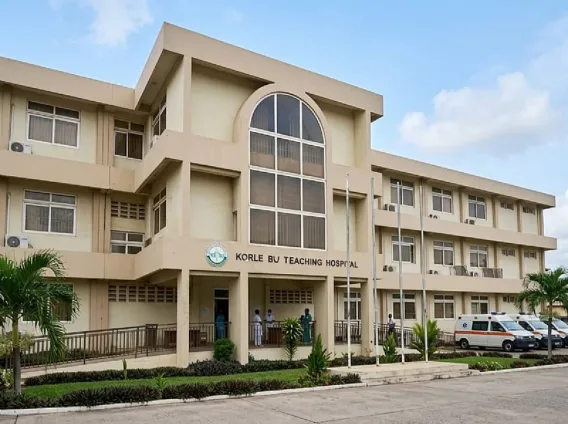
The Right to Information (RTI) Commission in Ghana has imposed an administrative penalty of GH₵20,000 on 254 public institutions for their failure to submit their 2025 annual reports, as mandated by law. This widespread sanctioning underscores the Commission's commitment to enforcing transparency and accountability across governmental bodies. The action is taken under Section 77(1) of the Right to Information Act, 2019 (Act 989), which requires public institutions to provide annual reports detailing their RTI activities within 60 days after December 31 each year. These reports are expected to include comprehensive details on the number of information requests received, approved, or rejected, alongside the reasons for any refusals.
Among the institutions sanctioned are all five teaching hospitals in Ghana: Korle-Bu Teaching Hospital, Komfo Anokye Teaching Hospital, Tamale Teaching Hospital, Cape Coast Teaching Hospital, and Ho Teaching Hospital. The Commission's action also affected a broad spectrum of other health institutions, including regional facilities such as Effia Nkwanta, Koforidua, Upper East, and Upper West Regional Hospitals, as well as municipal and government hospitals like Lawra Municipal Hospital, Atua Government Hospital, Bibiani Municipal Hospital, Ga East Municipal Hospital, LEKMA Hospital, Manhyia District Hospital, Suhum Municipal Hospital, Suntreso Government Hospital, Tafo Government Hospital, Tarkwa-Nsuaem Government Hospital, Tetteh Quarshie Memorial Hospital, and Weija Gbawe Municipal Hospital. Health regulatory institutions and professional bodies, including the Allied Health Professions Council, Nursing and Midwifery Council, Medical and Dental Council, Pharmacy Council Ghana, Ghana Psychology Council, Ghana College of Pharmacists, and Ghana College of Physicians and Surgeons, were also listed among the defaulters. Further health-related entities like the Christian Health Association of Ghana, the University of Ghana Medical Centre, the National Vaccine Institute, and the Mortuaries and Funeral Facilities Agency received penalties.
Beyond the health sector, the Ghana Police Service, the Ministry of Education, and the Ghana Education Service were also cited. The list of defaulting institutions extends to major public universities, including the Kwame Nkrumah University of Science and Technology, University of Cape Coast, University for Development Studies, University of Energy and Natural Resources, University of Environment and Sustainable Development, University of Mines and Technology, and the University of Professional Studies, Accra. All five technical universities, security agencies such as the Ghana Armed Forces, Ghana Navy, Ghana Air Force, and the Bureau of National Intelligence, along with the Office of the Special Prosecutor and several Metropolitan, Municipal and District Assemblies, were among the 254 public bodies penalized.
The Commission highlighted that these institutions failed to comply with their statutory obligations despite explicit reminders issued through publications in the Ghanaian Times on January 20, 2026, and the Daily Graphic on April 24, 2026. The annual reports are crucial for the RTI Commission to prepare its consolidated report to Parliament and effectively monitor compliance with the RTI law. The Commission unequivocally stated, “Compliance with Act 989 is not discretionary. Failure to adhere to statutory timelines, disclosure duties, or enforcement directives constitutes a violation of law and attracts regulatory consequences.” It was also noted that public health institutions are frequent recipients of RTI requests from citizens seeking information on critical issues like healthcare delivery, procurement processes, infrastructure projects, and institutional operations.
A significant concern highlighted by the latest sanctions is the persistent non-compliance among some public institutions, particularly repeat offenders. Both the Ghana Police Service and the Ministry of Education have appeared on the latest list of defaulters, having faced penalties for similar breaches in the past. A Corruption Watch investigation published in September 2025 revealed that over 60 institutions had accumulated approximately GH₵5.6 million in penalties between 2020 and 2025 for RTI violations. During this period, the Agricultural Development Bank recorded the highest penalties with about GH₵1.365 million, followed by the Ghana Police Service with GH₵450,357, the Ministry of Education with GH₵260,000, and SSNIT with GH₵200,000. The investigation further found that the Ministry of Education had received the highest number of penalties, with four sanctions, while the Ghana Police Service had been penalised three times prior to their current inclusion.
The affected institutions have been given a strict 14-day period from the receipt of the Commission’s formal notice to pay the GH₵20,000 penalty. The Commission warned that failure to comply within this stipulated period could trigger further enforcement action. Civil society groups have responded by calling for stronger accountability measures, including tougher sanctions against the heads of institutions who repeatedly fail to meet their transparency obligations. These latest penalties are part of the RTI Commission’s continuous efforts to strengthen public access to information and enhance accountability across all government institutions in Ghana.