Police Withdrawal Orders Under Scrutiny: Experts Cast Doubt on Effectiveness Amidst Historical Failures
President Bola Tinubu has ordered the withdrawal of police officers from VIPs, redirecting them to understaffed stations while transferring VIP protection to the NSCDC. This move is the latest in a decade-long struggle to reassign police personnel, a challenge critically analyzed by retired Commissioner of Police Lawrence Alobi, who deems it a 'panicky measure' and emphasizes the urgent need to strengthen and re-equip the Nigeria Police Force to tackle escalating insecurity.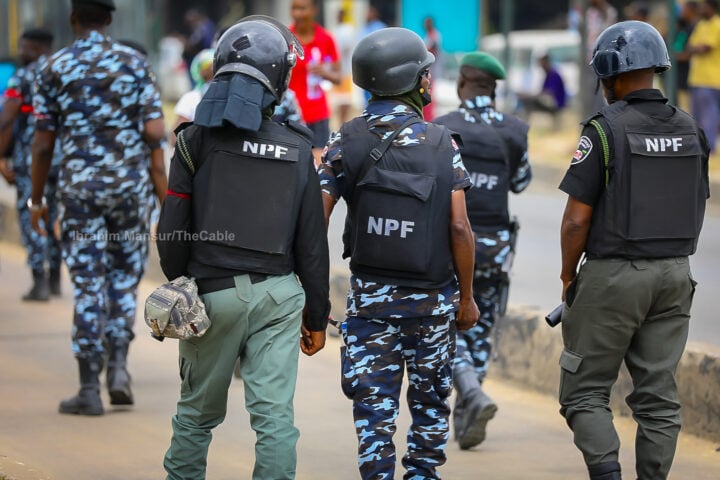
Amid a resurgence of gunmen attacks and abductions across Nigeria, President Bola Tinubu on Sunday issued a directive for the immediate withdrawal of all police officers attached to very important persons (VIPs) nationwide. This order, made during a high-level security meeting at the State House, also instructed VIPs requiring armed protection to source it from the Nigeria Security and Civil Defence Corps (NSCDC) instead of the Nigeria Police Force (NPF). The presidency stated that the goal is to redeploy thousands of officers to understaffed stations, particularly in rural and high-risk communities. However, this directive marks the latest chapter in a recurring pattern of attempts over a decade by successive Inspector-Generals of Police (IGPs) to reassign officers from private and unauthorized VIP protection duties to core policing functions, often with limited and short-lived success due to political pressures.
Historically, these efforts have faced significant challenges. In 2003, IGP Mustafa Adebayo Balogun initiated one of the earliest major attempts, targeting police orderlies attached to judicial officers and politicians. Despite initial resistance, including from then-Governor Bola Tinubu, Balogun renewed efforts in 2004 to withdraw orderlies from private individuals. IGP Ogbonnaya Onovo, in 2009, issued a sweeping order extending to former heads of state, ministers, and legislators, citing the lack of sanction from the Federal Executive Council for such privileges and estimating over 100,000 officers were illegally attached to VIPs, performing menial tasks. His successor, Hafiz Ringim (2010), reinforced this with threats of arrest and prosecution for non-compliant officers. Mohammed Abubakar (2012) cancelled and withdrew all approved police guards for private individuals and corporate bodies to restore professionalism. Solomon Arase (2016) made a similar move, describing the practice as a significant manpower drain, though many VIPs quickly regained their escorts. Ibrahim Idris (2018) issued a comprehensive order mandating withdrawal from politicians, private citizens, and corporate bodies, but this directive also collapsed within days. Mohammed Adamu (2020), following the #EndSARS protests, announced a nationwide withdrawal from “unentitled persons,” but enforcement was selective and abandoned. Usman Alkali Baba (2021) reiterated the policy, arguing against private police orderlies as unconstitutional, yet implementation remained inconsistent. Most recently, IGP Kayode Egbetokun (2023–2025) announced plans to withdraw Police Mobile Force (PMF) personnel from VIP escort duties, later clarifying it only applied to “non-entitled” VIPs, further fueling skepticism about the sincerity and effectiveness of these recurring directives. Even renewed efforts in April 2025 saw many VIPs quickly acquire new escorts.
The latest directive, which transfers VIP protection to the NSCDC, aims to break this cycle of resistance by introducing a different agency. However, retired Commissioner of Police, Lawrence Alobi, who served for 35 years, views the policy as a “panicky measure.” Alobi, active in security matters even after retirement, highlighted several factors responsible for Nigeria’s recent spike in insecurity, including the government’s lack of political will to decisively tackle the issue. He emphasized that security is the primary purpose of government, as enshrined in Section 14B of the Constitution, and criticized the current state where 25 secondary school girls were kidnapped in Kebbi and a general killed.
Alobi questioned the decision to transfer VIP protection from the police, the lead internal security agency primarily trained for such roles, to the Civil Defence, whose statutory functions relate to protecting critical infrastructure, acting as rangers, and mining. He stated that the NSCDC is not trained for the kind of security operations required for VIP protection, making VIPs potentially more vulnerable to attacks. Instead of withdrawing police, Alobi suggested increasing the NPF's strength, noting the inadequate ratio of one policeman to 400 citizens (UN recommendation), and advocating for a ratio of one policeman to 50 citizens given Nigeria’s security challenges. He called for consistent police recruitment and improved training institutions.
Furthermore, Alobi stressed that modern security is technology-driven, advocating for massive procurement of drones for regular surveillance of the country’s airspace and black spots, enabling prompt intervention by ground security forces. He strongly opposed negotiating with criminals or rehabilitating repentant bandits, arguing such approaches are nonsensical and dangerous, as individuals with strong ideologies may simply pretend to repent. He also highlighted Nigeria’s porous borders, suggesting the need for physical barriers or increased manpower to prevent incursions, though acknowledging resource constraints.
Regarding the proliferation of security outfits, Alobi asserted that it has never helped, instead creating rivalry, depleting resources, and hindering effective coordination. He posited that the police, as the