PayPal Is Coming To Africa - Is There Politics, Power, and Timing Behind Its Return?
PayPal is set to return to Africa in 2026. What does this planned return mean to Africa? This article questions the timing, trust, power, and whether the continent still needs a platform that once excluded and ignored it on the global financial market.
For nearly two decades, Africa existed in PayPal’s shadow economy. Not invisible, not irrelevant, but totally excluded. Freelancers watched contracts dissolve because clients insisted on PayPal-only payments. Entrepreneurs lost customers at checkout screens that quietly said, “This service is not available in your region.” Funds were frozen, accounts limited, explanations vague.
Amidst of all of this and through the unfair exclusion, Africa has adapted, innovated, and moved on.
Now, reports suggest PayPal is preparing to expand transaction access across Africa and is even eyeing a broader digital wallet launch by 2026 and is even seeking approval to launch the PayPal bank, a move that would let it lend directly, take deposits, and operate more like a traditional financial institution.
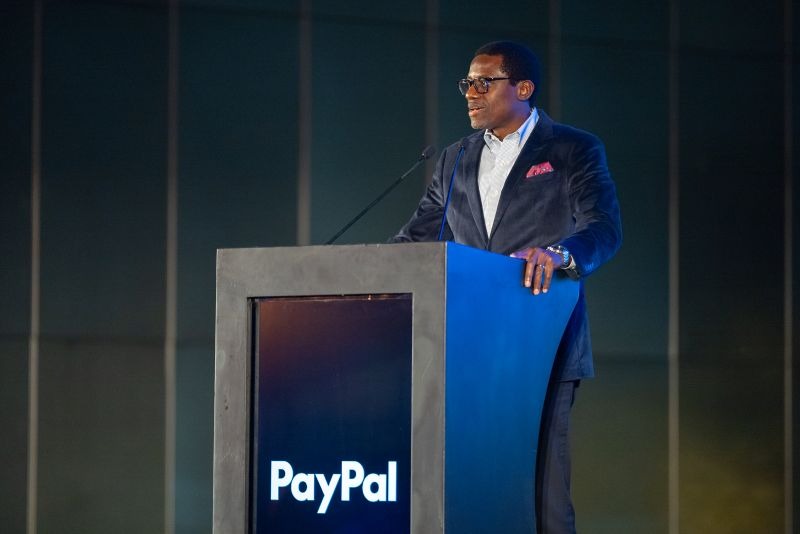
The announcement, though still unfolding, has reopened old conversations and unsettled memories. Why now? What changed? And perhaps two most uncomfortable questions of all: does Africa still need PayPal? Or is PayPal seeing something in Africa to tap from?
This is not just a fintech story. It is a conversation about power, timing, market arrogance, and whether global platforms can rewrite history without acknowledging the cost of their absence.
When Africa Was “Too Risky” to Matter
PayPal’s long-standing restrictions across much of Africa were often framed as compliance-driven decisions. Regulatory uncertainty, fraud risks, weak identity systems, and currency instability were commonly cited reasons. On paper, the logic sounded technical. In reality, it felt personal.
Entire countries were either blocked entirely or allowed to send money but not receive it, effectively locking Africans out of the global digital economy while still extracting value through consumption.
African users could pay international merchants but could not easily be paid in return. This imbalance shaped years of economic exclusion, particularly for remote workers, creatives, software developers, consultants, and small export-based businesses.

While Silicon Valley debated risk models, Africa paid the price in lost contracts, seized assets, missed payments, and stalled opportunities. And yet, instead of collapsing under exclusion, the continent built alternatives.
Fintech companies across Africa stepped into the vacuum PayPal left behind. Local and regional platforms emerged to solve cross-border payments, foreign exchange limitations, and merchant onboarding.
Mobile money ecosystems expanded at scale, especially in East and West Africa. Crypto adoption surged not as rebellion, but as necessity. By this time that PayPal has begun reconsidering Africa, the continent is no longer waiting for it and has moved on a long time ago.
Over the years, PayPal made limited attempts to re-enter Africa, but these efforts often fell short. In 2014 there was a planned partnership with Paypal and First Bank of Nigeria which was limited to bank customers and allowed only outbound payments.
Another collaboration was initiated in 2021 by PayPal but this time with Flutterwave acclaimed to support businesses but actually offered little value to individuals. Critics argue these initiatives tried to force African users into Western banking structures that did not reflect local realities.
But in all of these, it raises a difficult truth: PayPal is not returning because Africa has suddenly become worthy. It is returning because Africa is now becoming impossible to ignore on the global scale.
What PayPal Is Seeing Now That It Didn’t See Before
Africa today is not the Africa PayPal walked away from in 2008. The continent now hosts one of the fastest-growing populations of young, internet-connected consumers in the world. Smartphone penetration has expanded rapidly, digital identity frameworks have improved, and fintech regulation, while still uneven, is far more mature than it once was.
More importantly, Africa’s digital economy has proven resilient. Freelancing, remote work, e-commerce, and digital services have grown steadily, with millions of Africans earning foreign income despite structural barriers. Global companies now hire African talent not as an exception, but as strategy.
PayPal’s renewed interest appears less like a moral awakening and more like a market correction. The global payments landscape has changed. Competition is fierce. Fintech platforms that once dominated are now fighting to remain relevant in regions where growth is still possible. Africa represents scale, youth, innovation, and long-term value.
But there is an irony here. The very ecosystem PayPal once dismissed as too risky and flawed has now matured without it. Africa did not pause its digital evolution while waiting for Western validation. It built its own rails.

So the question is no longer whether PayPal can enter Africa, but whether if allowed to enter, can it enter on Africa’s terms?.
Can a Platform That Once Excluded a Continent Just Simply Return?
Trust is not restored by announcements. It is rebuilt through accountability, transparency, and consistency. For many Africans, PayPal’s history is not abstract. It is a lived experience. One that is still etched in the memories of those who have felt the sting of PayPal’s exclusion.
Frozen funds that took months to resolve or never came. Accounts shut down without clear explanations. Customer support systems that felt distant and dismissive. These experiences shaped a collective memory of exclusion that cannot be erased by a press release.
The idea that a single company could decide who participates in the global economy, then return years later expecting gratitude, forces an uncomfortable reflection on digital power and it should be fully questioned. Platforms are not neutral. Their policies shape livelihoods, especially in regions where alternatives are limited.
PayPal’s return, if handled without acknowledgment of past harm, risks reopening old wounds rather than healing them. Africans are no longer desperate users with no options. They are informed participants in a competitive fintech ecosystem.
The continent has learned a crucial lesson: dependence is expensive and any platform seeking relevance must now compete on value, not nostalgia or sentiments.
Does Africa Still Need PayPal or Has the Moment Passed?
This may be the hardest question PayPal must confront and one African needs to let the world know. Africa today has options and they have been perfectly fine without PayPal.
Over the years there has been a surge of International payment platforms, regional fintechs, crypto rails, and mobile money systems that facilitate cross-border transactions. Some are faster. Some are cheaper. Some are more culturally attuned to local realities.
PayPal still carries brand recognition and global acceptance, particularly with international merchants and platforms that default to its infrastructure. That matters. But relevance is no longer automatic. It must be earned.
Whether Africans will reject PayPal or not simply because of history, is something to watch as the whole event unfolds, but one is sure; Africans will not embrace it blindly. Adoption will depend on fairness, fee structures, dispute resolution, local partnerships, and whether PayPal treats Africa as a long-term partner rather than a late-stage growth market that is waiting to be exploited.
Most importantly, Africa’s fate in the global economy cannot be dictated by external platforms. The continent’s financial future must remain decentralized, competitive, and locally anchored. No single company should hold the power to determine who gets paid and who gets left out.
If PayPal succeeds in Africa, it will be because the continent first accepts it and also that it listens more than it dictates, adapts more than it imposes, and acknowledges that the continent it once ignored is no longer seeking permission to participate.
Is it too late for PayPal to return? Can they just impose themselves on Africans? Or just maybe PayPal should not return at all, what do you think?