ODM Implosion! Raila's Dream Betrayed as Oburu Grapples with Party Crisis
The Orange Democratic Movement (ODM) is facing a severe internal crisis, grappling with factionalism and leadership challenges following the death of Raila Odinga, despite recent positive poll numbers. Three distinct camps have emerged over the party's stance on the broad-based government and President William Ruto, with current leader Oburu Oginga's partisan approach exacerbating divisions. Urgent reforms, including leadership reconfiguration, honest dialogue, and credible nominations, are deemed essential to prevent the party from self-destructing.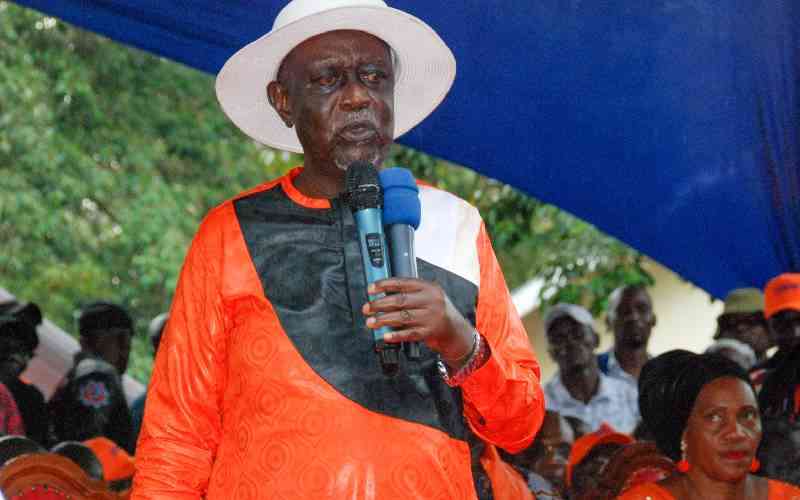
The Orange Democratic Movement (ODM) party, a significant political force in Kenya, finds itself embroiled in a deepening internal crisis following the death of its long-time leader, Raila Odinga. Despite an Infotrak opinion poll released in late 2025 placing ODM second in national popularity with 19 percent, just behind the United Democratic Alliance (UDA)'s 23 percent, the party's impressive public standing masks significant internal strife. This internal turmoil, which observers suggest threatens the party's very foundation, seems to defy the enduring support system built by Odinga, yet ominous unravelling is evident at its core.
The current crisis is primarily fueled by the emergence of three distinct camps within the 20-year-old party, largely divided over the concept of a broad-based government (BBG) and any potential alliance with President William Ruto's administration ahead of the next general elections. One faction has overtly aligned itself with the BBG, expressing commitment to supporting President Ruto. Prominent figures in this pro-BBG camp include the party leader Oburu Oginga and Chairperson Gladys Wanga, alongside Cabinet secretaries John Mbadi, Opiyo Wandayi, and Hassan Joho, who are described as "experts" within the BBG. Reports even indicated that a segment of this camp recently met President Ruto to strategize a working formula for the upcoming elections.
Diametrically opposed to this is a camp fiercely against both the BBG and any form of collaboration with President Ruto, viewing his administration as irrevocably compromised. This opposition faction includes influential voices such as Secretary General Edwin Sifuna, Governor James Orengo, and MP Babu Owino. A third, more moderate camp advocates for strategic caution, urging ODM to prioritize internal strengthening before making any definitive moves regarding future electoral alliances. Rarieda MP Otiende Amollo is a leading proponent of this approach, emphasizing careful deliberation for any party decisions, particularly those concerning the next elections.
The leadership of Oburu Oginga, the current party leader, has come under scrutiny, with critics arguing that his approach exacerbates the crisis rather than mitigating it. Unlike his late brother, Raila Odinga, Oburu has reportedly demonstrated an incapacity to unite a divided party. His strong identification with the pro-BBG camp has effectively compromised his ability to act as a unifying figure. Further fueling the internal discord, Oburu controversially anointed himself as ODM's sole presidential candidate should the party decide to field one in the next election. This partisan stance has led to the party being described as "operating on autopilot" amidst relentless "bickering and infighting among senior-ranking leaders," raising serious questions about his capacity to steer and steady the ship.
The stark contrast between the nostalgic birthday messages and celebratory videos posted by ODM leaders for the late Raila Odinga's 81st birthday, and the current reality of the party "tottering on the brink of self-destruction," underscores the severity of the situation. To avert further damage and regain its footing, the ODM party is advised to undertake three critical reforms. Firstly, a re-evaluation and reconfiguration of its national leadership are imperative. This may involve replacing the current party leader with a more politically astute and technically proficient individual, such as Prof Nyong’o, or a radical transformation of Oburu's leadership style.
Secondly, an honest and open dialogue among the rival factions is crucial. Despite the seemingly irreconcilable differences, a middle-ground consensus, reminiscent of Raila Odinga's past ability to bridge divides, is achievable. Such a consensus would project much-needed unity and enhance the party's potency ahead of the 2027 elections. Lastly, any reform efforts must guarantee free, fair, and credible nominations for upcoming elections. Flawed nominations have historically been ODM’s Achilles heel. With the absence of Raila Odinga, who previously served as an "antidote" to mitigate the damage from these issues, ensuring transparent nomination processes becomes even more vital for the party's future credibility and stability.