Obi's 2027 Masterplan: 'Production First' Agenda to Save Nigeria
Presidential candidate Peter Obi of the Nigeria Democratic Congress (NDC) launched his 2027 campaign, vowing to transform Nigeria from consumption to production. Alongside running mate Senator Rabiu Musa Kwankwaso, Obi detailed ambitious reforms across security, economy, education, and healthcare, emphasizing direct engagement with Nigerians and an issue-based campaign.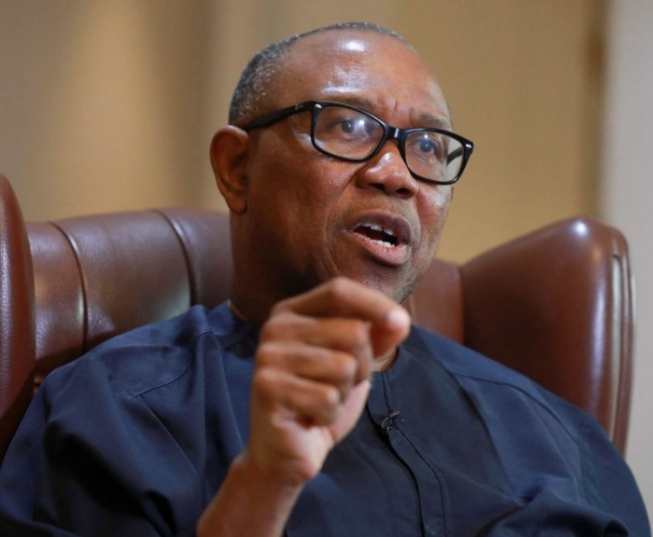
Mr. Peter Obi, the presidential candidate for the Nigeria Democratic Congress (NDC), officially launched his 2027 campaign on Friday, promising a transformative shift for Nigeria "from consumption to production." Accompanied by his running mate, Senator Rabiu Musa Kwankwaso, Obi outlined a comprehensive agenda spanning security, economy, education, and healthcare reforms, should their ticket be elected. Speaking from his Onitsha GRA residence, Obi marked the official commencement of campaigns on Wednesday, August 19, 2026, as a critical opportunity for Nigerians to evaluate candidates' records and proposals amidst global uncertainties.
Obi articulated his profound belief in Nigeria's potential, stating, "I enter this contest with one firm conviction: Nigeria can work, and Nigeria must work." He highlighted the dire economic realities faced by the nation, citing International Monetary Fund (IMF) data that revealed 63 percent of Nigerians, equating to over 140 million people, live at or below the national poverty line. Furthermore, humanitarian agencies projected 35 million people would require food assistance during the 2026 lean season, with 3.6 million internally displaced due to ongoing conflict and insecurity. Obi underscored that these figures represent the daily struggles of Nigerian families, farmers, workers, students, and businesses, yet maintained his conviction that Nigeria possesses the necessary people, resources, market, talent, and enterprise to overcome these challenges.
Anchoring his campaign on his extensive experience in the private sector and as former governor of Anambra State, Obi emphasized his track record in prioritizing education, healthcare, infrastructure development, fiscal discipline, and institutional capacity. He described Senator Kwankwaso as bringing "different but complementary governing experience" from Kano State, where his focus included education, technical training, scholarships, and infrastructure. Both leaders concurred that Nigeria's path to progress lies in investing in its people and meticulously managing public resources with discipline. Obi firmly asserted that "Public office is not a reward; it is a responsibility to the people."
The core of the NDC's agenda, as presented by Obi, is to center "production, investment, enterprise, and human capital" in their leadership approach. Key proposals for an NDC-led federal government include: Agriculture, which would involve securing farming communities, expanding irrigation, enhancing rural roads and storage facilities, and connecting farmers with finance and markets. Industry would be bolstered through strengthening manufacturing and agro-processing sectors to boost finished goods exports and capture greater value. To foster a conducive Business Climate, the administration would focus on removing unnecessary regulatory and infrastructure barriers for entrepreneurs. Public Finance would be reformed by cutting wasteful spending, ensuring accountability for every naira, and increasing revenue without impeding businesses. Obi clarified that the ultimate goal is not mere growth, but an economy that significantly increases production, creates more employment opportunities, generates wealth, and elevates living standards for all citizens. He stressed, "Nigeria cannot import its way to prosperity. We will produce more of what we consume, process more of what we produce, and compete more effectively in global markets."
Security was also a paramount concern for Obi, who asserted that national prosperity is unattainable when citizens cannot safely farm, travel, or conduct business. His security strategy encompasses improved intelligence gathering, enhanced coordination among security agencies, strengthened policing and border management, and greater integration of technology. He also endorsed "lawful community-based systems" for early threat detection and advocated for decentralizing security management while maintaining robust coordination across all levels. Addressing the root causes of insecurity is critical, as he explained, "Farmers cannot produce food if they cannot reach their farms safely. Children lose the chance to learn when they cannot attend school safely."
Recognizing Nigeria's young population as its "greatest asset," Obi pledged to expand access to basic education, universities, and technical and vocational training to realize a "demographic dividend." Regarding healthcare, he lamented the "very poor" primary healthcare indicators, noting that infant and maternal mortality rates are among the worst globally. His administration would commit to expanding access to essential medicines and adequately equipping health workers. Obi further detailed a region-by-region productivity plan: focusing on agriculture and livestock in the North-West; reconstruction and trade in the North-East; food processing and minerals in the North-Central; manufacturing, technology, and the creative economy in the South-West; entrepreneurship and infrastructure in the South-East; and value-added oil, gas, maritime, and fisheries in the South-South. The Federal Capital Territory (FCT), he added, "Must demonstrate what efficient urban planning, transportation, housing, sanitation, security, and public services can achieve."
Referencing the World Bank’s April 2026 Nigeria Development Update, Obi emphasized that the primary task is to translate reforms into "improved livelihoods, stronger human capital, wider opportunities, and inclusive growth." He called for an issue-based campaign, urging Nigerians to critically "examine each candidate’s record and proposals, ask tough questions, and demand evidence behind every promise." He cautioned against politics driven by "propaganda, ethnicity, religion, elitism, or cronyism." In a direct challenge to his political rivals, Obi committed that he and Kwankwaso would personally "take our message directly to Nigerians" and would not "delegate this duty to proxies." He concluded by asserting that "Any presidential candidate who lacks the resolve to travel across the country, meet the people, and respond to their questions lacks the capacity to govern it," and pledged to begin the journey of resetting Nigeria by uniting it and securing its path towards economic and inclusive growth.