Nigerian Games Have Struggled to Make Money. Is Lagos Life Changing That?
Lagos Life hit 1.2 million players in days, but the real test is how it plans to make money. Could virtual Lagos finally crack Nigeria’s gaming revenue problem?
For years, Nigerian game developers have had a frustrating problem. Getting people to play their games has never been the only challenge; it has always been how to turn those players into paying customers.
Lagos Life, a browser-based life simulation game created by software developer Shalom Mathew, is now trying a different approach.
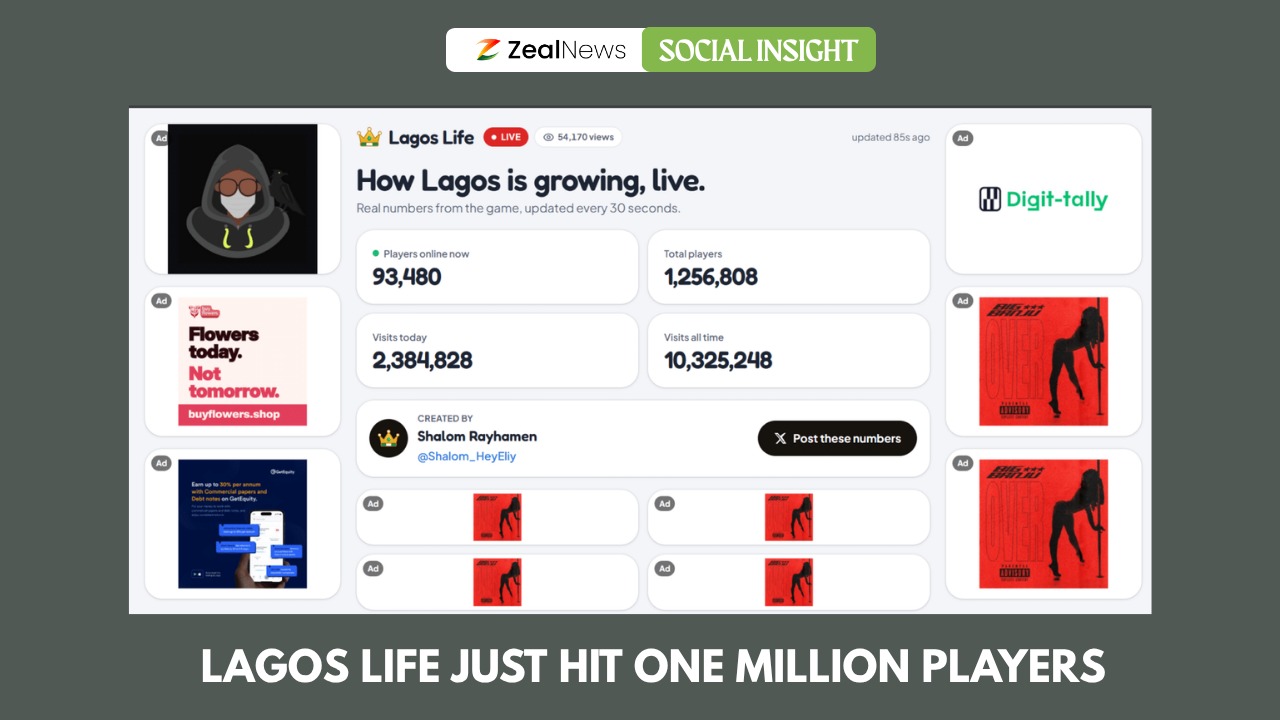
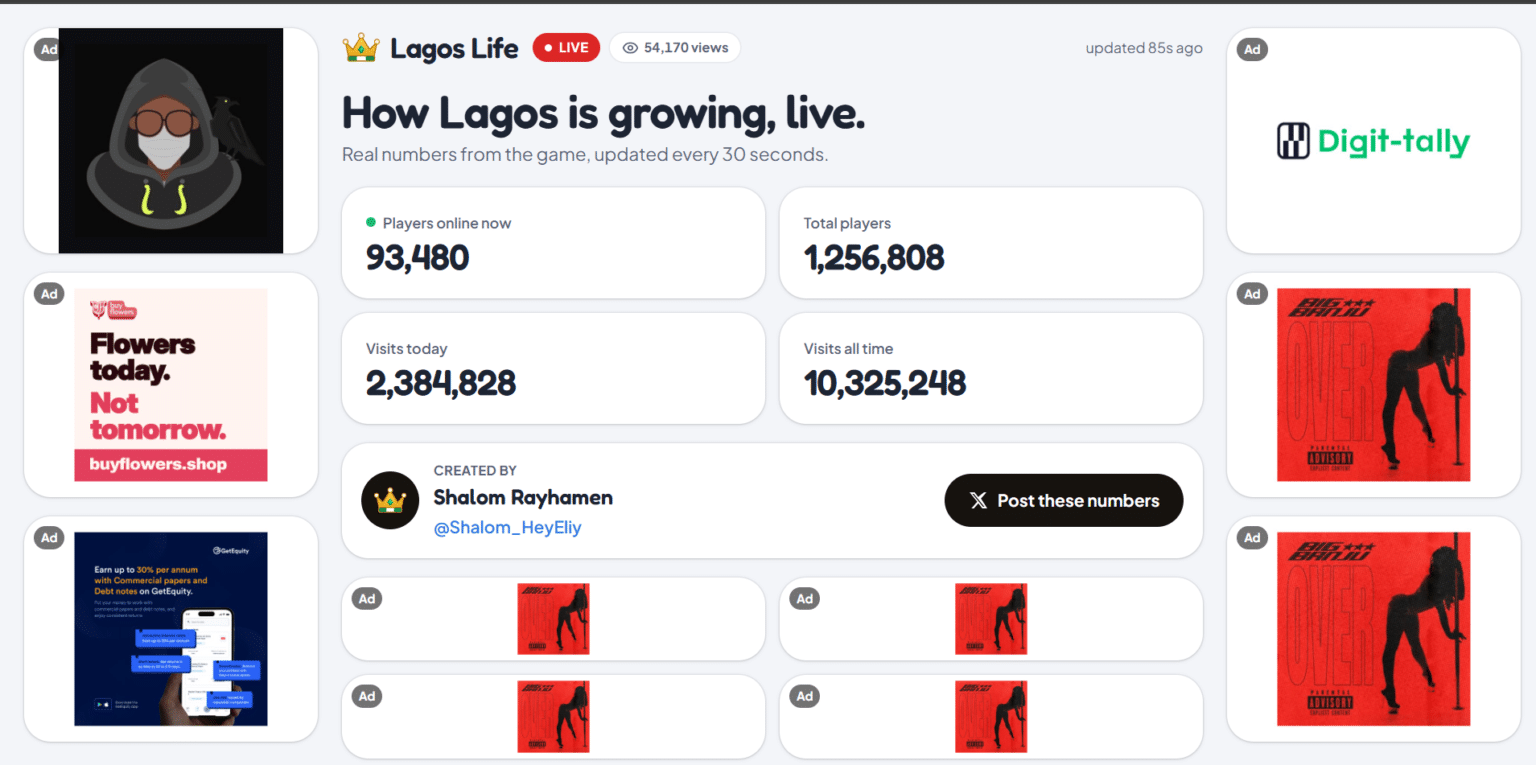
The game launched on October 1 and reportedly crossed one million players within four days. By October 5, its dashboard showed more than 1.2 million total players, with more than 71,000 people online at the same time.
Those numbers have understandably attracted attention, but the size of the audience is only part of the story. Lagos Life is also testing a business model that does not require its players to pay for the game.
Instead, it is turning the virtual city into advertising space and asking businesses to pay for access to the people playing inside it.
That makes Lagos Life an interesting test of a question Nigerian game developers have been dealing with for years: can a locally made game attract enough attention to become a sustainable business?
Why Has Making Money From Nigerian Games Been So Difficult?
The problem has never been that Nigerians do not play games. They do. The problem is getting enough economic value from those players to support the cost of building and running a game.
Gamsole, one of Nigeria's early mobile gaming companies, experienced this challenge with Gidi Run.
When the game launched in 2016, its founder Abiola Olaniran spoke about the difficulty of monetising Nigerian players. Advertising was one option, but the amount advertisers were willing to pay to reach local audiences was relatively low. Payment systems also made it harder for developers to rely on players buying games or making purchases inside them.
Gamsole eventually partnered with MTN to distribute Gidi Run through the telecom company's Game+ platform, using telecom billing as part of its monetisation strategy.
In an earlier interview, Olaniran also explained that the company's Windows Phone games were largely monetised through advertising because their download numbers were high enough to make that model work. For its Android and iOS titles, the company was looking towards in-app purchases.
The underlying problem was fairly straightforward. A game could attract plenty of players and still struggle to generate enough revenue from them.
Lagos Life is approaching that problem from a different direction.
How Is Lagos Life Trying to Make Money?
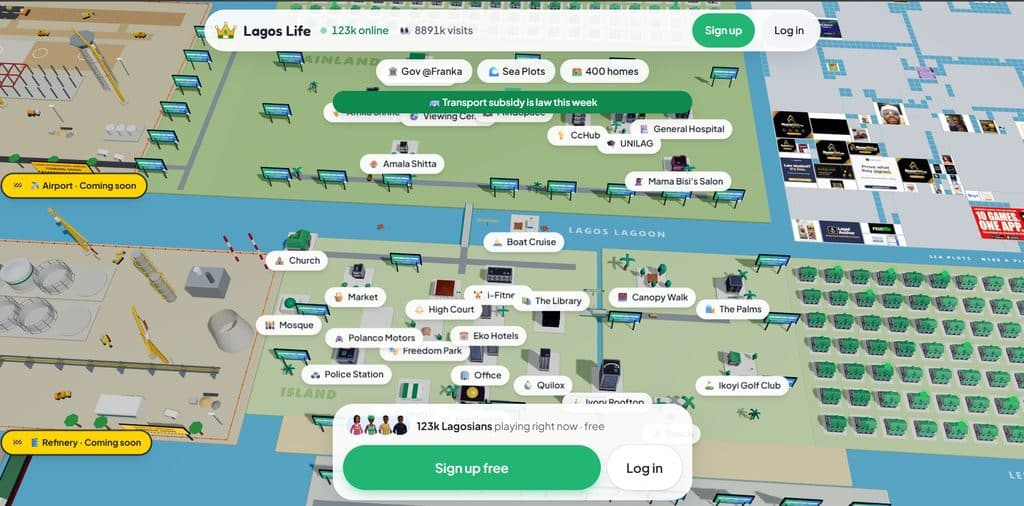
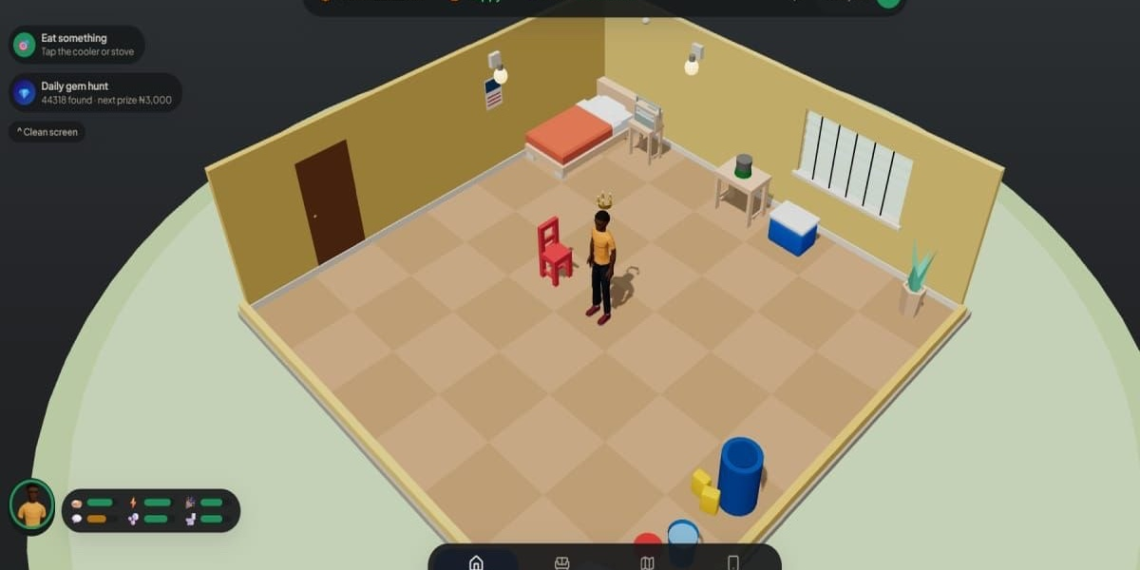
Lagos Life is free to play, and users do not need to download an app. They create characters, take virtual jobs, pay rent and interact with other players inside a digital version of Lagos.
Social Insight
Navigate the Rhythms of African Communities
Bold Conversations. Real Impact. True Narratives.
The game then places businesses inside that environment.
There are 38 virtual billboards around the city that businesses can rent for ₦5,000 a week. There are also virtual sea plots available for ₦18,000 a week. Businesses can upload their logos to these spaces, and players can tap the adverts to visit the businesses' links.
The game's live statistics page has also become advertising inventory. On October 3, six slots were being offered at ₦50,000 for 30 days. By October 5, a slot was listed at ₦100,000 for seven days.
Businesses have already started using the available advertising spaces. Reported advertisers include Salary Index, Leadway Lifestyle Fair, MyDecorTrade and music distributor ONErpm, alongside smaller businesses and independent artists.
The developer has also shared campaign results from advertisers. In one campaign, 3,686 taps were recorded from 9,826 game opens, producing a reported tap-through rate of roughly 38%.

That figure should be treated with some caution because the result comes from the developer rather than an independent advertising measurement system. Still, it shows why businesses might be interested in the model if the audience continues to grow.
Lagos Life is essentially turning player attention into advertising inventory.
Can That Model Actually Make The Game Profitable?
That is still unclear.
The game's large audience does not automatically mean that it is making a lot of money. Lagos Life has not disclosed its revenue or operating costs, so there is currently no public information that allows anyone to calculate whether the business is profitable.
The billboard prices give us a small indication of the potential revenue, though. If all 38 billboard spaces were rented at ₦5,000 per week, they would generate ₦190,000 weekly. The game also has its sea plots, advertising on the live statistics page and other potential opportunities for businesses to pay for visibility.
Those numbers show that there is a revenue model, but they do not yet demonstrate that it is large enough to sustain the entire business.
The audience figures also need some context. The player numbers come from Lagos Life's own dashboard and have not been independently verified.
So Lagos Life has not yet proved that it has solved the Nigerian gaming industry's monetisation problem.
What it has done is demonstrate that there may be another way to approach it.
So, Does Lagos Life prove Nigerian Gaming Can Finally Make Money?
Not yet.
Social Insight
Navigate the Rhythms of African Communities
Bold Conversations. Real Impact. True Narratives.
One game cannot prove that an entire industry has found a sustainable business model, particularly when the game is still only days old and its revenue and operating costs are not public.
What Lagos Life has demonstrated is that a Nigerian-made game can attract a very large audience very quickly and create advertising opportunities around that audience.
That is significant because it changes the question developers have to ask.
The traditional model assumes that the player is the customer. The developer builds a game, attracts players and then tries to convince those players to spend money through purchases, subscriptions or other forms of payment.
Lagos Life is experimenting with a model in which the player does not necessarily have to be the customer. The audience itself becomes valuable, and businesses pay to reach it.
That approach could be particularly relevant in Nigeria, where getting large numbers of consumers to pay directly for digital products has historically been difficult.
It also gives locally made games another possible source of revenue beyond app-store purchases and in-game transactions.
For now, Lagos Life is still an experiment. Its player numbers are self-reported, its advertising business is young and there is not enough public financial information to determine whether the game is profitable.
But if the audience continues to grow and more businesses begin paying to be part of the virtual city, Lagos Life could provide a useful answer to one of Nigerian gaming's oldest problems.
The question may not be whether Nigerian players are willing to pay for locally made games.
It may be whether developers can build games that are valuable enough to attract an audience, and valuable enough to make businesses pay for access to that audience.