Nigerian Banking Titan Jim Ovia Exits Zenith Chair Amid CBN Tenure Rule
Jim Ovia, founder of Zenith Bank, has retired as Group Chairman after completing his 12-year tenure, as mandated by Nigerian corporate governance regulations. While Engr. Mustafa Bello takes the helm, Ovia significantly increased his shareholding, mirroring a broader trend among Nigerian bank founders who convert formal authority into substantial financial influence despite regulatory limits.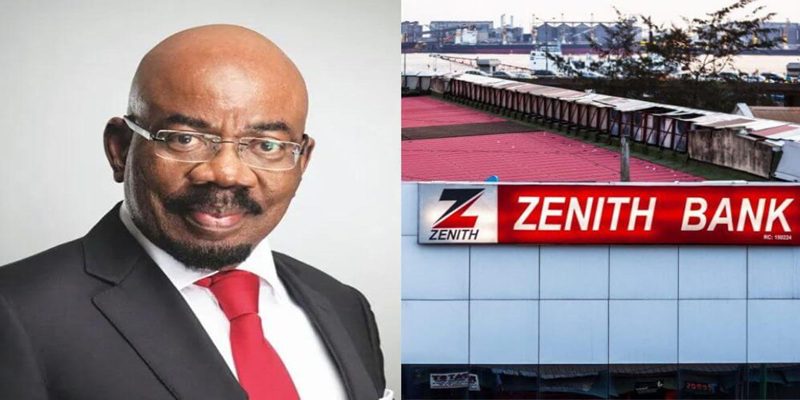
Jim Ovia, the esteemed founder of Zenith Bank, has officially retired as Group Chairman of the institution, concluding a mandatory 12-year tenure in accordance with Nigerian corporate governance regulations. This significant announcement was made in Lagos on May 5, 2026, marking the close of an influential era for one of Nigeria’s preeminent financial institutions, which Ovia meticulously built from its inception. The bank's board lauded Ovia for his exceptional leadership, strategic foresight, and robust oversight, emphasizing his unwavering commitment to governance standards and stakeholder value creation that profoundly elevated Zenith Bank's standing within Nigeria’s competitive financial services sector.
His successor, Engr. Mustafa Bello, has received the requisite approval from the Central Bank of Nigeria (CBN). Bello, who joined the Zenith Bank Board on December 29, 2017, holds the distinction of being the longest-serving director on the current board. This appointment is strategically designed to ensure seamless continuity of the bank's objectives and maintain stability as Zenith navigates the dynamic landscape of evolving regulatory frameworks and market conditions.
Under Ovia's leadership, Zenith Bank consistently demonstrated formidable financial strength. In 2025, the bank reported a pre-tax profit of N1.26 trillion. While this figure represented a 4.78% decrease from the previous year, it was directly attributable to an industry-wide directive from the Central Bank of Nigeria compelling banks to settle debts related to COVID-19 relief measures—a one-time event that impacted profits across the sector. Despite this external pressure, the bank’s core revenue generation remained robust. Interest income notably surged from N2.7 trillion in 2024 to N3.6 trillion in 2025. Loans and advances to customers, the primary driver of the bank’s income, contributed N1.8 trillion, showcasing a substantial year-on-year growth of 20.15%. Additionally, treasury bills generated an impressive N1.1 trillion. After accounting for N222.8 billion in income tax, the post-tax profit settled at N1.04 trillion. This strong momentum extended into the first quarter of 2026, with Zenith posting an unaudited pre-tax profit of N360.92 billion, a 2.87% increase compared to Q1 2025. Profit after tax also saw a marginal but stable rise of 0.69% to N314.02 billion, despite increased loan impairments and persistent cost pressures.
Engr. Bello inherits a bank in robust financial health, yet operating within a challenging macroeconomic environment characterized by rising credit costs, ongoing regulatory scrutiny, and inherent volatility in Nigeria’s economy. His immediate mandate will involve safeguarding the institutional culture and rigorous governance standards established under Ovia, while concurrently charting the course for the bank’s subsequent growth phase. For Jim Ovia, his retirement closes a chapter that commenced with Zenith Bank's founding in 1990, a journey that transformed a startup into one of Nigeria's foremost tier-one banks, boasting assets in the trillions of naira, thereby cementing his legacy as a pivotal figure in Nigerian banking history.
Beyond Zenith Bank, a broader trend is unfolding across Nigeria’s five largest commercial banks—the FUGAZ group (First Bank, UBA, Guaranty Trust, Access, and Zenith)—as the Central Bank’s decade-old, 12-year tenure rule for chairmen and key executives reaches its peak. While individuals are formally stepping down from their leadership roles, a striking pattern has emerged: many are simultaneously increasing their shareholdings in the institutions they are leaving. This orderly, compliant, and predictable exit for Ovia from Zenith Bank, for instance, saw no market crisis, save for a minor 0.93% drop in Zenith Bank shares at the time of reporting. However, beneath the surface of this regulatory clock, Ovia had strategically augmented his ownership stake. He now commands approximately 16.2% of Zenith Bank, equating to about 5.08 billion shares, a significant increase from the 11-12% range disclosed in 2024 filings. This deliberate accumulation makes him the single most influential shareholder in the bank he founded, reinforcing his economic interest despite the change in his formal title.
The CBN's governance framework, which introduced these tenure limits, aimed to prevent the long-term entrenchment of institutional power in too few hands. While this objective has been met in terms of formal leadership rotation, the share registers of these banks reveal a different dynamic. The individuals most affected by the tenure rule have, in several instances, responded by fortifying their economic positions. Tony Elumelu at UBA similarly holds a consolidated stake of 16.3% (approximately 5.6 billion shares), accumulated largely through Heirs Holdings, tripling his economic exposure from around 5% just a few years prior. At FirstHoldCo, Femi Otedola's consolidated stake stands at an even more aggressive 18.12% (8.02-8.05 billion shares), having grown from 11.8% in 2024 through direct and indirect holdings. His proactive accumulation, including a NGN14.8 billion share purchase in December 2025, positions him as the largest individual shareholder, though RC Investment Management Limited holds a larger institutional stake.
In contrast, Access Corp and GTCO exhibit more dispersed ownership structures. Following the passing of Herbert Wigwe, the Wigwe family estate holds between 4.2% and 8.8% in Access Corp through Tengen Holdings, but no dominant anchor shareholder exists. GTCO is the most dispersed, with CEO Segun Agbaje holding a mere 0.11% and ownership primarily resting with institutional investors and foreign portfolio holders, negating the kind of individual shareholder pressure seen in Zenith, UBA, or FirstHoldCo. These cases illustrate what the CBN’s governance model achieves when ownership is genuinely fragmented, with the tenure rule and ownership structure aligning.
The CBN’s tenure framework has undeniably succeeded in its primary objective: ensuring that the same individuals cannot indefinitely occupy formal leadership positions in Nigerian banks, fostering visible transitions across the FUGAZ institutions. However, the concurrent data from share registers unveils a nuanced reality: many of these departing leaders are not disengaging but are rather converting their formal authority into enduring financial authority. Ovia at 16.2%, Elumelu at 16.3%, and Otedola at 18.12% are profiles of individuals deepening, not withdrawing, their institutional influence. The increasing prevalence of holding company structures further complicates this, as strategic decisions at the group level often fall outside the direct regulatory perimeter of the operating bank. While compliance is enforced at the operational level, significant influence persists at the group level and, crucially, through the share register. Across the FUGAZ group, the foundational institutions continue to dominate Nigeria's deposit and credit markets, and the influential investor networks still steer their long-term trajectories. What has fundamentally shifted is the mechanism through which the most impactful individuals maintain their connection: formal titles are being replaced by strengthened equity positions, which in at least three of the five major banks, have grown larger, not smaller, during these governance transitions. The CBN's tenure rule facilitated Jim Ovia's move from the chairman’s seat, but the Zenith Bank share register unequivocally shows where his enduring influence now resides.