Nigeria’s Satellite Network: $11.44M Dispute Raises Bigger Questions About Control and Dependence
Nigeria’s satellite faces scrutiny as China claims $11.44M is owed. Beyond the payment, Beyond the payment, the situation exposes deeper concerns about technology control, infrastructure, and opportunity costs.
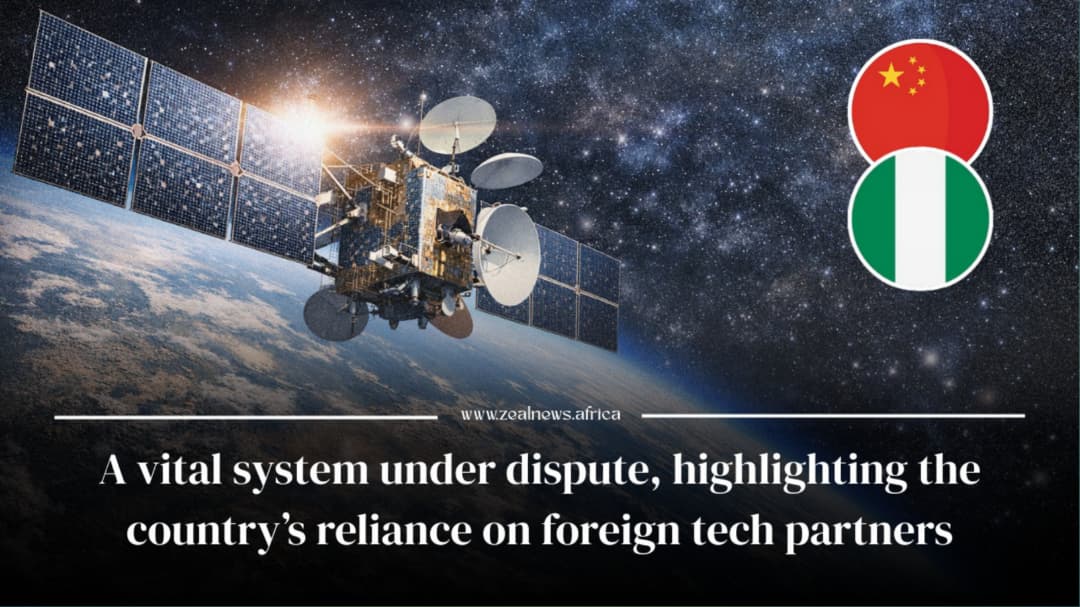
Nigeria’s satellite network is back in the spotlight, but not for the reasons most people would hope.
Reports say China’s China Great Wall Industry Corporation (CGWIC) has demanded $11.44 million from Nigeria, claiming it is owed for years of technical support.
Nigeria, however, has denied the debt, insisting the situation is being misrepresented.
Either way, it’s clear this is more than a simple financial disagreement.
It raises the question: how much control do we really have over the technology that runs critical national systems?
The Numbers and the Threat
According to reports, the claimed amount covers Telemetry, Tracking, and Command (TT&C) services, which are essential for the operation of NigComSat-1R, Nigeria’s communications satellite.
CGWIC warned that failure to settle the debt within 30 days could result in restrictions or shutdowns of parts of the satellite.
The satellite itself is crucial.
It supports broadcasting, internet connectivity, and even government communications across Nigeria, especially in rural areas where alternative infrastructure is limited.
Any disruption could ripple through everyday life.
Nigeria Pushes Back

Nigeria’s official satellite agency,NigComSat Limited, has responded firmly, calling the claims misinformation. The agency insists that control over the satellite remains with Nigeria, and that the reported threat is overstated.
This conflicting narrative leaves the public in a confusing space: the reports signal risk, but the denial suggests the situation may not be as dire. Who is right? And does it really matter if the satellite’s operation is already dependent on foreign infrastructure?
The Broad Picture: Dependence and Vulnerability
Even if the dispute over $11.44 million is resolved quickly, it exposes a larger concern: Nigeria’s reliance on foreign partners for critical technology.
The satellite was built and launched with Chinese support, and parts of its ground control operations have been handled from China since a 2019 incident damaged Nigeria’s local facility.
This dependence highlights a vulnerability in national infrastructure management. If operational control, maintenance, or technical decisions are partially external, Nigeria’s ability to act independently is limited.
It’s not just about money, it’s about who actually controls the systems that underpin modern life.
Economic Cost Beyond the Debt

The $11.44 million figure is just one part of the story. Maintaining technology that is partially foreign-controlled has a hidden economic cost.

Nigeria spends millions each year on satellite support and technical services, money that could have been invested in local engineers, homegrown satellites, or training programs.
By relying on external partners, the country loses not only money but also opportunities for skill development and job creation in the growing field of space technology.
The dispute is a reminder that financial obligations often intersect with broader questions of economic planning and capacity building.
Looking Ahead
What this situation makes clear is that the conversation around Nigeria’s satellites cannot end at payment disputes.
It invites deeper reflection on how the country develops and manages technology, and whether reliance on foreign entities leaves critical infrastructure exposed.
Whether the $11.44 million claim is accurate or not, the underlying question remains: how prepared is Nigeria to handle its own technology, fully and independently?
That is a conversation that will define not just satellites, but the future of the country’s digital sovereignty.