Mystery Unveiled: U.S. Ghost Town Resurfaces from Lake Depths
Discover the captivating story of St. Thomas, a ghost town in Nevada's Lake Mead that periodically resurfaces from its watery grave. Submerged during the construction of the Hoover Dam, the town has re-emerged due to persistent drought, offering a unique glimpse into history and the profound impact of environmental change.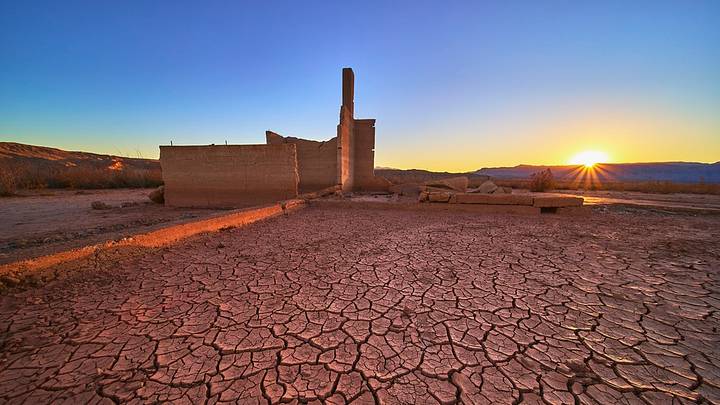
St. Thomas, a unique ghost town nestled within Nevada's Lake Mead National Recreation Area, presents a haunting yet fascinating spectacle as it periodically emerges from the depths of Lake Mead. This town, abandoned and subsequently submerged during the monumental construction of the Hoover Dam, has repeatedly defied its watery grave due to recurring droughts, resurfacing multiple times throughout the 20th century. Notably, it re-emerged in the early 2000s and has remained exposed ever since, transforming into a compelling tourist destination that connects a unique historical remnant with contemporary environmental challenges.
The genesis of St. Thomas traces back to land near the Overton Arm of the Muddy River, which flows into the Colorado River. Evidence suggests the area was prone to regular flooding millennia before European colonization, inhabited first by ancient Pueblo and Basketmaker cultures. In 1865, Mormon settlers established St. Thomas, initially believing it to be in Utah or Arizona. A subsequent land survey, however, officially placed it in Nevada, prompting most inhabitants to leave to avoid Nevada taxes. Only Daniel and Ana Bonelli remained, sustaining themselves through livestock and a ferry service on the Colorado River. By the 1880s, the town experienced a resurgence, attracting new settlers drawn to its fertile soil. At its zenith, St. Thomas was home to over 500 residents, serving as a vital stop along the Arrowhead Trail between Salt Lake City and Los Angeles. Despite lacking modern amenities like plumbing or electricity, the town boasted essential services including a school, a church, a soda fountain, and even garages for the then-novel automobile.
A pivotal shift occurred in 1928 with President Calvin Coolidge's signing of the Boulder Canyon Project Act, greenlighting the construction of the Hoover Dam, then known as the Boulder Dam. This ambitious project necessitated the creation of a vast reservoir, Lake Mead, which would inundate surrounding areas, including St. Thomas. Residents were instructed to evacuate and were compensated, albeit reportedly meagerly, for their displacement. Despite some resistance, efforts to remain proved futile. Wooden structures were dismantled, and the town's cemetery was relocated to nearby Overton. By 1935, the waters of Lake Mead began their slow encroachment. While most had departed, some residents lingered, with the last, Hugh Lord, famously leaving his home in a rowboat only when the water reached his front door. By 1938, St. Thomas lay 60 feet beneath the surface of Lake Mead, its ice cream parlor and school classrooms silently submerged, with only the highest tips of cottonwood trees visible above the water.
However, St. Thomas proved unwilling to stay buried forever. Throughout the latter half of the 20th century, periods of drought caused the town to occasionally break the surface before receding once more. Former residents organized reunions when the town briefly reappeared in 1945 and again in 1962, remaining exposed for a remarkable nine years until 1972. It then remained submerged until 2002, when it resurfaced for another reunion, and has notably remained exposed ever since. Today, it appears the town has re-entered the realm of air and wind for good. Lake Mead and the Hoover Dam endure, but persistent drought has drastically lowered the lake's water levels. As of 2026, Lake Mead's surface is at a historic low, significantly compromising the dam's hydroelectric power generation and posing a severe threat to the regional water supply. This environmental crisis has, paradoxically, ensured the sustained exposure of St. Thomas's ruins.
Visitors today can explore the poignant remains of St. Thomas, witnessing firsthand the profound impact of water on a civilization, wearing it down to its fundamental structures in a relatively short span. Among the visible relics are adobe steps leading nowhere, abandoned cisterns, and eroded concrete foundations. The remnants of the schoolhouse and the ice cream parlor are particularly cherished ruins, the latter historically being the first building to emerge from the receding waters. Practical advice for visitors includes wearing long pants and closed-toed shoes, as the site is often coated in salt-encrusted silt and seashell fragments. The National Park Service actively maintains the site, offering reassurance that sudden re-flooding, at least without warning, is unlikely.