Millions of Nigerians Are Living With Disabilities, Here Is What This startup is Building For Them.
35 million Nigerians live with disabilities, yet most websites exclude them. Here is how Adaptive Atelier is rebuilding digital access and creating an accessibility economy in Africa.
In Nigeria, disability is often treated as a personal burden rather than a societal responsibility that we should all help in. It is usually talked about in whispers, wrapped in prayer, or even completely hidden behind closed doors.
For millions of Nigerians living with disabilities, the world is not just physically inaccessible; it is structurally indifferent.
An estimated 35 million Nigerians live with some form of disability. Yet, their exclusion is rarely discussed in terms of infrastructure, design, or systems that affect daily life.
Instead, the burden of adjustment is placed on the individual or their care givers.
The blind must find their way through interfaces not built for them.
The deaf must navigate conversations never designed to include them.
Neurodivergent individuals must survive environments that overwhelm rather than accommodate them.
This exclusion also extends into the digital world, where participation increasingly defines access to education, employment, commerce, and community.
Websites are designed for speed, aesthetics, and efficiency, but rarely for accessibility. Some videos usually lack captions.
Interfaces assume uniform cognitive processing. Navigation systems ignore assistive needs.
For many Nigerians with disabilities, the internet, which promises global inclusion, becomes another closed door.
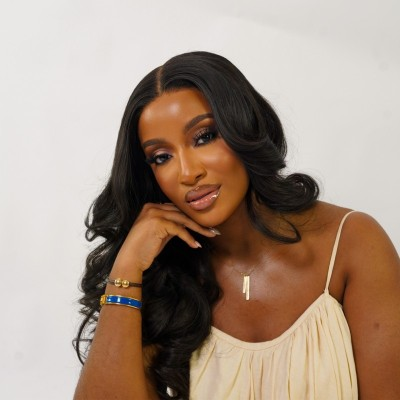
Toyosi Badejo-Okusanya understands this exclusion intimately.
As a child, she was labelled stubborn and disrespectful, punished for ignoring instructions she simply could not hear.
Her deafness was misunderstood, not accommodated. It was treated as defiance rather than difference.
Her experience reflects a broader reality in Nigeria, where disabilities are seen as individual limitations rather than design failures of society itself.

But sometimes, exclusion does not just produce silence. Sometimes, it produces architects.
The startup rebuilding digital access from the margins
In 2023, Toyosi Badejo-Okusanya founded Adaptive Atelier, an accessibility technology startup focused on redesigning the internet to include people with disabilities, particularly across Africa where assistive infrastructure remains limited.
Her vision was shaped by contrast. After moving to the United Kingdom in 2017, she encountered systems where accessibility was treated as standard, not optional.
Hearing aids were provided through public healthcare and universities embedded accessibility into their operational structure. Inclusion was engineered and not just improvised or outrightly ignored.
Adaptive Atelier emerged from the realization that accessibility is not charity. It is infrastructure, one that needs to be deliberately.
The startup builds tools that allow websites and digital platforms to adapt to individual users rather than forcing users to adapt to rigid systems.
Its first product, AdaptiveWiz, is an API-based integration layer that allows users to personalise how they experience websites in real time.
Once integrated into a platform, users can activate accessibility profiles that adjust contrast, reduce motion, simplify layouts, or emphasize specific content.
This allows individuals with hearing loss, ADHD, epilepsy, low vision, and other conditions to navigate digital environments in ways aligned with their needs.
So instead of forcing uniformity, AdaptiveWiz enables customization and suit individual needs.
Behind the interface, these adaptations align with Web Content Accessibility Guidelines (WCAG), global standards for digital accessibility.
More importantly, the system is validated by disabled professionals who test platforms based on lived experience, not just technical compliance.
The company’s second product, AdaptiveTest, functions as a diagnostic and monitoring engine. It scans websites for accessibility violations, including missing alt text, poor color contrast, navigation failures, and structural design errors.
But unlike purely automated tools, Adaptive Atelier combines AI diagnostics with human validation.
This distinction matters, automated systems can detect errors, but only human experience can detect usability.
Adaptive Atelier has also created an accessibility marketplace that connects companies with disabled consultants who test and validate digital platforms.
This model transforms accessibility from a passive requirement into an active economic opportunity.
In a country where 63% of adults with disabilities are unemployed, this approach does more than fix websites. It creates work, participation, and ownership.
Since its launch, the startup has served approximately 5,000 users and operates with a distributed team across Lagos and London, supported by over 5,000 disabled consultants globally.
Adaptive Atelier is not just building tools, it is building an accessibility economy.
One where disabled individuals are not merely accommodated but employed, not merely included but empowered.
The future depends on what we choose to include
Accessibility is often misunderstood as generosity. But it is not generosity, it is justice from a social standpoint.
The work being done by Adaptive Atelier reveals a deeper truth and that is the fact that exclusion is rarely intentional, but it is always consequential.
Every inaccessible website, every design oversight, every missing caption reinforces a system that quietly tells millions of people they were never considered.
And yet, accessibility benefits everyone, captions help people in noisy environments, simplified interfaces improve usability for older adults.
Flexible design enhances overall user experience. Inclusive systems are not special systems. They are better systems.
As artificial intelligence reshapes the digital world, accessibility has the potential to scale faster than ever before. But technology alone is not enough. Inclusion must be intentional. It must be designed.
Because the true measure of progress is not how advanced systems become, but how many people they include.
Nigeria stands at a crossroads. The digital economy is expanding rapidly, startups are building the future and different platforms are shaping opportunity in real time.
The question here is simple; will that future include everyone? Or will millions remain invisible inside systems they cannot access?
Startups like Adaptive Atelier offer a glimpse of what inclusion looks like when it is treated as infrastructure, not afterthought.
They remind us that people with disabilities do not need sympathy. They need systems that see them and allow them accessibility.
And perhaps the greatest failure is not exclusion born of cruelty, but exclusion born of neglect.
Because when society fails to include people, intentionally or unintentionally, it quietly ostracizes them.
Not with words,but with design.