Mienye Ignites Debate: Bayelsa Governor Must Answer for Poverty, Not Abuja!
A governorship aspirant in Bayelsa State, Dr. Domor Mienye, has urged citizens to hold the state government accountable for high poverty levels, arguing that governors are primarily responsible for economic development. He highlights Bayelsa's vast resources and federal allocations, questioning why they haven't translated into job creation and improved living standards. Mienye proposes a new development model focused on economic diversification and evidence-based governance to move beyond reliance on federal funds.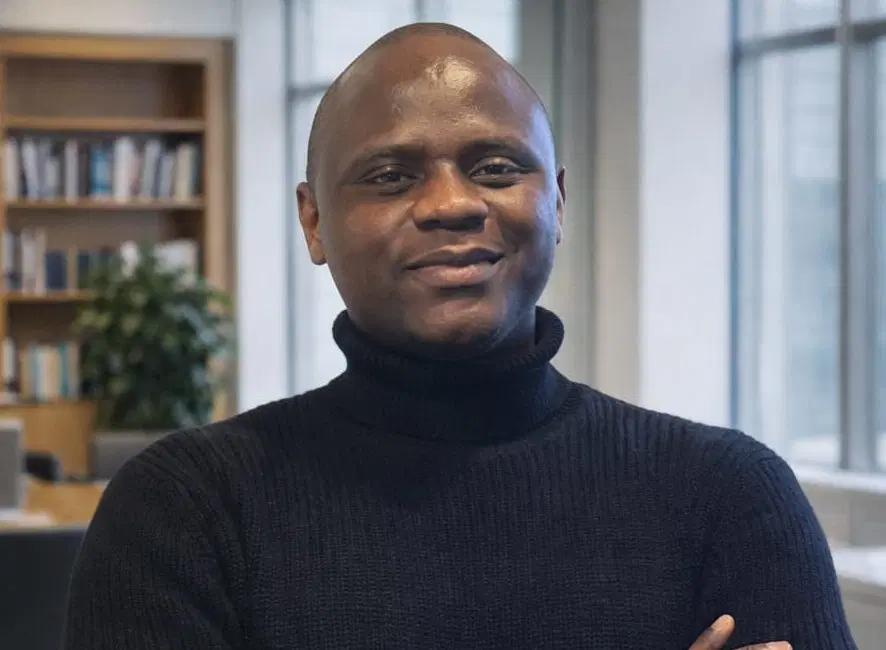
A governorship aspirant, Dr. Domor Mienye, who is under All Progressives Grand Alliance (APGA) in Bayelsa State, has strongly urged the citizens of Bayelsa to hold their state government directly accountable for the persistent high levels of poverty within the state.
Mienye contends that governors bear the primary constitutional responsibility for driving economic development, creating sustainable jobs, and significantly improving the living standards of their constituents.
These remarks come amidst ongoing public discourse regarding Bayelsa’s concerning poverty profile, with Mienye emphasizing that while federal policies undoubtedly impact the national economy, the fundamental duty for developing the state’s economy rests squarely with the governor and the state administration.
According to the APGA aspirant, poverty in Bayelsa should not be dismissed merely as a social issue but rather interpreted as a critical indicator reflecting the overall quality of governance, strategic planning, and effective economic management by the state leadership.

He challenged Bayelsans to critically assess the situation, asking: “After receiving substantial statutory allocations, 13 per cent derivation, and other federation revenues over the years, what measurable improvements have been made in reducing poverty, creating jobs, and expanding economic opportunities?”
This question highlights his central argument that despite significant financial inflows, tangible positive outcomes for the populace remain elusive.
Mienye pointed out the stark paradox that Bayelsa State possesses abundant natural resources, including vast agricultural land and rich marine assets, coupled with one of the highest per-capita public revenues among Nigerian states.
Yet, despite these inherent advantages, a large segment of its young population continues to grapple with chronic unemployment and severely limited economic prospects.
He cited reputable sources such as civil society budget reports, official Federation Account Allocation Committee (FAAC) records, and Bayelsa State’s own published financial documents.
This collectively indicate that the state has received well in excess of ₦2 trillion through various federal allocations and related federation-account revenues over the last decade.
Such immense resources, Mienye argued, should have been strategically utilized to lay robust foundations for industries, modern infrastructure, diversified agricultural value chains, a burgeoning tourism sector, and the creation of thousands of sustainable jobs.
Furthermore, Dr. Mienye maintained that governments ought to be increasingly evaluated not by the sheer volume of money they receive or the number of projects they merely announce, but by the concrete, measurable improvements observed in the daily lives of ordinary citizens.
He articulated this principle clearly: “Development is measured by outcomes. Are more people employed? Are businesses growing? Are young people finding opportunities at home? Is poverty reducing? These are the questions that matter.”
He underscored the critical need for Bayelsa’s economy to undergo a deliberate and profound transformation, shifting away from its current over-reliance on monthly federal allocations towards an economy vigorously driven by local production, entrepreneurial spirit, and robust private-sector growth.
He identified key sectors with immense potential to diversify the state’s economy, including agriculture, aquaculture, tourism, manufacturing, technology, and the burgeoning blue economy.
He stressed that these sectors could thrive if adequately supported by deliberate policy frameworks, essential infrastructure development, and disciplined, consistent implementation.

He succinctly summarized the core issue: “Our challenge is not that Bayelsa lacks resources. Our challenge is that we have not consistently converted those resources into productive assets that improve people’s lives. Leadership must be measured by its ability to create opportunities, not merely manage allocations.”
Adding weight to his call for evidence-based governance, Dr. Mienye, who is recognized as a data scientist among the world’s Top 2% Scientists by Stanford University and Elsevier for both 2024 and 2025.
This is advocated for governance models driven by empirical evidence, clearly defined measurable targets, and comprehensive long-term planning, rather than being swayed by ephemeral short-term political considerations.

He concluded that Bayelsa urgently requires a new development paradigm founded on accountability, genuine economic diversification, and transparent execution.
Bayelsans, he asserted, are deserving of a government that proactively prepares for the future, fosters productive industries, champions entrepreneurs, empowers its youth, and critically ensures that public resources genuinely translate into visible and impactful improvements in people’s lives.
The core of the conversation, he stressed, should not revolve around shifting blame between state capital Yenagoa and the federal capital Abuja, but rather on identifying who holds the constitutional responsibility to solve these pressing problems and whether those responsibilities are being diligently fulfilled.
This, Mienye firmly stated, is the unequivocal standard by which every government should be judged.